Scientists discover why high levels of the amino acid cysteine are toxic to cells
 COPY LINK
Key takeaways
- Cysteine is the only protein-building amino acid that is acutely toxic to human cells when present in excess. Cells avoid this toxicity by converting cysteine into glutathione.
- Scientists had long puzzled over why excess cysteine is dangerous, while a large amount of glutathione is safe.
- A new study shows that excess cysteine causes the release of iron, which accumulates inside mitochondria and ultimately triggers cell death. Glutathione gives the cell many of the same advantages as free cysteine, without unleashing unsafe levels of iron.
- Beyond clarifying fundamental mysteries underlying the basic biology of human cells, the findings may also have implications for cancers that take up large amounts of cysteine.
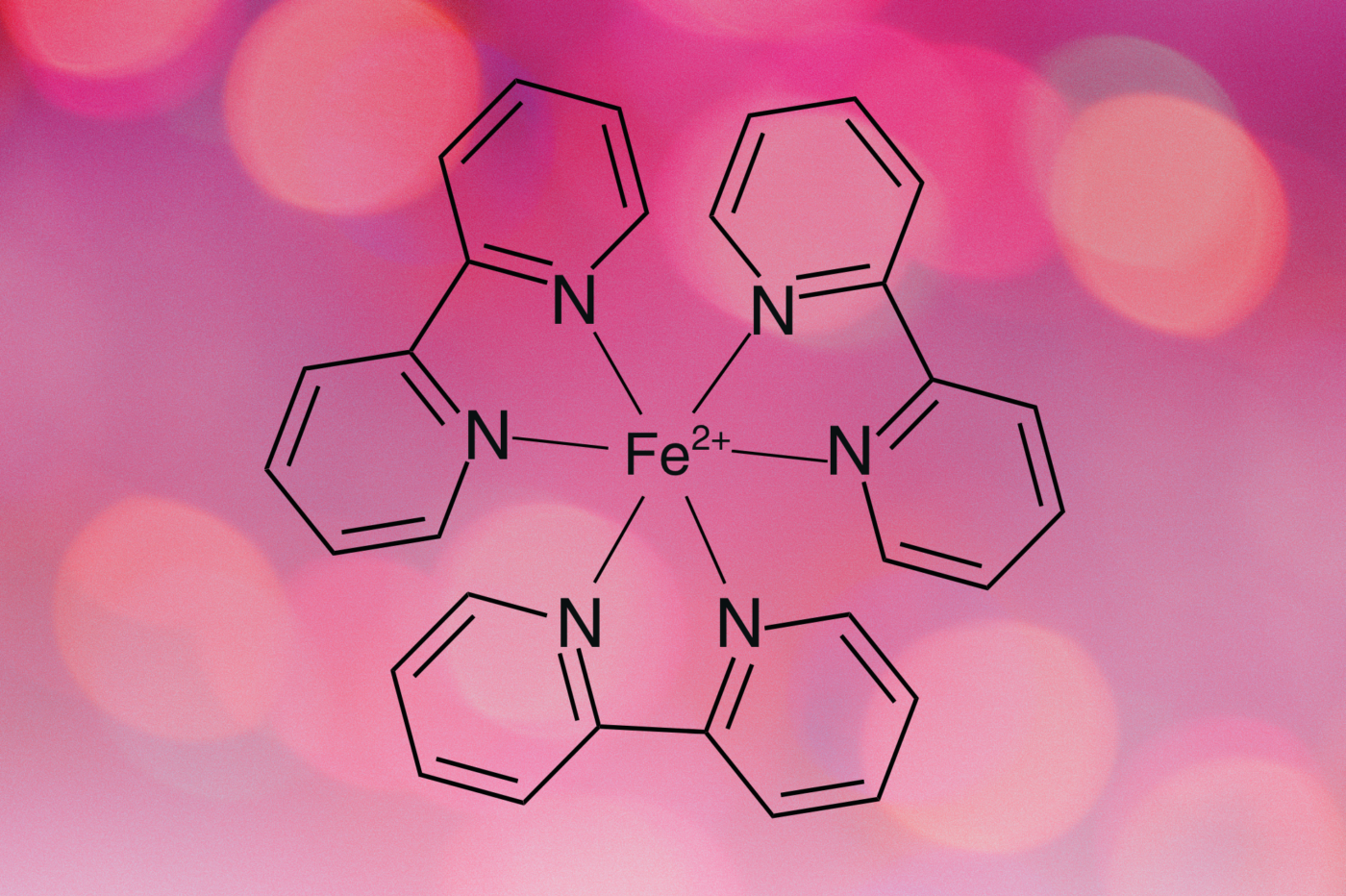
Chemical composition of an assay that turns samples bright red and helps detect the presence of iron. (Credit: Birsoy lab)
Cysteine is one of the main building blocks that cells use to make proteins. But this amino acid is a double-edged sword—too much cysteine is toxic to the cell. Cells therefore keep free cysteine levels to a minimum, converting most of the amino acid into the antioxidant glutathione.
Now, a new paper explains why cysteine is so toxic at high concentrations. The findings, published in Nature Metabolism, show that cysteine can pry iron from ferritin, the protein complex that normally keeps the metal safely locked away, flooding the cell with iron that accumulates in the mitochondria, leading to cell death. These results resolve a longstanding question in basic biology, and offer the first comprehensive explanation for why cells may have evolved to expend significant energy packaging cysteine into glutathione.
“Throughout evolution, our cells preferred glutathione as their primary redox molecule,” says Kivanç Birsoy, head of the Laboratory of Metabolic Regulation and Genetics at Rockefeller. “If cells had relied on cysteine instead, it would have been catastrophic for mitochondria. We now know that keeping free cysteine low was nature’s way of protecting the cell’s energy generator.”
An evolutionary mystery
Cysteine presents cells with something of a biochemical dilemma. On one hand, the cell needs cysteine. It’s one of only 20 amino acids used to build proteins, and it contains a sulfurous chemical group that makes it unusually reactive, useful for maintaining proteins and controlling the cell’s chemical environment. Cysteine is also needed to build iron-sulfur clusters, which help many proteins do their jobs, and to generate glutathione, the cell’s primary antioxidant. When cells have too little cysteine, glutathione becomes depleted, ultimately triggering cell death.
On the other hand, too much cysteine is just as toxic. In fact, cysteine is the only one of the 20 protein-building amino acids that becomes acutely toxic when present in excess. “There are some studies suggesting cysteine supplementation might be beneficial,” Birsoy says. “This should be taken with a grain of salt precisely because of how toxic high cysteine is to cells.”
Cells therefore keep free cysteine at very low levels, rapidly converting it into glutathione, which they can safely maintain at much higher concentrations. But cysteine and glutathione rely on the same reactive sulfur group. Why can cells tolerate an abundance of one but not the other?
Birsoy and colleagues set out to answer this key question, which strikes at the heart of how our most fundamental unit of life evolved. “Understanding why cells keep cysteine low would provide the long-awaited evolutionary explanation for why they chose glutathione as their main antioxidant,” says Toshitaka Nakamura, a postdoctoral fellow in the Birsoy lab.
This work builds on a string of significant insights his lab has generated about glutathione in recent years. “We discovered how it gets into organelles and how the glutathione molecule is regulated in the cell,” Birsoy says. “But one thing that was always bothering me was why glutathione is in such abundance, and why is it the preferred substrate?”
Mitochondria under fire
To find out what makes free cysteine lethal, the researchers performed a genome-wide CRISPR screen, systematically disabling genes to see which genetic losses allowed cells to survive high cysteine levels. The screen pointed directly to SLC25A28, a gene encoding a protein that transports iron into mitochondria, as well as receptor proteins involved in breaking down ferritin.
Ferritin normally keeps iron safely locked away, while SLC25A28 transports available iron into mitochondria. Finding SLC25A28 at the center of their genetic screen led the researchers to ask whether excess cysteine was somehow freeing iron from ferritin and sending it into mitochondria. A series of experiments confirmed that cysteine can react directly with iron stored in ferritin, changing it into a form that can escape. Glutathione, despite sharing cysteine’s reactive sulfur-containing group, could not. And when the researchers blocked either the release of iron from ferritin or its transport into mitochondria, high levels of cysteine were no longer toxic—a deft demonstration that its impact on iron’s movement is what explains its toxicity.
The team then followed the freed iron into mitochondria, where the iron was indeed accumulating and damaging iron-sulfur proteins, which cells rely on for energy production. Beset by iron on all sides, mitochondrial energy production collapsed. Cell death soon followed.
“Iron is a very reactive molecule,” Nakamura says. “It just messes up the mitochondria.”
While the discovery immediately represents a fundamental advance in basic science and our understanding of why cells evolved as they did, the findings could also ultimately open compelling new avenues for disease research. Because some cancers rewire their metabolism to take up unusually large amounts of the oxidized form of cysteine, the findings raise the possibility that such cancer cells find ways to manage the resulting cysteine burden and avoid lethal iron accumulation in their mitochondria. Identifying—and potentially disrupting—those sorts of adaptations could eventually expose vulnerabilities in cancer cells and pave the way for new cancer treatments.
For now, however, the lab’s focus is on understanding the basic biology behind the balancing act central to keeping our cells alive and well: how cells manage chemically reactive molecules such as cysteine without sacrificing the useful functions they provide. “We want to understand how cells handle redox-active molecules, how they sense and respond to them, and how this applies to cancer and other diseases,” Birsoy says. “This work gives us one of the key answers to a fundamental question about how our cells deal with these molecules.”
Key takeaways
- Cysteine is the only protein-building amino acid that is acutely toxic to human cells when present in excess. Cells avoid this toxicity by converting cysteine into glutathione.
- Scientists had long puzzled over why excess cysteine is dangerous, while a large amount of glutathione is safe.
- A new study shows that excess cysteine causes the release of iron, which accumulates inside mitochondria and ultimately triggers cell death. Glutathione gives the cell many of the same advantages as free cysteine, without unleashing unsafe levels of iron.
- Beyond clarifying fundamental mysteries underlying the basic biology of human cells, the findings may also have implications for cancers that take up large amounts of cysteine.