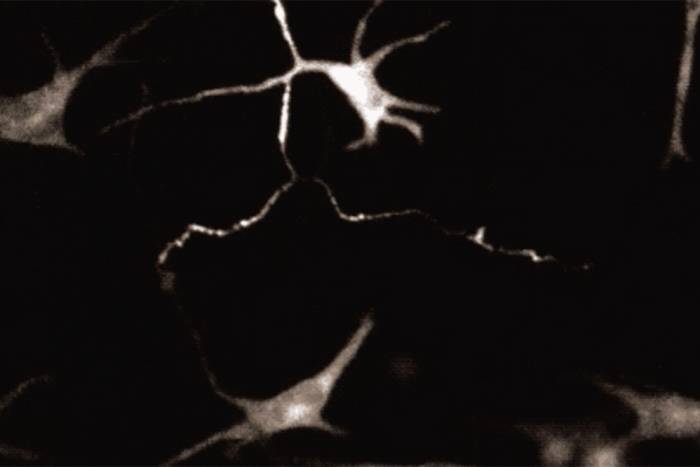
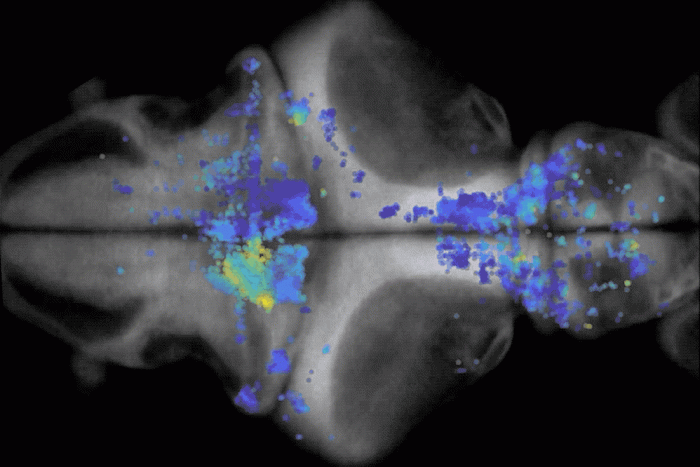
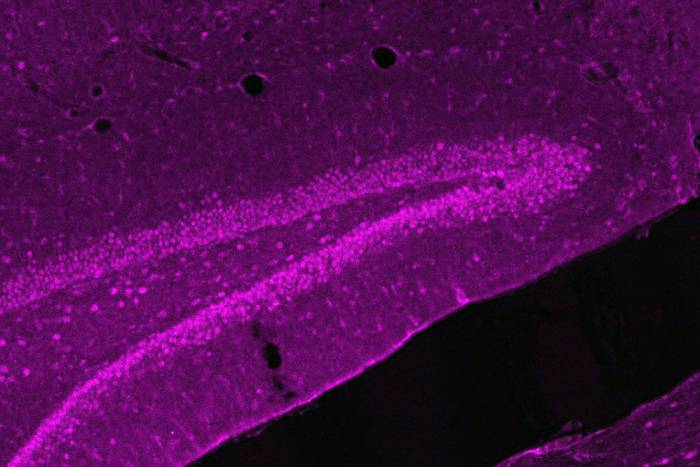
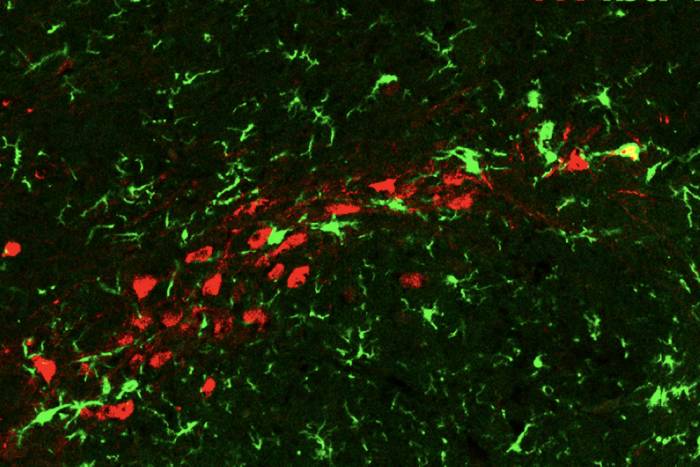
Research on Parkinson’s has taken a surprising twist. A group of neurons long assumed to expire in the disease were recently found to not be dead after all—providing a possible explanation for how the condition worsens.
The novel compounds are based on so-called broadly neutralizing antibodies, molecules that make rare people's immune systems capable of fighting HIV. They could potentially yield new treatment and prevention approaches benefitting people around the world, including in developing countries.
Scientists have identified a particular type of skin cell that looks and behaves similar to a nerve cell, prompting new questions about the body's biggest organ.
Rockefeller researchers studying the tuberculosis bacterium now have access to a state-of-the-art biosafety level 3 laboratory on campus. The new facility is one of only a small handful in New York City.
Data analysis is becoming increasingly important in all fields of science. In joining the program, Rockefeller will connect with a stream of talented students focused on computational problems.
On a recent Saturday, over 400 teens crowded into Caspary Auditorium to hear Jarvis’s 2020 Talking science seminar, “Singing in the Brain: A Personal Science Journey.”
For reasons that have long been unclear, cells stop dividing when the pH rises inside tiny cellular compartments called lysosomes. Now scientists have found an explanation for this phenomenon, with potential implications for drug development.
Scientists are learning how tumor cells’ nutritional needs differ from those of normal cells. Will their work help
launch the next genre of cancer therapies?
For some unlucky people, a bout of intestinal distress like traveler’s diarrhea leads to irritable bowel syndrome. Recent discoveries have given scientists a better idea of how this happens, and potential leads for new treatments.
A pioneer in neuroendocrinology, McEwen’s work on how the brain changes throughout life has profound implications for public health. He died on January 2, at age 81.
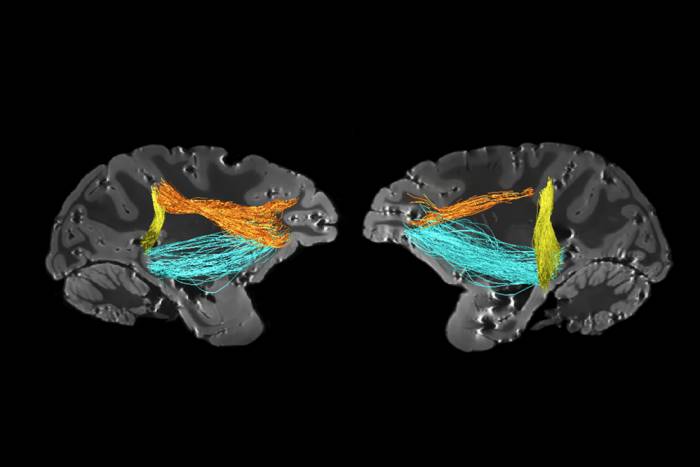
Scientists find a new brain area in control of our attention skills, raising new questions in what has long been considered a settled scientific field.
To scientists' surprise, the immune system develops its response to each virus variant mostly from scratch, instead of building on what it has already learned.
Researchers have identified a set of biological factors in mice that seem to determine one's ability to bounce back from a traumatic event, and provide preliminary evidence that a naturally-occurring substance may help boost resiliency in the face of stressful situations.
Protein clumps are routinely found in the brains of patients with neurodegenerative diseases. Now researchers find a link between this buildup and the intracellular movement of proteasomes, molecular machines tasked with degrading protein waste inside cells.
Research that began with the analysis of two developmental syndromes ultimately helped scientists understand how diverse epigenetic mechanisms can combine to drive tissue overgrowth in cancer.
A new study finds that neurons affected in Parkinson’s disease can shut down without fully dying, allowing them to also switch off neighboring cells. The findings might give scientists a better understanding of how the condition wreaks havoc in the brain, as well as ideas for new treatments.
To grow new hair, stem cells throughout the skin must work in sync. Researchers have discovered the molecular communication tool, part of the lymphatic system, that the cells use to synchronize their activities.