How specific genetic mutations create distinct metabolic vulnerabilities in liver cancers
 COPY LINK
Key takeaways
- Researchers developed a new platform for rapidly isolating mitochondria directly from tumor cells, overcoming a longstanding obstacle to studying cancer metabolism.
- Different cancer-causing mutations create distinct metabolic vulnerabilities even within the same organ, pointing toward more personalized approaches to cancer treatment.
- Targeting cancer metabolism could both slow tumor growth directly and enhance the effectiveness of existing treatments, including immunotherapy.
- Lipid metabolism, a largely unexplored frontier in cancer biology, is emerging as a promising source of therapeutic targets, with vulnerabilities now identified in both pancreatic and liver cancers.
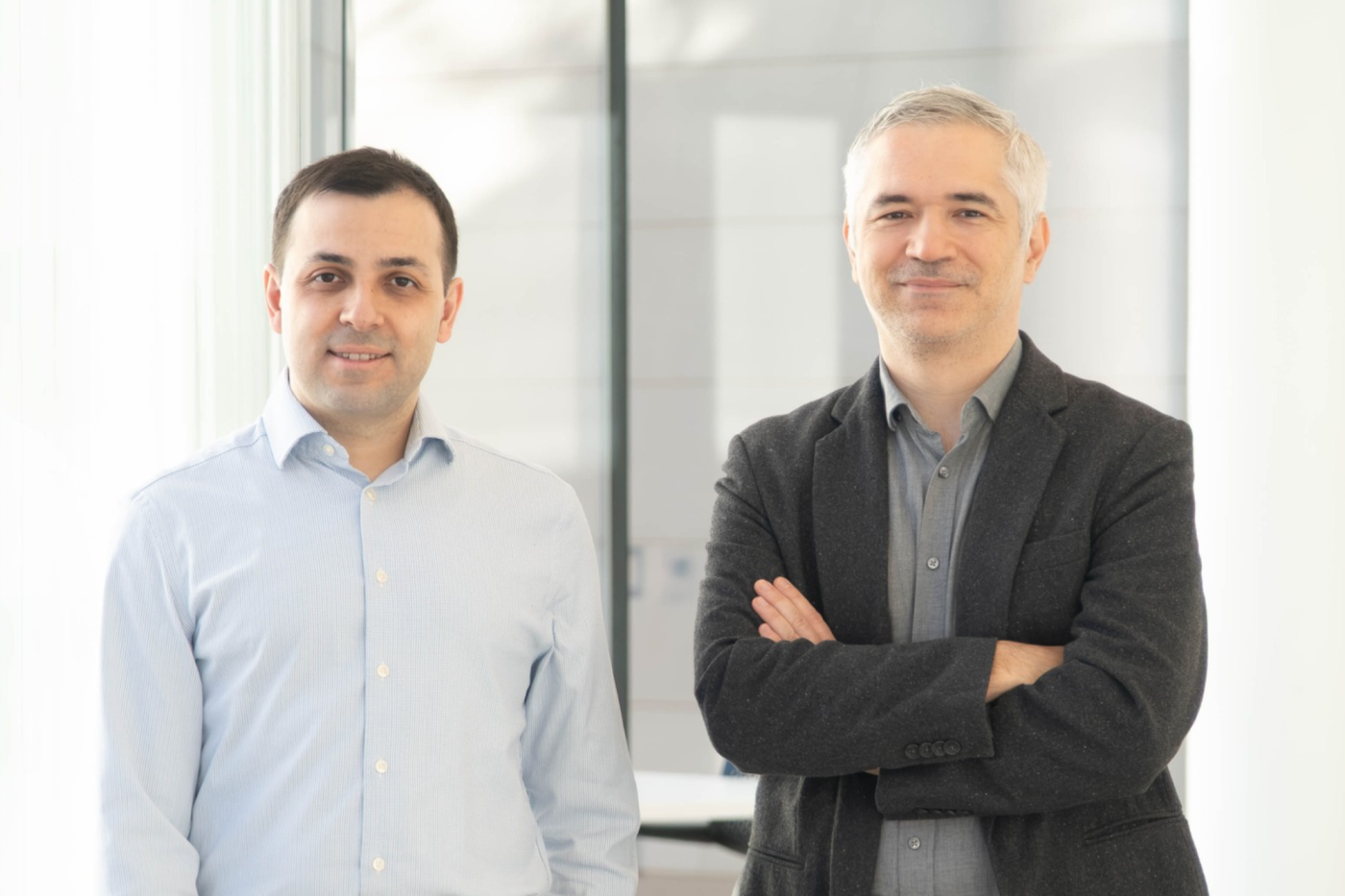
Kıvanç Birsoy and Gokhan Unlu are innovating new tools to enable more in-depth study of cancer metabolism. (Credit: Lori Chertoff)
Cancer cells depend on enormous amounts of nutrients to grow and survive, meaning that one of the most promising emerging strategies for eradicating tumors is to cut off that supply. Understanding the unique metabolic needs of cancer cells, and identifying ways to exploit them therapeutically, is a central focus of Kıvanç Birsoy‘s Laboratory of Metabolic Regulation and Genetics at Rockefeller.
Recently, the lab adapted an innovative method for studying mitochondria directly in cancer cells, revealing how different genetic mutations create distinct metabolic vulnerabilities in liver tumors.
Their technique has already generated several findings; it may open the door to similar discoveries in cancers affecting other organs, while offering a new way to investigate other cellular structures that play important roles in metabolism. We spoke with Birsoy and Gokhan Unlu—a research associate in the lab who will soon establish his own laboratory at Memorial Sloan Kettering Cancer Center—about advances in the field of cancer metabolism, and how overcoming technical bottlenecks could enable new therapies.
Most treatments target tumors through surgery, chemotherapy, or radiation. What does it mean to target cancer through metabolism, and what makes this approach promising?
Kıvanç Birsoy: Cancer cells need so much energy and raw materials to grow and divide that they must alter the way cells take up and process nutrients, often becoming unusually dependent on particular metabolic pathways. These dependencies may create vulnerabilities that could be exploited therapeutically, either by blocking the uptake of specific nutrients or by interfering with the cellular machinery tumors use to process them. Most importantly, these factors differ according to a tumor’s genetic makeup, raising the possibility of treatments tailored to individual cancers, instead of treating every tumor in the same organ identically.
What has historically made cancer metabolism so difficult to study?
KB: One of the biggest challenges is that metabolism changes constantly and is highly plastic. Cells are continuously taking up and processing nutrients, making it difficult to capture an accurate picture of what’s happening inside them. Another problem is that tumors are complex mixtures of cancer cells, healthy cells, and immune cells. When we analyze an entire tumor, we’re measuring all of those cells together, which can obscure the metabolic changes happening specifically in the cancer cells. Further, many important metabolic processes take place within specialized cellular structures, such as mitochondria, which are difficult to isolate.
Gokhan Unlu: New technologies are allowing us to overcome some of these limitations. For example, in our recent study, we adapted a previously established method to genetically tag and isolate mitochondria specifically from cancer cells in mouse liver tumors in just minutes. That allowed us to compare the metabolic profiles of genetically distinct cancers with much greater precision. And by combining metabolic profiling with genetic and pharmacological experiments, we can determine which of those differences actually matter for tumor growth.
How do genetic differences between tumors influence their metabolic needs?
KB: Previous work has shown that identical cancer-causing mutations can produce different metabolic dependencies depending on where a tumor develops. But genetic makeup also plays an important role: different mutations can rewire biochemical pathways, changing how tumors obtain and use energy and nutrients.
GU: We saw this in our recent study, where liver tumors driven by MYC relied heavily on oxidative phosphorylation and mitochondrial translation, while those driven by KRAS depended on creatine metabolism to maintain their energy supply.
KB: What’s particularly interesting is that mutations can influence metabolism in more than one way. They can directly alter biochemical pathways, but they can also change the cellular identity of a tumor, which in turn shapes its metabolic needs.
How might metabolic therapies complement existing cancer treatments, and what will it take to translate discoveries in cancer metabolism into treatments for patients?
GU: For liver cancer, treatment options have been limited. We’ve relied on relatively few kinase inhibitors, and surgery isn’t always possible because of a tumor’s location or spread. Metabolism gives us a different angle of attack, particularly when combined with existing treatments. In our recent study, we found that tumors lacking a tumor suppressor gene accumulate a membrane lipid that helps cancer cells evade immune attack. When we blocked its production, the cancer cells became more susceptible to immune-mediated destruction. Targeting lipid metabolism could therefore help make existing immunotherapies more effective.
KB: Some metabolic inhibitors, including drugs that interfere with mitochondrial energy production, are already being evaluated clinically. Other approaches might involve blocking nutrient transporters or modifying patients’ diets, although dietary interventions require particular caution. Creatine, for example, is widely used as a dietary supplement, yet in our mouse models of KRAS-driven liver cancer, creatine supplementation accelerated tumor growth and shortened survival. That doesn’t mean creatine has the same effect in all patients, but it shows why we need to understand a tumor’s metabolic dependencies before considering dietary interventions.
There’s still a lot of work to do before these discoveries can benefit patients. Most of our findings come from mouse models, and although we’ve also studied human liver cancer data, translating these particular vulnerabilities into treatments will require further validation and clinical testing. But the more we understand what individual tumors need to survive, the more opportunities we’ll have to develop treatments that exploit those vulnerabilities.

Key takeaways
- Researchers developed a new platform for rapidly isolating mitochondria directly from tumor cells, overcoming a longstanding obstacle to studying cancer metabolism.
- Different cancer-causing mutations create distinct metabolic vulnerabilities even within the same organ, pointing toward more personalized approaches to cancer treatment.
- Targeting cancer metabolism could both slow tumor growth directly and enhance the effectiveness of existing treatments, including immunotherapy.
- Lipid metabolism, a largely unexplored frontier in cancer biology, is emerging as a promising source of therapeutic targets, with vulnerabilities now identified in both pancreatic and liver cancers.