Bargmann is honored for her research exploring how genes and the environment interact to generate a variety of behaviors, and how behavioral decisions are modified by context and experience.

One of the most prestigious funding programs in the world, the MacArthur fellows program awards grants to exceptionally creative individuals as an investment in their potential.

Problems with olfaction have been linked to a variety of health conditions. Scientists have developed new tests to detect smell loss more reliably.

de Lange is honored for her elucidation of the mechanism of telomere protection and the maintenance of genome stability.

Rockefeller University biologist Michael W. Young, who studies the biological clocks that regulate sleep, metabolism, and response to disease, is this year’s recipient of the Nobel Prize in Physiology or Medicine.

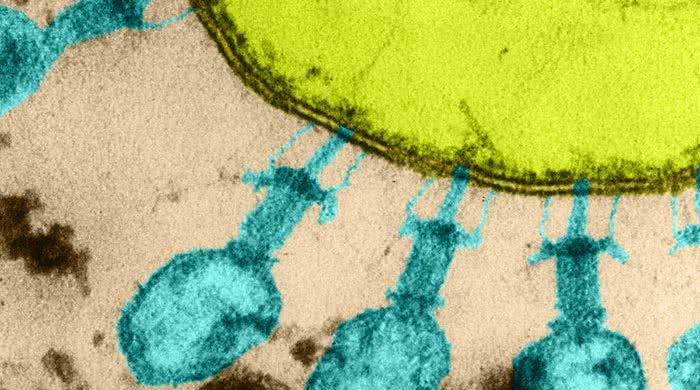
Scientists found that a system called CRISPR-Cas10 can target rapidly mutating viruses.

The prestigious award honors Marraffini and four other scientists for development of the revolutionary genome-editing system known as CRISPR-Cas9.

Scientists disrupted a gene essential for sensing pheromones, resulting in severe deficiencies in the ants’ social behaviors and their ability to survive within a colony.

Within the oldest part of the brain, scientists have found cells in charge of controlling appetite and eating. The discovery could revitalize efforts to develop drugs for obesity that make us less hungry.

New insights about gene regulation in liver cells could lead to better treatments for a common tumor type.

In the rats that roam New York City’s streets and tunnels, scientists have found a virus that resembles hepatitis C. They have used it to create the first animal model of the human disease, a breakthrough that potentially could yield a much-needed vaccine.

Jeremy M. Rock uses genetics to investigate how the microbe causes disease. He will join Rockefeller’s faculty on January 1, 2018.

Stem cells in the hair follicle are organized by the cell type they will eventually become in unique compartments, at the ready to regenerate tissue.

Allis has received the March of Dimes Prize in Developmental Biology. The award, given to investigators whose research offers hope for the prevention and treatment of birth defects and other infant diseases, honors Allis for his groundbreaking work on gene regulation.

Searching for a way to thwart Zika, scientists have discovered an antibody with a potent ability to neutralize the virus.

Scientists have long seen parallels between healing wounds and growing tumors. In studying the molecular changes that occur within both, a research team has discovered a new cancer-fuelling mechanism that potentially could inform drug development.

The centromere region of chromosomes retains the same DNA from one generation to the next. Scientists have gained new insights into how it avoids being scrambled in normal cells, and how it becomes unstable in cancer.

Scientists have discovered a common mutation that might explain why some people have trouble going to sleep at night and getting up early. The gene alteration slows the internal biological clock that regulates our sleeping patterns.

Researchers have found that the bacterial immune system targets an invading virus as soon as it enters the cell. This discovery answers a long-standing question about how microbes defend themselves.

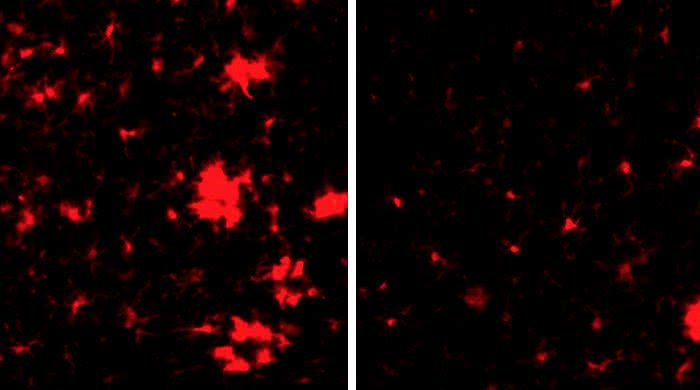
In some people whose cognitive functions are weakened due to Alzheimer’s, the disease can be traced back to changes in the brain’s blood vasculature. Scientists have found that a protein involved in blood clotting and inflammation might offer a potential path to new drugs.

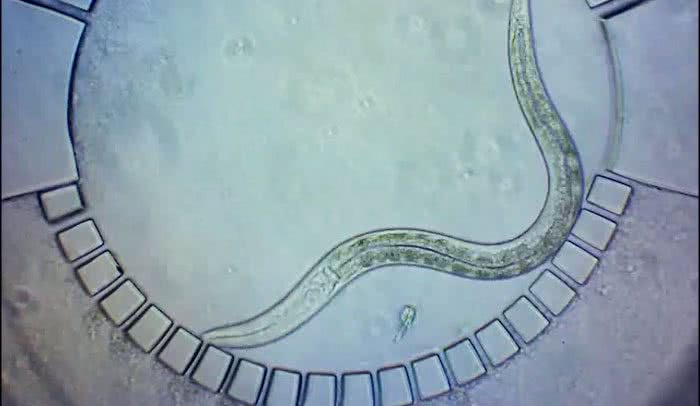
Two new technologies are helping scientists understand new aspects of organ and nervous system development in C. elegans. One allows them to image worms developing in a natural environment, while the other makes it possible to track single neurons as the worms grow.

New findings from Rockefeller University researchers could guide the development of potent combination therapies that deliver more effective and durable treatment of leukemia. In recent work published in Nature, they show it’s possible to deactivate cellular programs involved in tumor growth by d...

As much as we try to avoid it, ­we are constantly sharing germs with those around us. But even when two people have the same infection, the resulting illnesses can be dramatically different—mild for one person, severe or even life-threatening for the other. Now, new research from The Rockefell...

As he opened this year’s Talking Science lecture, geneticist Jean-Laurent Casanova made a stark observation to his teenage audience: “If we had been here 150 years ago, about half of you would already have died.” The primary reason, he told the 350 high school students and 60 teachers present,...

You can anticipate a color before you see it, based solely on the length of light waves. Music can be interpreted from notes on a page without being heard. Not so with odor.

 Scientists can rack up many awards, but to have one’s name cemented in scientific nomenclature is a special kind of honor. In an homage to his mentor Daniel Kronauer, former Rockefeller postdoctoral associate Christoph von Beeren has named a new species of beetle Nymphister kronaueri. ...

When most cells divide, they simply make more of themselves. But stem cells, which are responsible for repairing or making new tissue, have a choice: They can generate more stem cells or differentiate into skin cells, liver cells, or virtually any of the body’s specialized cell types. As r...

Each cell in the body follows a strict protocol for manufacturing the proteins it needs to function. When a cell turns cancerous, however, its protein production goes off script. A new study led by researchers at the Rockefeller University takes a close look at one way in which this procedure goe...

Elaine Fuchs, Rebecca C. Lancefield Professor and head of the Robin Chemers Neustein Laboratory of Mammalian Cell Biology and Development, has been honored with the 2017 McEwen Award for Innovation. The prize, given by the International Society for Stem Cell Research, recognizes groundbreaking wo...

Some microbes can form memories—although, inconveniently for scientists who study the process, they don’t do it very often. Rockefeller University researchers and their colleagues at the University of California, Berkeley, have found a way to make bacteria encode memories much more frequently...