Studying two very different viruses is helping this virologist develop new strategies for more potent antiviral treatments
 COPY LINK
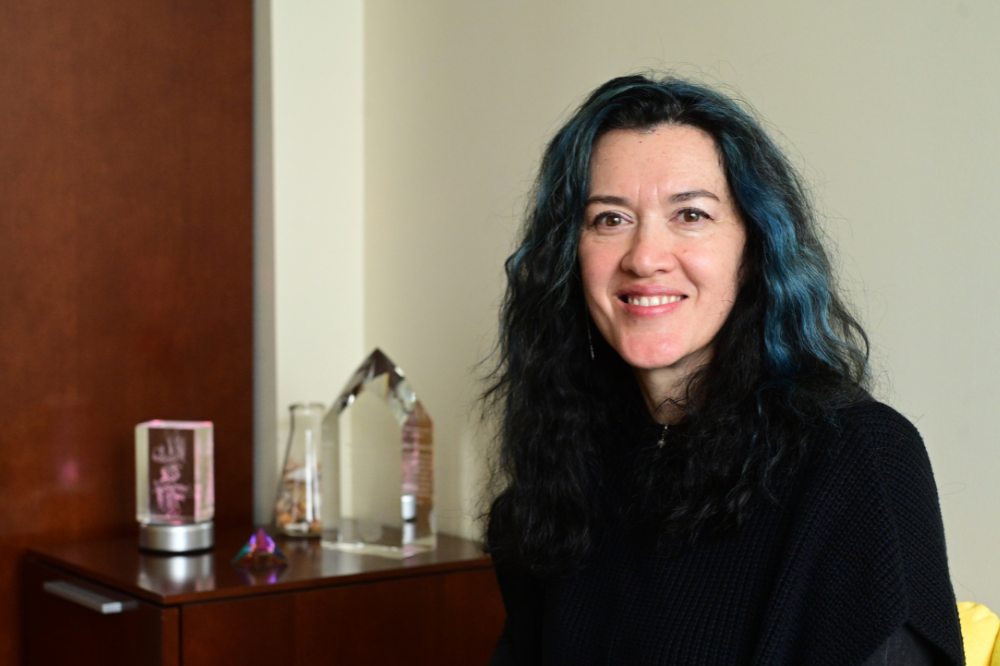
Theodora Hatziioannou (Credit: Chris Taggart)
Beyond both being viruses, HIV-1 and SARS-CoV-2 don’t seem to have a lot in common. HIV-1 is a retrovirus that integrates with its host’s DNA for life and can be passed down from mother to child, while SARS-CoV-2 is contagious but temporary and cannot be inherited. And while antivirals can repress the symptoms caused by each infection, effective vaccines exist only for one.
But for Rockefeller virologist Theodora Hatziioannou, the viruses have one very important thing in common: They both cause deadly pandemics.
Hatziioannou is well known for her pioneering research on the molecular interactions between HIV-1 and its host. Among other insights, she discovered that these interactions were species-specific, which explained why it had been nearly impossible to create an animal model for HIV-1, the human-specific virus—and led her to find a way around it. Researchers have since used her HIV-1 animal model to not only observe the course of infection but also control and manipulate it, as well as to evaluate the effectiveness of HIV-1-specific therapeutics and prevention strategies.
So when the SARS-CoV-2 pandemic began, Hatziioannou, in conjunction with Paul Bieniasz, with whom she co-directs the Laboratory of Retrovirology, shifted her focus to bringing her HIV-honed skills and tools to this new global threat, which made it easier and faster for researchers to gain insights into the virus and test antibodies for potential therapeutic candidates in real time.
We spoke to Hatziioannou, who was recently promoted to research professor, about how her research enables better vaccines, treatments, and infection prevention—for HIV-1, SARS-CoV-2, and potentially other viruses as well.
One of your seminal breakthroughs was to develop an animal model for HIV-1. How has this contributed to human health?
TH: When it comes to a retrovirus like HIV-1, it’s very important to block the initial infection altogether. Retroviruses insert their own DNA into the DNA of host cells, so the viral DNA becomes part of the human genome. They stay with you for life. You can’t get rid of them. And when they infect germline cells, they become inheritable. Eight percent of the human genome is actually retrovirus sequences—that’s four times the amount of DNA that encodes for genes.
A few years ago, the FDA approved a long-acting antiviral drug called lenacapavir for the treatment of multidrug-resistant HIV-1. It’s an HIV-1 capsid inhibitor, so it acts by interfering with the virus’s ability to replicate. Since then, we’ve used our model to show that lenacapavir was effective at not only keeping replication in check but preventing infection as well. That study could only have been done in our animal model, because lenacapavir is very specific for the HIV-1 capsid, which the other viruses used in HIV-1 animal models don’t have.
Last summer, the FDA approved lenacapavir as a twice-yearly injection as a means for preventing HIV-1 infection. The WHO recommended it as a preventative soon after. It’s been very, very satisfying to see that our work can be so useful.
How did your expertise in HIV-1 apply to your work on Sars-CoV-2?
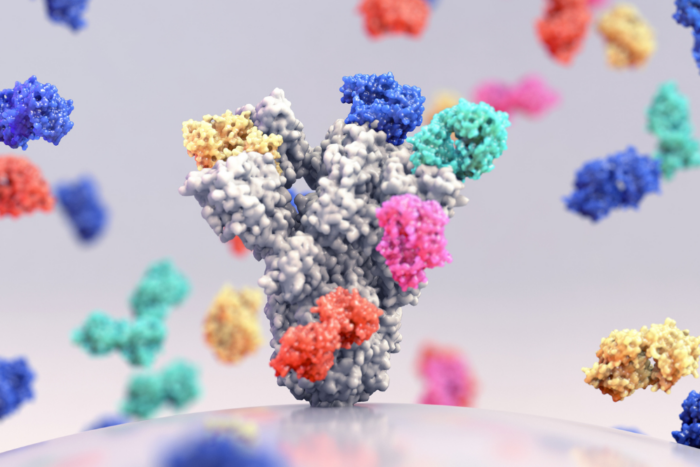
TH: Retroviruses like HIV-1 are actually quite easy to work with in the lab. You can just take their components apart—which is important for making them less dangerous—and reconstruct them any way you like. Of course Sars-CoV-2 was quite dangerous to work with, so the first thing we did was create a “pseudovirus” by essentially decorating a harmless version of the HIV-1 virus particles with the SARS-CoV-2 spike protein. We also used another non-pathogenic virus—vesicular stomatitis, or VSV—to make chimeric viruses by replacing the VSV envelope protein with that from SARS-CoV-2. These tools allowed us to study—in a far safer and faster way—how SARS-CoV-2 virus reacted to different antibodies found in the blood of people who’d recovered from it.
We also recognized that we had before us an unprecedented opportunity to understand viral mutation and host response in real time. We were able to follow the introduction of a brand-new virus into the human population and the human immune response to it simultaneously. We’d never been able to observe the interplay between those two things on this scale before. And that kind of fundamental knowledge could have applications for a range of viruses.
What did you learn from that experience?
TH: We were able to record the response of the immune system over time to primary infections, secondary infections, and vaccines dosages as well. From that, we were able to identify useful intervention strategies in a timely way, such as when we determined that three doses of the original Covid vaccines were able to generate better antibodies than two doses. It was gratifying to be able to contribute so quickly to a public health crisis.
Crucially, we were also able to observe how the virus responded once infection and vaccination became more widespread in the human population. Of course, the virus did what viruses do: it mutated. So we created a method to recapitulate viral evolution in tissue cultures, which was very effective in allowing us to not only mirror what was happening in the human population but predict what would happen next. That was really encouraging. We thought: Can we do this for other viruses too? Naturally we looked at HIV-1 first. It mutates very quickly—far faster than SARS-Co-V2—and is remarkably diverse after circulating in humans for decades.
How did you apply these insights to your work on HIV-1?
TH: We developed assays similar to those we have for SARS-CoV-2 to measure how the use of new therapeutic broadly neutralizing antibodies will shape virus evolution. We set up large-scale tissue culture assays coupled with bioinformatic pipelines and, working with our Rockefeller colleagues Michel Nussenzweig and Marina Caskey, discovered that the majority of virus strains tested could escape from such antibodies very easily. But we can also identify antibody combinations that might be harder to escape from.
We have also returned to our animal model to look at the early stage of the immune response to HIV-1. During acute HIV-1 infection, Type 1 interferon responses are sky high, but then they plummet. We assume the virus has learned to overcome them, but they are difficult to study in humans because the virus has already adapted to them. In contrast, the virus is not fully adapted to interferon responses in the non-human primate model we are using, offering us an opportunity to discover new cellular proteins involved in the antiviral response.
You’re trying to figure out which part of the immune response can stop the virus?
TH: Exactly. To do so, we made an interferon receptor “decoy”—it’s a protein that will trap all Type 1 interferons and stop them from interacting with the host cells. That should help us understand how these responses inhibit virus replication in an organism. We’ve shown that our decoy works well in mouse models and in tissue culture, and now we’re about to test it in non-human primates.
Have you developed ways to counter the constant one-upmanship between host and pathogen?
TH: I think so. We’ve come up with two ways to potentially counter a virus’s ability to evolve around our immune responses. When it comes to Covid, our initial idea was to block the receptors that viruses use to enter human cells—if it can’t enter the cell, then it can’t infect the cell. In experiments with SARS-CoV-2, we were able to do just that using specific antibodies or nanobodies against ACE2, which prevented every variant we tested from entering human cells. We are constantly improving these reagents but also looking to expand our targets to receptors for other viruses.
We’d also like to generate broader coronavirus vaccines that remain effective in the face of virus envelope evolution and diversity. We have multiple approaches on this front, using various combinations of variants of the receptor binding domain (RBD) of spike proteins to make immunogens. We’ve been able to demonstrate that the arsenal of multiple antibodies generated in response to some of our vaccines can protect animal models from infection. Some of the “rules” we are discovering about immunogen design may be broadly applicable to vaccines against other viruses.