Campus club discusses milestone discoveries with the Rockefeller researchers who made them
 COPY LINK
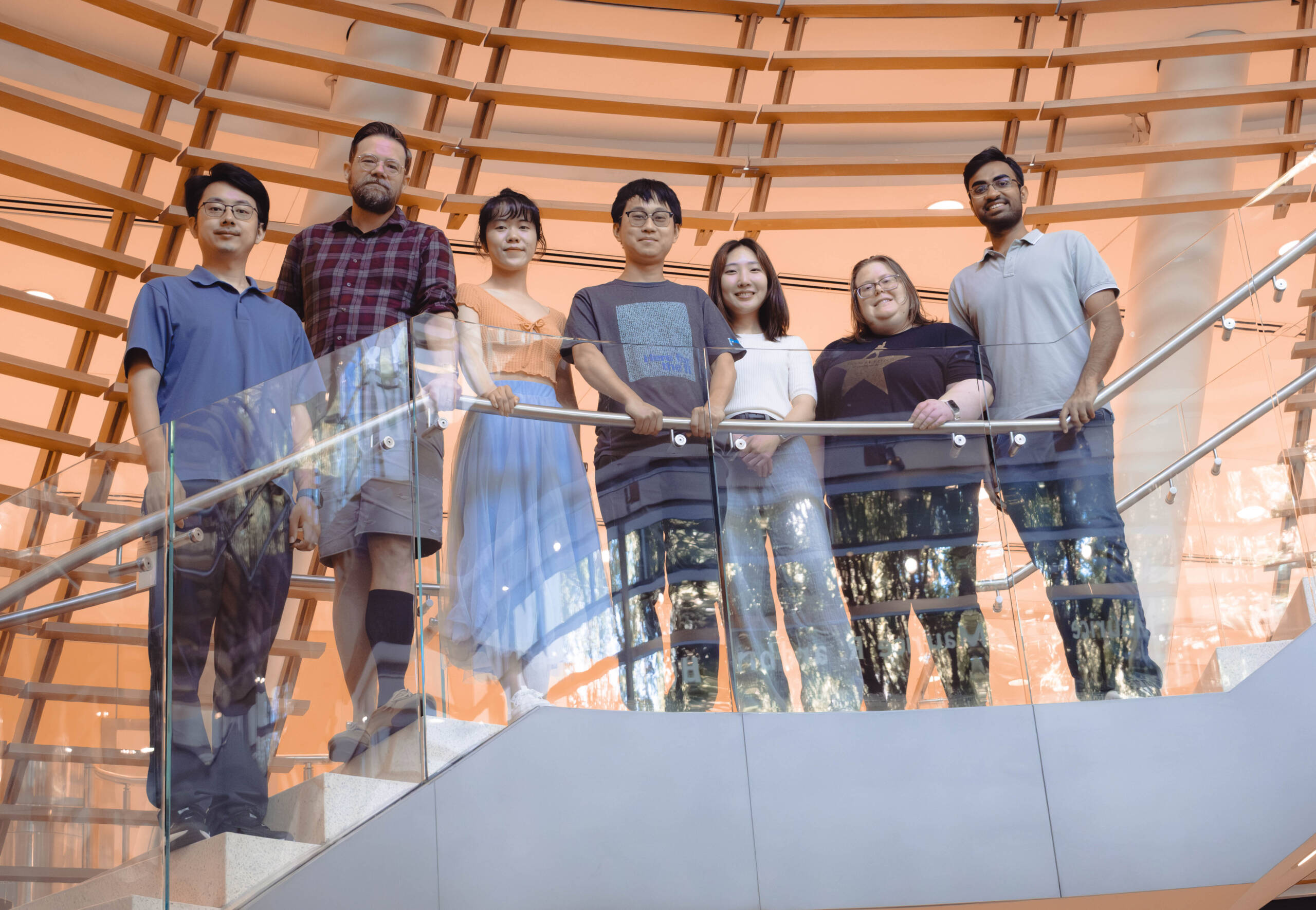
Journal Club organizers from left to right: Hengrui Liu, Keith Hamilton, Yixin Hu, Charles Xu, Yoonji Kim, Kimberly Elicker, and Dhyey Gandhi (Credit: Lori Chertoff)
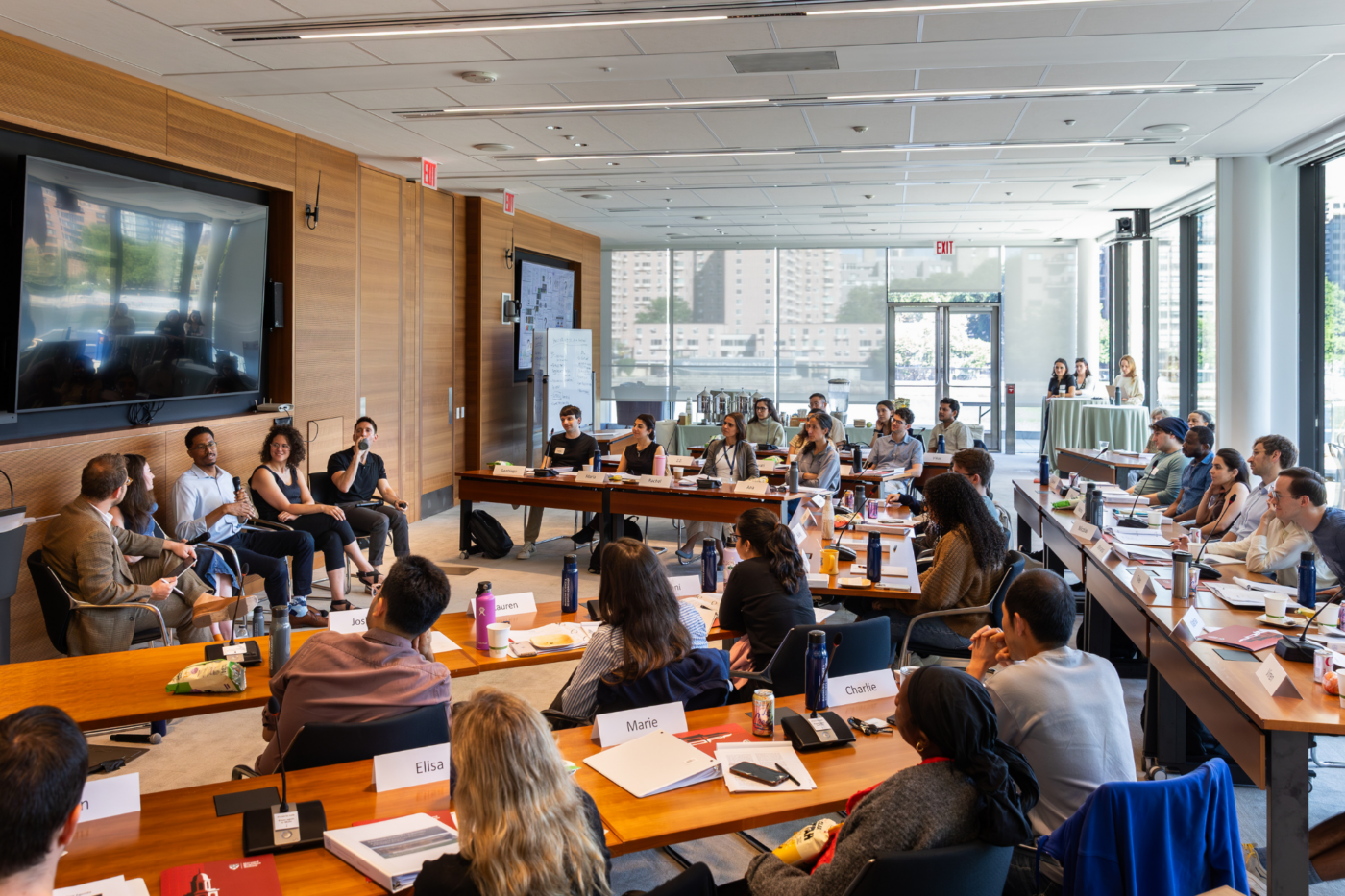
A new journal club is offering students, postdocs, early career researchers, and the entire Rockefeller community the chance to break bread with some of Rockefeller’s prominent researchers—and learn about the process behind their seminal breakthroughs.
The Historical Reading of Great Discoveries (HRGD) Journal Club, which began in June, runs monthly through November, before kicking off again in the spring. Each session includes a casual lunch, a brief presentation by a Rockefeller lab head, and a Q&A session. Invitations are emailed out monthly to the entire campus community. Capacity is limited, and seats fill up fast.
“The HRGD sessions offer opportunities to get to know landmark discoveries by engaging directly with great scientists in an informal and interactive way,” says organizer Yixin Hu, a postdoctoral fellow in Elaine Fuchs’ lab. “We gain firsthand insights that can help us to develop our scientific intuition and perspective.”
“When these speakers made these discoveries, they were often in the early stages of their careers, just as we are, so it’s really informative to hear about the dynamics they had with mentors, collaborators, and colleagues,” adds organizer Charles Xu, a research associate also in the Fuchs’ lab.
Signature work
Xu was among a handful of early career researchers who launched the HRGD journal club in January 2024. “If we are truly committed to advancing science, our focus should be on the signature work representing meaningful, lasting contributions—not on trendy buzzwords or merely the prestige of the journals where they appear,” says Xu.
In nine biweekly sessions, club organizers presented milestone discoveries, including discussions of key papers and of the associated scientists. Attendees were asked to read the papers ahead of time and prepare questions for the Q&A that followed. Topics included the genetic control of biological actions (George Beadle), DNA as the genetic material (Oswald Avery), the small RNA revolution (Gary Ruvkun), and retroviral oncogenes (Harold Varmus).
While most presentations were given by trainees, two sessions featured Ruvkun and Varmus as guest speakers, each of whom walked the attendees through the evolution of their research.
The organizers noticed that the audience was clearly energized by the opportunity to speak directly with the Nobel Prize winners. “The feedback we got about these sessions was overwhelmingly positive,” says Xu.
“We realized they wanted the main authors on the paper to be the one to present the research,” says organizer Kimberly Elicker, a research assistant in Lamia Wahba’s lab.
That’s when the group decided to change tack for the 2025 HRGD series and feature only senior scientists discussing in person the origins of their signature research. “We set a high bar—we wanted the research to represent a milestone in its field, and we wanted enough time to have passed for the impact of their findings to be clear,” says Elicker.
They didn’t have to look far. “In searching for first authors that have made great discoveries, we immediately realized that we have this wealth of knowledge here on campus,” she says.
The current season
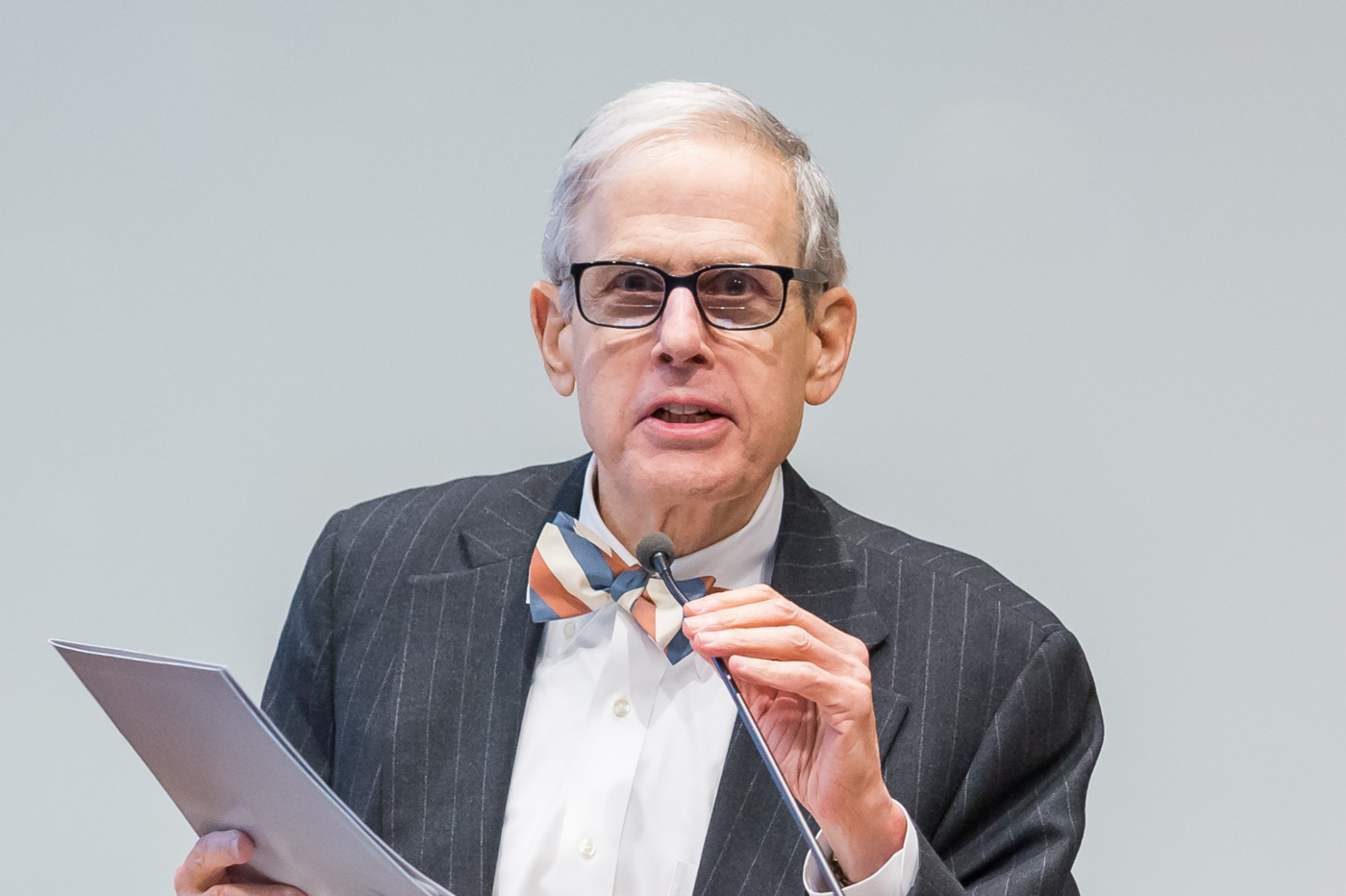
Supported by a grant from the Kavli Neural Systems Institute, the current series launched on June 26 with Jeffrey Ravetch, who spoke about his work showing that Fc receptors—molecules found on the surface of nearly all immune cells—play a critical role in autoimmune diseases and cancer. His decades of research have yielded new immunotherapies, some of which are currently in clinical trial.
“I enjoyed the opportunity to reflect on the origins of my interest in antibody structure,” he says. “When I started these studies 40 years ago, I couldn’t have predicted that they would lead to an understanding of the role the Fc domain holds in the biological functions of antibodies. It wound up becoming the dominant area of my research for my entire career.”
Such stories underscore the importance of deep curiosity in science, says Christina Pressl, an instructor in clinical investigations and member of Nathaniel Heintz’s lab who has been attending the series. “These discussions remind me that persistence can matter more than following a traditional career path, and that depth and careful thinking are far more valuable than chasing quick or prestigious results.”
On July 17, attendees heard from Svetlana Mojsov, whose discovery of GLP-1 made blockbuster diabetes and obesity drugs such as Wegovy and Zepbound possible. Mojsov shared that a desire to find better treatments for diabetes initially inspired her research, and took the crowd of about 40 people through key data from her landmark papers.
“I was really moved by Dr. Mojsov,” Pressl adds. “Working in a male-dominated field and outside the bounds of academic prestige, she remained devoted to her question—guided by passion and an extraordinary ability to recognize patterns others could not see.”
Mojsov also spoke about the support she received from Ralph Steinman, who gave her a research home in his lab even though her work was in an entirely different field. (Steinman discovered the dendritic cell, a type of immune cell.)
“I actually thought that I would eventually move from Steinman’s lab, but I just couldn’t let go of GLP-1, and he was with me at every step,” she told the attendees. “He talked about it with me, he read all of my papers, and he read all of my grant proposals.”
The importance of such collegiality is a key concept Xu hopes the attendees take away from the luncheons.
Kazuhiro Horii, a postdoctoral associate in the lab of the late A. James Hudspeth, says he got the message. “I learned that a generous attitude is fundamental for great scientists,” he says. “Both speakers demonstrated great kindness to every single questioner.”
The next HRGD luncheon takes place on August 28 with Charles Rice, who will discuss his work on hepatitis C. He’s followed by Nathaniel Heintz on September 18, on the epigenetic modifier 5hmC and how DNA demethylation occurs; Robert Roeder on October 23, on eukaryotic transcription; and Michael Young on November 20, on circadian rhythm. The club programming picks up again sometime in the spring with Roderick MacKinnon discussing ion channels.