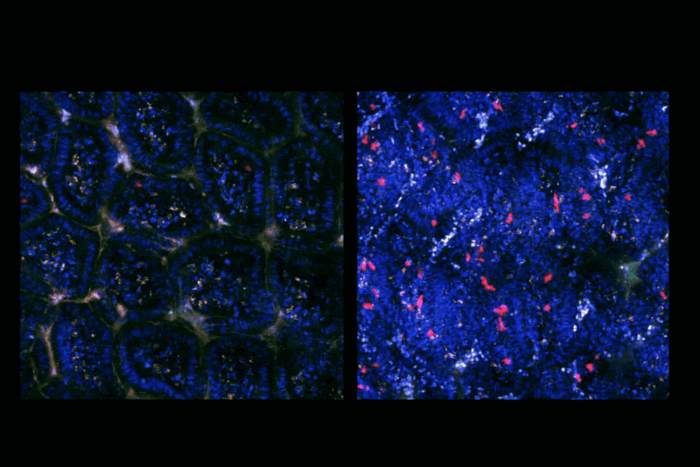
Researchers uncovered immune dynamics that may inform future therapies for infection, cancer, and autoimmunity.
New work in fruit flies uncovers an electrical trick that allows neurons to compute direction efficiently by juggling multiple signaling mechanisms. These findings could reframe our understanding of how some neurons operate.
New work demonstrates how neural circuits in the brain and muscles of the face work together to respond physically to social cues.
Study demonstrates that the Homer1 gene improves focus by reducing “noise” in the prefrontal cortex, with implications for the study of ADHD and other attention disorders.
Researchers created this first-of-its kind map by merging 40 ant brains into one.
Elaine Fuchs has spent decades uncovering why our bodies are so good at regenerating skin—and how we might harness that understanding to combat illness, hair loss, and possibly the aging process itself.
Replicative aging of human cells, the result of telomere shortening, is slower at physiological oxygen than at atmospheric oxygen, a difference now shown to be due to low oxygen impairing the ATM kinase response to withered telomeres.
More Kavli NSI news