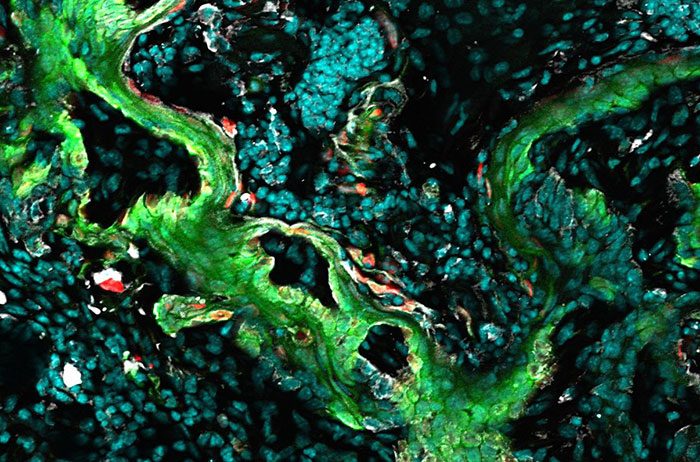
Scientists have long seen parallels between healing wounds and growing tumors. In studying the molecular changes that occur within both, a research team has discovered a new cancer-fuelling mechanism that potentially could inform drug development.
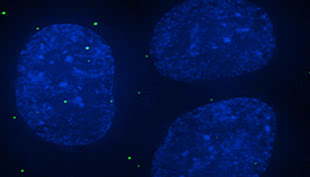
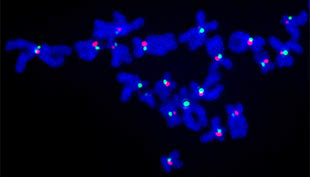
The centromere region of chromosomes retains the same DNA from one generation to the next. Scientists have gained new insights into how it avoids being scrambled in normal cells, and how it becomes unstable in cancer.
The unique award, funded by a $7 million gift, is designed to encourage Rockefeller’s early-career faculty members to pursue the most imaginative science in the years leading to a tenure decision. All heads of laboratories are eligible upon their promotion to associate professor.
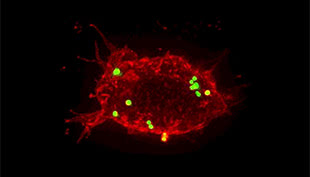
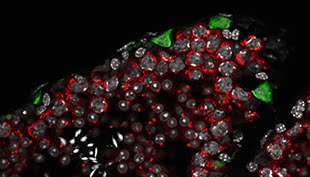
Researchers have identified a molecule that guides the formation of eggs and sperm by preventing a host of factors related to cell death and inflammation from killing the precursors to these cells. Their findings reveal new knowledge about how a mutation in this molecule leads to male sterility.
Some viruses can insert their genetic material into the genome of their host, creating a genetic fossil record. Researchers have uncovered how our ancestors may have wiped out one such virus around 11 million years ago.
A bucket of seawater contains more than meets the eye—it’s chock-full of fish DNA. Scientists are now putting that DNA to good use to track fish migration with a new technique that involves a fraction of the effort and cost of previous methods. DNA strained from samples drawn weekly from New ...
Rockefeller’s Board of Trustees elected new member Pablo G. Legorreta, the founder and CEO of Royalty Pharma, at their February 15 meeting. With his election, the university has 49 voting members.
The centromere region of chromosomes retains the same DNA from one generation to the next. Scientists have gained new insights into how it avoids being scrambled in normal cells, and how it becomes unstable in cancer.
Released by the European Commission–funded U-Multirank, the survey placed Rockefeller first in categories related to scientific impact and research productivity. The results incorporate data on more than 1,300 institutions in over 90 countries.
Scientists have discovered a common mutation that might explain why some people have trouble going to sleep at night and getting up early. The gene alteration slows the internal biological clock that regulates our sleeping patterns.