After figuring out the functions of two proteins involved in the rare genetic condition ICF, scientists pieced together the molecular process that is altered in the disease.
Our ability to hear relies on tiny bundles of hair-like sensors inside the inner ear. Scientists have identified a key component of the machinery that makes these bundles grow in an orderly fashion.
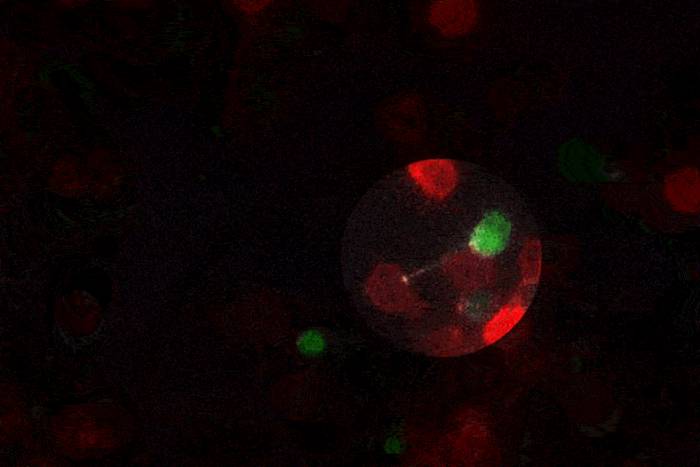
Virtually all aspects of life and disease depend of brief exchanges between cells. A new technique to study cell-to-cell contacts lets interacting cells “smear” one another with the biological equivalent of lipstick.
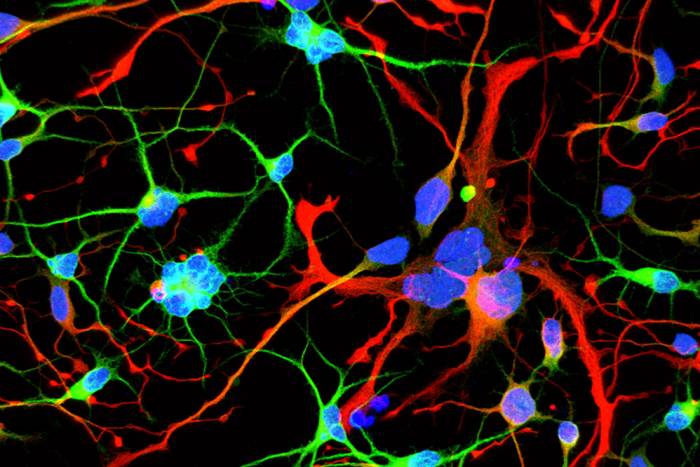
The symptoms of Huntington’s typically appear in middle age, but the disease may in fact originate much earlier. New research shows that a patient’s neural abnormalities may arise already during embryonic development—suggesting that treating the disease early may be beneficial.
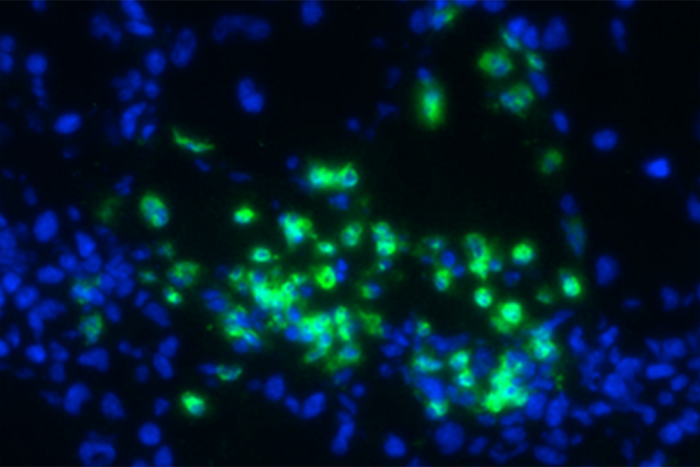
A new treatment may help cancer patients who don't respond to traditional immunotherapy. Findings from the first-ever clinical trial reveal that it is effective in activating immune cells that kill cancer cells.
New research shows that subtle differences between bacterial strains may cause dramatic differences in outcome between people infected with the same microbe.
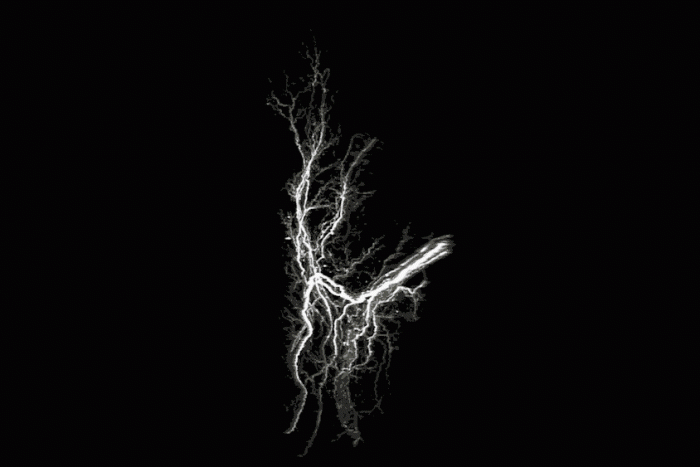
With new imaging methods, scientists hope to make significant progress in the fight against obesity. A new report reveals striking images of neural projections within fat tissue, and clues for the development of new drugs.
Scientists found that immune cells called intraepithelial lymphocytes act as a surveillance force at the intestine, helping to generate an appropriate immune response to both friendly bacteria and dangerous pathogens.
Scientists studying the cell’s DNA-copying machinery have discovered a molecular mechanism that helps reactivate it should it stop prematurely. Its function may prevent genetic errors like those that cause cancer.