Svetlana Mojsov is named a citation laureate by Clarivate
 COPY LINK
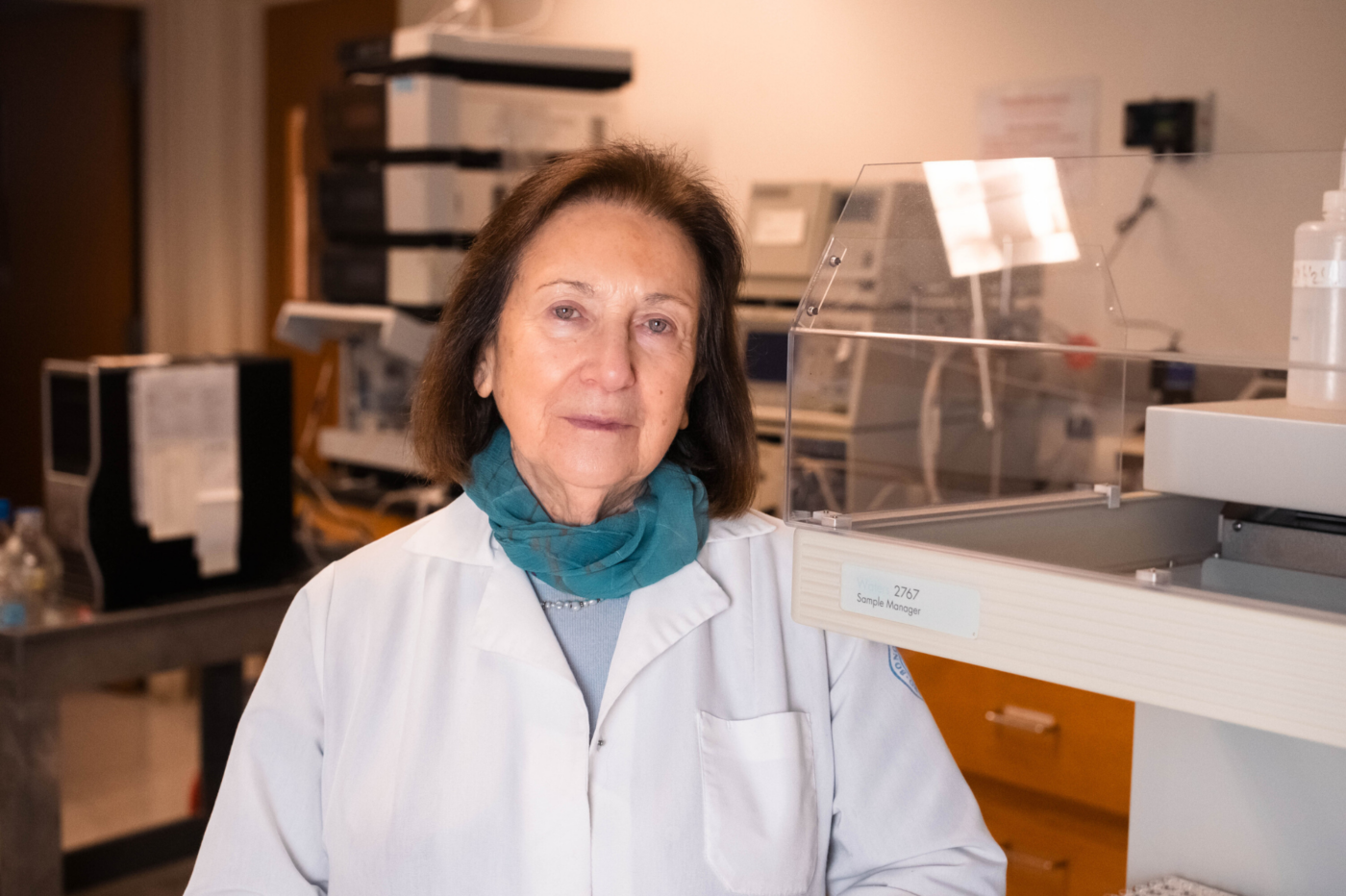
Svetlana Mojsov.(Credit: Lori Chertoff)
Svetlana Mojsov, whose research on peptide synthesis led to the development of a revolutionary class of drugs to treat diabetes and obesity, has been named a 2026 Citation Laureate by Clarivate, an information services firm that maintains scientific reference and citation data and operates the Web of Science database. Mojsov is named alongside Daniel J. Drucker of the University of Toronto and Jens Juul Holst of the University of Copenhagen. The trio was recognized in the category of physiology or medicine “for identification and characterization of glucagon-like peptide-1 (GLP-1) and studies of its biological activity.”
Mojsov’s research began at Rockefeller in the mid-1970s, when she first began working on peptide synthesis in Bruce Merrifield’s laboratory, and continued at Massachusetts General Hospital, where she discovered and characterized GLP-1, and later as a member of Ralph Steinman’s Rockefeller laboratory. Today she is the Lulu Chow Wang and Robin Chemers Neustein Research Professor at Rockefeller.
Citation Laureates are scientists who are considered likely to win Nobel Prizes based on the impact of their scientific publications. Clarivate’s methodology analyzes more than 67 million articles and proceedings indexed since 1970, and Citation Laureates are selected from an elite group of authors whose work is among the top 0.02 percent most widely cited. Since the program began in 1989, when it was part of Thompson Reuters, 89 Citation Laureates have gone on to win Nobel Prizes.
Mojsov has been recognized with many of the world’s most prestigious scientific prizes, including the 2024 Pearl Meister Greengard Prize, Time Magazine’s top 100 most influential people of 2024, the 2024 Tang Prize, the 2024 Princess of Asturias Award for Technical & Scientific Research, the 2024 Lasker-DeBakey Clinical Medical Research Award, the 2025 Warren Triennial Prize from Massachusetts General Hospital, the 2025 Breakthrough Prize in Life Sciences, the 2025 Distinguished Medical Science Award from the National Library of Medicine, and the 2026 King Faisal Prize in Medicine, as well as election to the National Academy of Sciences in 2025.