Lecture series explores the future of science funding and policy
 COPY LINK

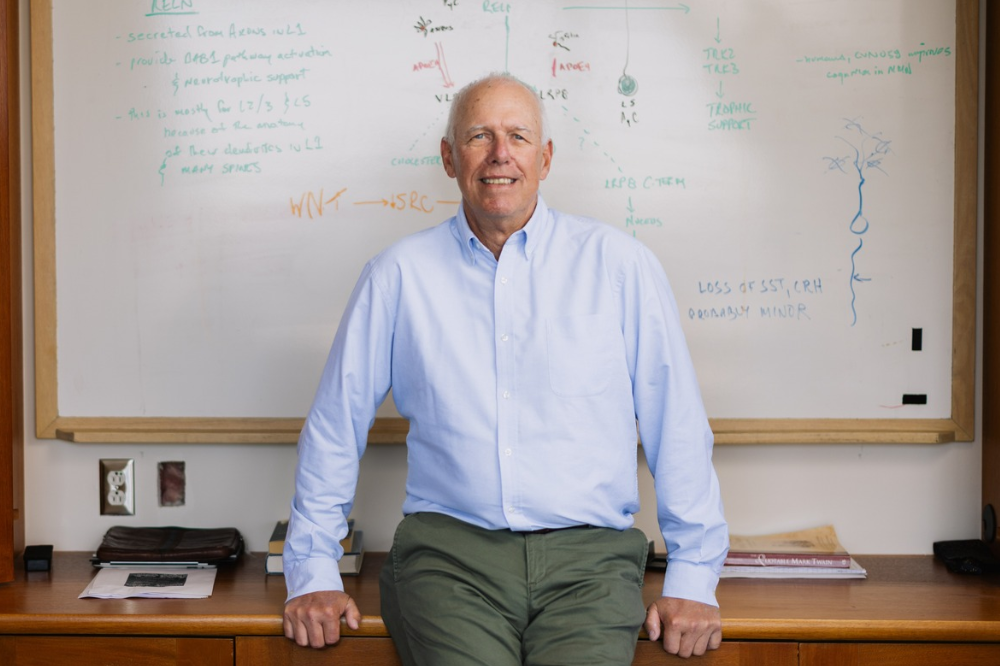
Lauren Anderson Westcott created In Situ: Biology & Society, a series of panel discussions exploring how biomedical research intersects with policy, investment, and innovation. (Credit: Lori Chertoff)
To help early career scientists learn how to navigate—and help shape—the future of research, graduate fellow Lauren Anderson Westcott created In Situ: Biology & Society, a series of panel discussions exploring how biomedical research intersects with policy, investment, and innovation.
Hosted by the Tri-I Science Education & Policy Association (SEPA), of which Anderson Westcott is a member, and supported by a microgrant from Rockefeller’s Office of University Life and Community Engagement, In Situ has hosted experts drawn from both the private and public sectors over past two months. The final event of the series, “Policy for Life Science Innovation,” will be held on May 27 in Hess Academic Center from 3-4 pm, with a reception to follow.
“I’m interested in how scientific institutions, government, and private capital can work together to support ambitious biological research and translate discoveries into societal benefit,” says Anderson Westcott, who researches the maintenance of chromatin structure during cell division in the Laboratory of Genome Architecture and Dynamics, led by Viviana Risca. “Organizing the series has allowed me to create a forum where trainees can engage with leaders across science policy, biotech, and innovation.” Some 25–40 attendees have come to each event.
One of them is Nicole DelGaudio, a graduate fellow in Kıvanç Birsoy’s Laboratory of Metabolic Regulation and Genetics, where she studies the metabolic dependencies of cancer cells, and a recipient of a grant from the Black Family Therapeutic Development Fund, which supports translational research.
“I have a strong interest in the intersection of basic science, therapeutic development, and the mechanisms that support and fund translational research,” she says. “The series has boosted my interest in how the scientific expertise developed during a Ph.D can help inform everything from government policy and public funding to private investment and industry innovation.”
Science as a team sport
The first event, held on March 31, was “Funding the Future of Biotech,” in which panelists Samantha B. Larsen (RTW Investments and a Rockefeller alum), Miguel Chuapoco (Luma Group), and Zehra Ansari (NYC Economic Development Corporation) discussed the current biotech funding landscape, the role of venture capital in biomedicine, and how investors evaluate early-stage opportunities.
“They stressed that it’s super important to show investors that you have a solid team that can work together to effectively de-risk a new product and bring it to market,” Anderson Westcott notes. “Those of us who work in the lab know that science is a team sport, so that message resonated.”
The second, held on April 24, was “The Lifecycle of a Chimpanzee Lab: Funding Costly Science in the 20th Century United States,” a lecture given by science historian Brigid Prial, of the University of Pennsylvania, who used the topic as a lens to look at the evolution of funding. Science that began in the halls of museums in the 19th century moved to the university labs of the 20th; the 21st may see yet another paradigm shift due to advancing technologies like AI and the diversification of funding sources.
Collaborating microgrants
Anderson Westcott and her fellow SEPA organizers have also coordinated with the Rockefeller University Biotech Club to co-host a few lunches with special guests—a cross-pollination of microgrant-funded programs that benefitted both.
Among those guests was Weill Cornell Medicine’s Harold Varmus, a Nobel Laureate who discovered the cellular origin of retrovirus oncogenes. Among other topics, he spoke about the various streams of science funding and the importance of communicating the benefits of science and medicine to the public.
“He highlighted the need to effectively convey victories in biomedical science to the general population, and he encouraged trainees to engage in scientific communication,” says James Hickling, a graduate student in Jeremy Rock’s Laboratory of Host-Pathogen Biology, where he researches the genetics of and drug discovery for mycobacteria.
Varmus also reflected on his time serving as the director of both the NIH and the NCI as well as the current challenges facing biomedical research funding, a key point for Hickling. “I’m concerned that underinvestment in biomedical sciences will result in poorer public health outcomes,” he says.
The NYC ecosystem
Because Anderson Westcott also had the goal of situating Rockefeller within its NYC ecosystem—thus the name In Situ—the final event of the current series keeps the focus local. On May 27, leaders from local and state government, nonprofit, and industry will discuss how New York is investing in its life sciences economy through research and translational funding, startup support, and workforce development. The panelists are Jennifer Hawks Bland, CEO of NewYorkBIO; Monica Malowney, vice president of NYCEDC’s Life Sciences and Healthcare initiative; Rob Beiderman, senior project manager of the Empire State Life Sciences Initiative; and Rockefeller’s own Carlo Yuvienco, director of the Ford Center Incubator.
Anderson Westcott hopes In Situ will develop into an ongoing series. “This was a sort of pilot run, and now that we have gotten so much interest and engagement, we can definitely see continuing it,” she says. “Many of the panelists have suggested people we could invite in the future, so I already have a list of potential guests for next year.”