"Jumpstart" provides a path into science
 COPY LINK
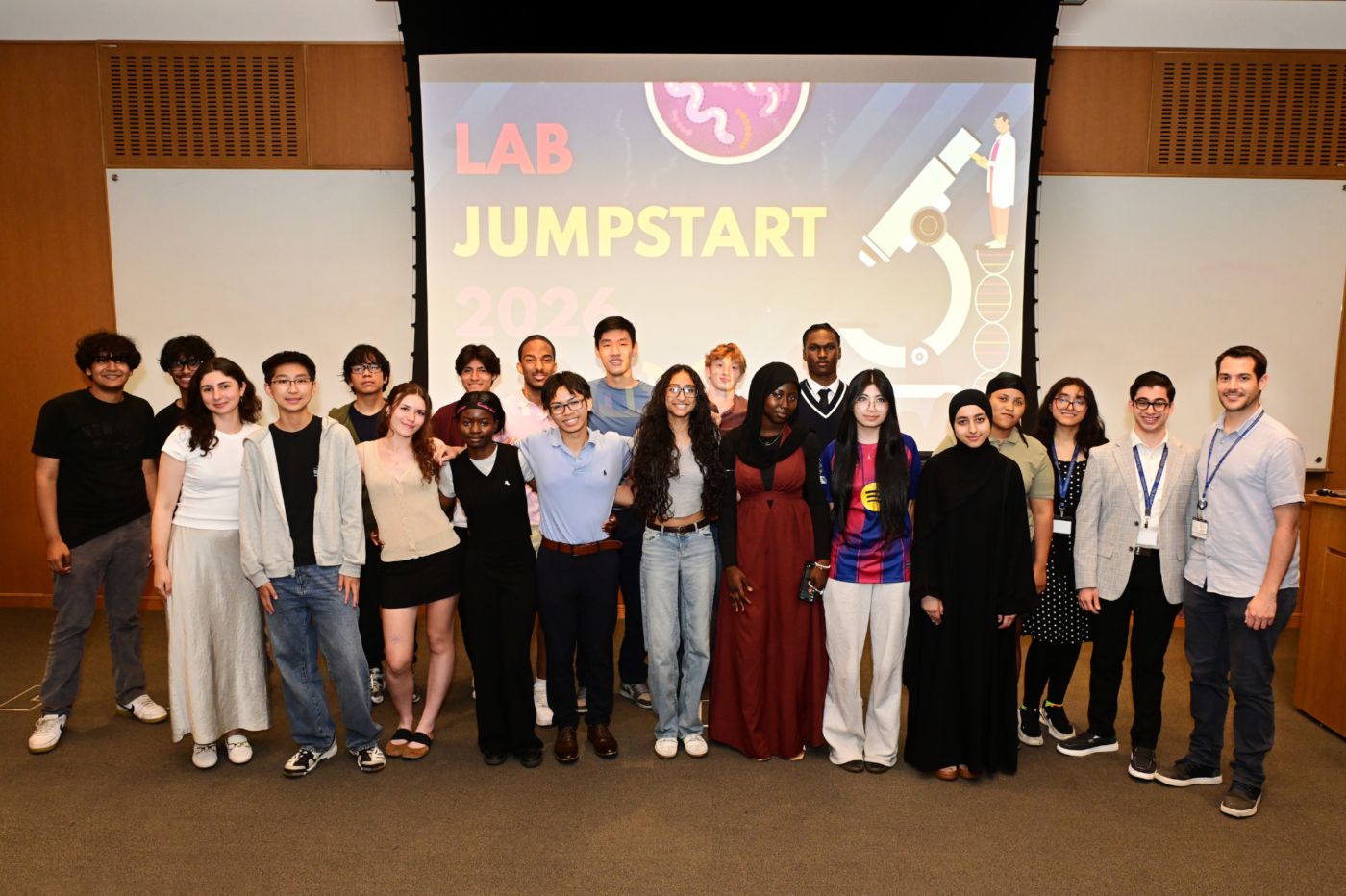
RockEDU’s long-running program gives New York City high school students access to authentic research experiences and a chance to envision themselves as scientists. (Credit: Chris Taggart)
For many New York City high school students, opportunities to experience hands-on scientific research depend less on talent or interest than on school resources. Outside of a handful of elite STEM schools, most of the city’s more than 500 public schools provide limited access to skill building in the lab and pathways into professional science.
Rockefeller’s outreach team created Jumpstart to close that gap. Launched in 2014 as an entry point into the university’s Summer Science Research Program (SSRP), the program gives juniors and seniors from across the city the chance to train alongside working scientists and build the confidence and skills to succeed in research environments.
“Over the past decade, Jumpstart has had a huge impact on broadening access to SSRP,” says Jeanne Garbarino, executive director of RockEDU and founder of the Jumpstart program. “And one of the big takeaways for us has been that broadening access starts even before SSRP or Jumpstart begins, with the application process itself. We’ve very intentionally designed everything from our forms to how we train those reviewing student applications, so that we can most effectively assess potential.”
The program is part of the Science Research Mentorship Consortium in New York City, of which RockEDU is a founding member. Each spring semester, the 14-week program brings in a cohort of 16 high school students and 4 undergraduate students to learn fundamental concepts in biology, master core laboratory techniques, explore how scientific questions are developed, and become familiar with the process of experimentation. After a more immersive phase in May, the program culminates in an annual poster session in June. Upon transitioning to SSRP, students then begin working in small research groups on projects inside of the RockEDU labs, all inspired by ongoing work across Rockefeller, Memorial Sloan Kettering, and Weill Cornell. There, students gain greater independence, designing experiments, interpreting results, and taking ownership of research questions.
“Jumpstart is all about the fundamentals,” says Jessi Hersh, program manager for student engagement at RockEDU. “They’re doing more light-touch experiments; they’re in larger groups and it’s very guided. During SSRP they’re in the lab full-time, and they have more independence about what questions they want to ask and answer.”
Early on, RockEDU recognized the role that proper infrastructure would play in the program’s success; since 2013, the group has operated dedicated training labs for student instruction. “People might underestimate the importance of designing a space for students,” says Jen Bohn, assistant director of RockEDU. “You need that. Because the space was created with them in mind, students not only have all the resources they need at their fingertips, they also get the sense that they belong here.”
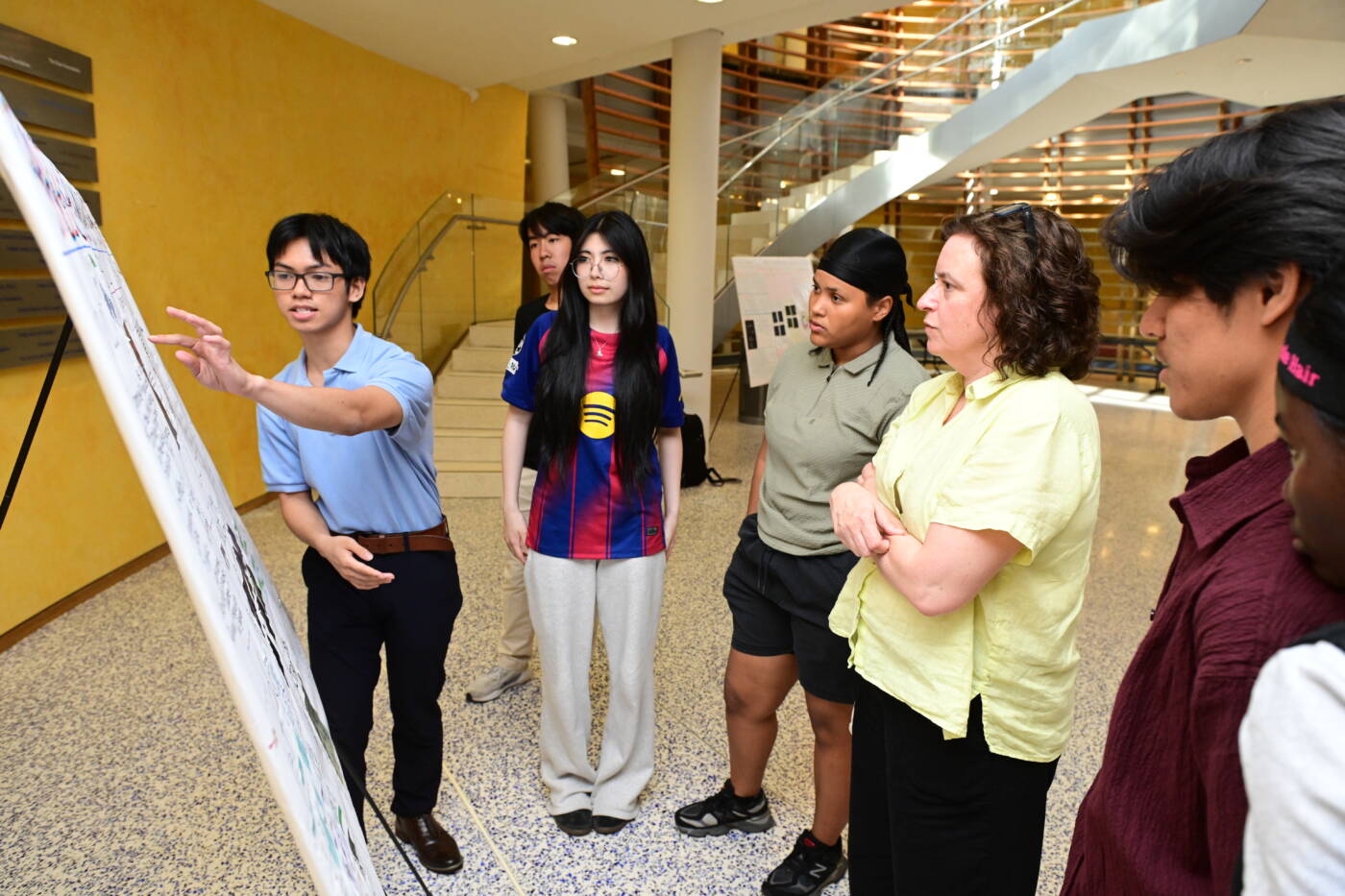
The program culminates in an annual poster session in June where students share their research.
The university’s culture and expertise on campus is key as well. RockEDU fosters direct mentorship opportunities in which graduate students, postdocs, research assistants, and research associates work closely with small teams of high school students, teaching lab techniques while helping the Jumpstart cohort navigate the realities of scientific research.
For some students, the transformation is especially dramatic. Hersh recalls how one student, who entered Jumpstart while still learning English, initially struggled with both scientific literacy and the language. “This student had a double barrier—she just worked so hard and eventually excelled,” Hersh says. “She would go to her mentors for advice, the advocate that we assigned her would help her find YouTube videos to practice techniques and, by the end of the spring, she had a really great grasp of the material. She was able to do a really complicated project that summer.”
The benefits don’t accrue just to Jumpstart’s participants, however. Bohn recalls how a postdoc mentor brought a troubleshooting problem from his active research workflow into the summer program, where a group of students systematically tested experimental conditions and ultimately helped improve the process enough for it to be implemented back in the lab. “The postdoc was struggling to get this one experiment working with a reliable readout,” Bohn says. “So he used this summer and his group of eight students to actually test a bunch of different conditions. And the students were able to create a better pipeline for this experimental workflow.”
The impacts of Jumpstart and SSRP extend far beyond a single summer. Internal RockEDU data show that nearly all program alumni go on to pursue STEM majors in college, compared to a national average of roughly 32 percent. Eighty-five percent of SSRP participants have attended or plan to attend graduate school and, among alumni who graduated high school in 2020 or earlier, 52 percent have already earned advanced degrees, far exceeding the national average of 14 percent. The programs also appear to shape long-term career trajectories. Sixty seven percent of Jumpstart alumni go on to enter research-based careers.
“It makes them feel really confident and capable about working in research environments,” Hersh says.
That sense of possibility is especially important, given that 65 percent of participants reported that Jumpstart was their only accessible research opportunity and more than half reported that, had the fully subsidized program cost money, they would not have been able to attend. But Jumpstart is designed to equip them with skills that extend far beyond the lab as well. “We really focus on building critical thinking, teamwork, and time management into the program,” Bohn says. “Those are the tools that will make them successful no matter where they go.”
As a result of such careful planning, the program has functioned as one of RockEDU’s longest running and most powerful vehicles for jumpstarting scientific careers.
“It’s a core pillar for our team, grounding us in our mission and centering us, setting the tone for what science outreach can and should look like,” Bohn says. “It’s an opportunity to show students a world that can feel locked away in an ivory tower. It breaks down barriers.”