Rockefeller's Clinical Scholars: 50 years of training in translational medicine
 COPY LINK
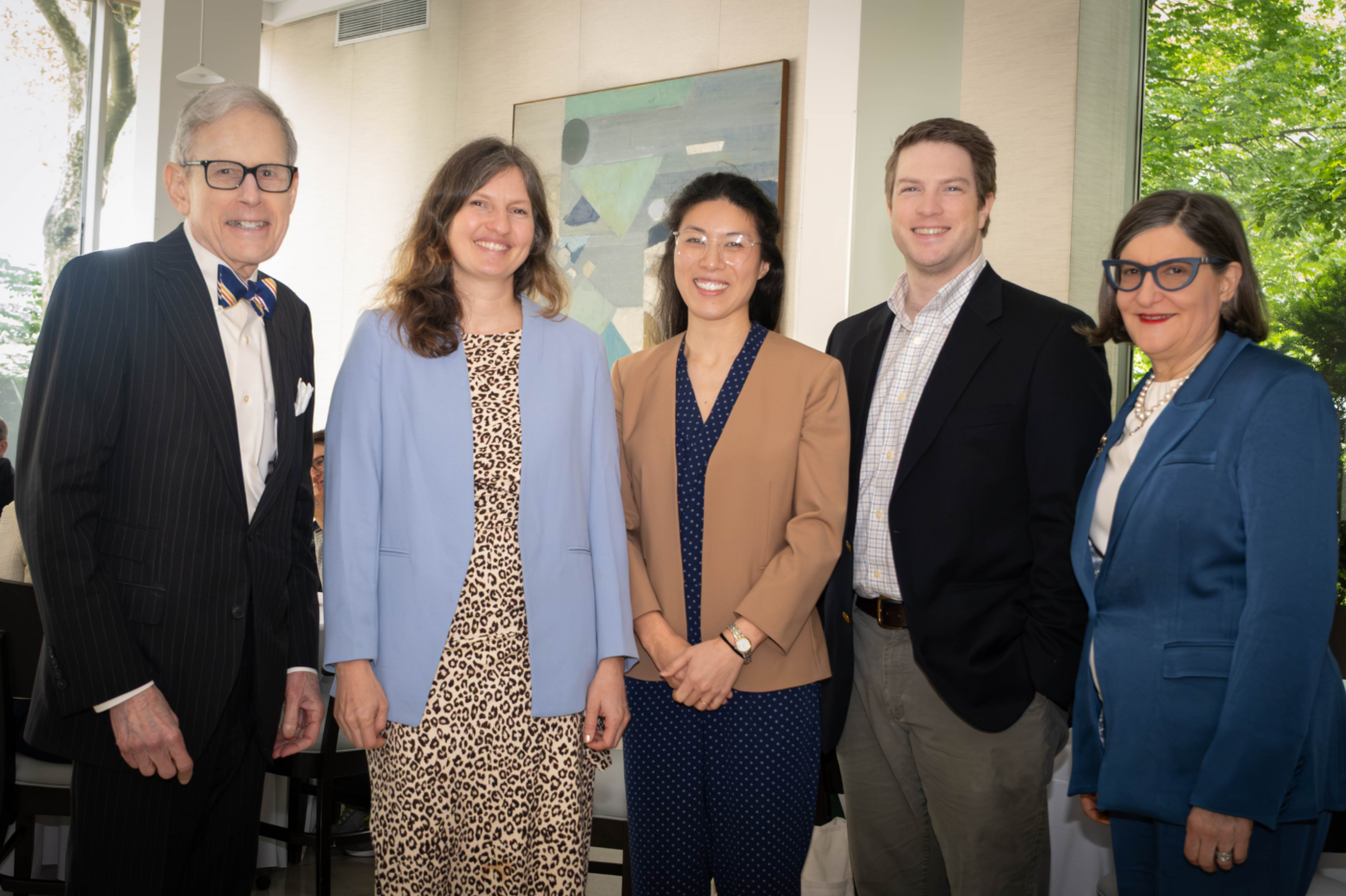
From left to right: Barry Coller (co-director), Laura Berneking (chief scholar 2026 to 2027), Julia Wu (chief scholar 2025 to 2026), Neil Neumann (chief scholar 2026 to 2027), and Sarah Schlesinger (co-director). (Credit: Lori Chertoff)
For half a century, the Clinical Scholars Program at Rockefeller has trained physician-scientists to bridge the worlds of laboratory discovery and patient care. This past semester, alumni of the program returned to campus for a celebratory symposium marking both the program’s golden anniversary and the 125th year since the university’s founding in 1901. Held in the Carson Family Auditorium, the event brought together graduates who have gone on to lead laboratories, clinical trials, and biotechnology and pharmaceutical companies around the world.
The reunion also reflected a core Rockefeller principle. Since its founding, the university has pursued basic discovery not only to better understand biology, but also to translate those insights into new ways to prevent, diagnose, and treat disease. The Clinical Scholars Program has helped sustain that mission by training physician-scientists, whose experiences caring for patients allow them to identify medically important questions that might otherwise remain unexplored.
“The Clinical Scholars Program was initiated and has been sustained with a goal of training individuals who have the passion and the ability to make fundamental scientific discoveries that then can be translated to the clinic for the benefit of patients and public health,” said Richard P. Lifton, Rockefeller’s president. “Physician-scientists who are well-trained in the clinic often see problems that even great biochemists would not know how to think about or approach.”
Founded in 1976, the program has expanded dramatically over the decades. When Barry S. Coller, head of the Allen and Frances Adler Laboratory of Blood and Vascular Biology, joined the university in 2001 as Physician-in-Chief of the Rockefeller University Hospital, he began reshaping the program by adding tutorials on translational research and a core didactic curriculum covering biostatistics, bioinformatics, and bioethics. Each Clinical Scholar now also creates and leads a research study involving human participants in the hospital during their tenure. In 2006, under Coller’s leadership, the university received a Clinical and Translational Science Award from the National Institutes of Health and received authorization from New York State to award graduates of the Clinical Scholars Program a Master’s degree. In 2016, Sarah J. Schlesinger, who also leads the Rockefeller University Institutional Review Board, was appointed director of the program and Coller became co-director.
Alumni now comprise a global network of translational investigators. Since the program’s founding, 113 scholars have completed the program, with 90 receiving Master’s degrees. Collectively the graduates have published more than 5,000 papers, led 154 clinical trials, and secured roughly $140 million in research support—with very tangible benefits. “I have to tell you, when you see a drug that you’ve advocated for approved and getting out to patients, that’s really gratifying,” said Schlesinger.
The program’s philosophy has its roots in the origins of the hospital itself. Opened in 1910 as the first biomedical research hospital in the United States, the hospital’s founding director, Rufus Cole, championed the idea that medicine should function as a rigorous scientific discipline, integrating patient care with benchwork.
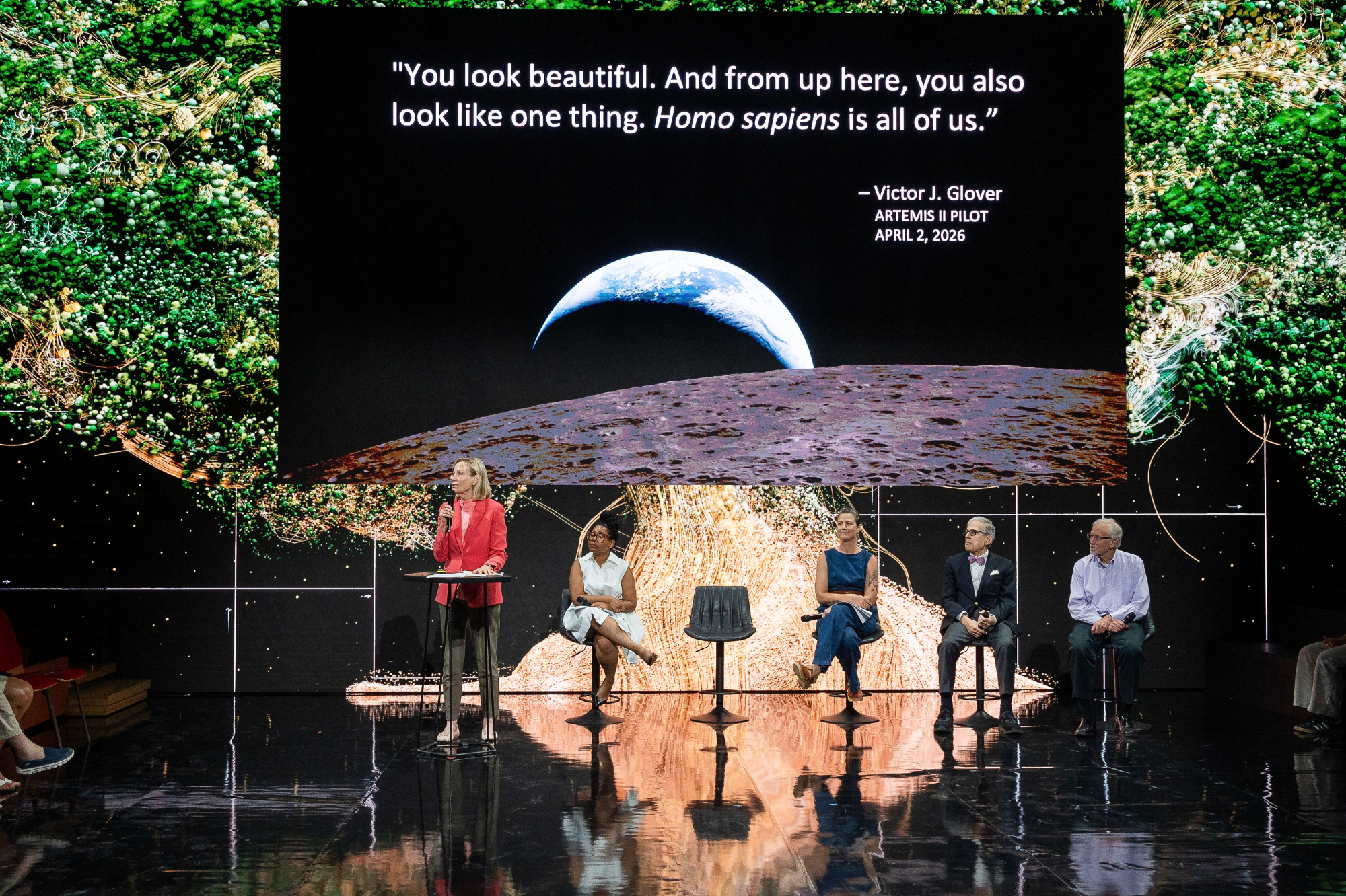
That legacy continues today. At the symposium, held on May 13, speakers reflected on discoveries by Rockefeller investigators ranging from HIV multidrug therapy and a cure for hepatitis C to obesity treatment and COVID antibody therapeutics—each example illustrating how the university’s basic science discoveries have impacted clinical care. “As we have noted throughout the day, the ability to manipulate the genome, target the immune system with confidence, and leverage insights from AI have opened enormous possibilities in our work,” Schlesinger said. “To be a Clinical Scholar is just an unbelievable opportunity.”
The program’s emphasis on treating medicine as both a scientific and deeply human endeavor also resonates personally with Schlesinger, a third-generation woman physician. In her presentation, she recalled the challenges that earlier generations of women in her family faced balancing scientific careers with motherhood. Schlesinger said she encountered many of the same struggles herself, making the Clinical Scholars’ successes meaningful not only for their scientific and clinical accomplishments, but also for the families that they built.
“As inspired as I have been by your scientific progress, seeing the photographs of your growing and thriving families has been an even greater pleasure for me,” she told the alumni.
The symposium featured presentations spanning obesity medicine, kidney disease, heart disease, infectious disease, and gastroenterology, with speakers from academia and industry, including Lisa M. Neff of Eli Lilly and Company, Marshall Fordyce of Vera Therapeutics, Amir Shlomai of Rabin Medical Center, Beilinson hospital, Manish Ponda of Regeneron Pharmaceuticals, and Rachel Niec of Memorial Sloan Kettering Cancer Center. The event also recognized the philanthropy that has sustained the Clinical Scholars Program, honoring Allen Adler; Judy and Russ Carson; Andreas Dracopoulos and the Stavros Niarchos Foundation; Evelyn Lipper, M.D.; and John Shapiro and Shonni Silverberg, M.D., for strengthening Rockefeller’s translational research ecosystem.
As much as the reunion focused on history, it also emphasized continuity and renewal. Marina Caskey—a graduate of the Clinical Scholars Program from 2006 to 2011—was recently selected to serve as executive medical director of Rockefeller’s new Clinical Research Center. “Her experience leading more than 30 absolutely groundbreaking clinical trials here at Rockefeller makes her absolutely the ideal person for this role,” said Coller.
At the close of the symposium, attendees received commemorative medals struck for the reunion with the iconic portico of the Rockefeller University Hospital. The gift served as a reminder of a century-long tradition, and of a program that has long supported Rockefeller’s central mission.
Coller emphasized the crucial roles of the members of the Rockefeller University Hospital staff and the Clinical Scholar educators in making the Clinical Scholars Program a success, each of whom was presented with a glass paperweight etched with the iconic portico of the hospital.
“It took me time to articulate what drives me and, I believe, many Clinical Scholars,” Coller said. “That’s the realization that harnessing the power of the scientific method to promote human health and alleviate suffering from disease is our species’ single greatest achievement. I feel very privileged to have the university’s support to work with Sarah Schlesinger to build and nurture the Clinical Scholars Program as our contribution to that noble effort.”