How research assistant positions at Rockefeller help launch careers in science
 COPY LINK
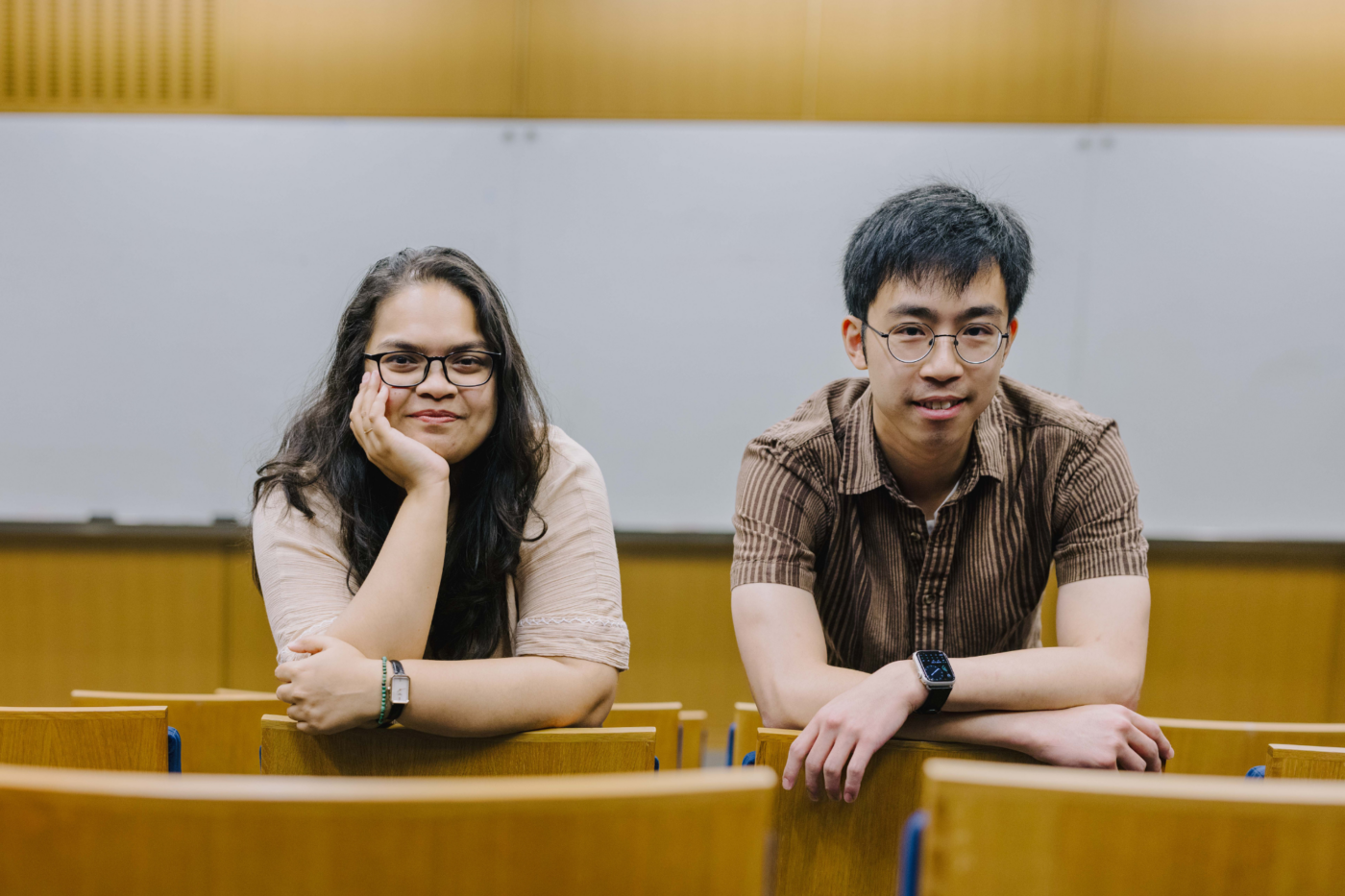
Alexander Talaie and Chidera Udedibia (Credit: Lori Chertoff)
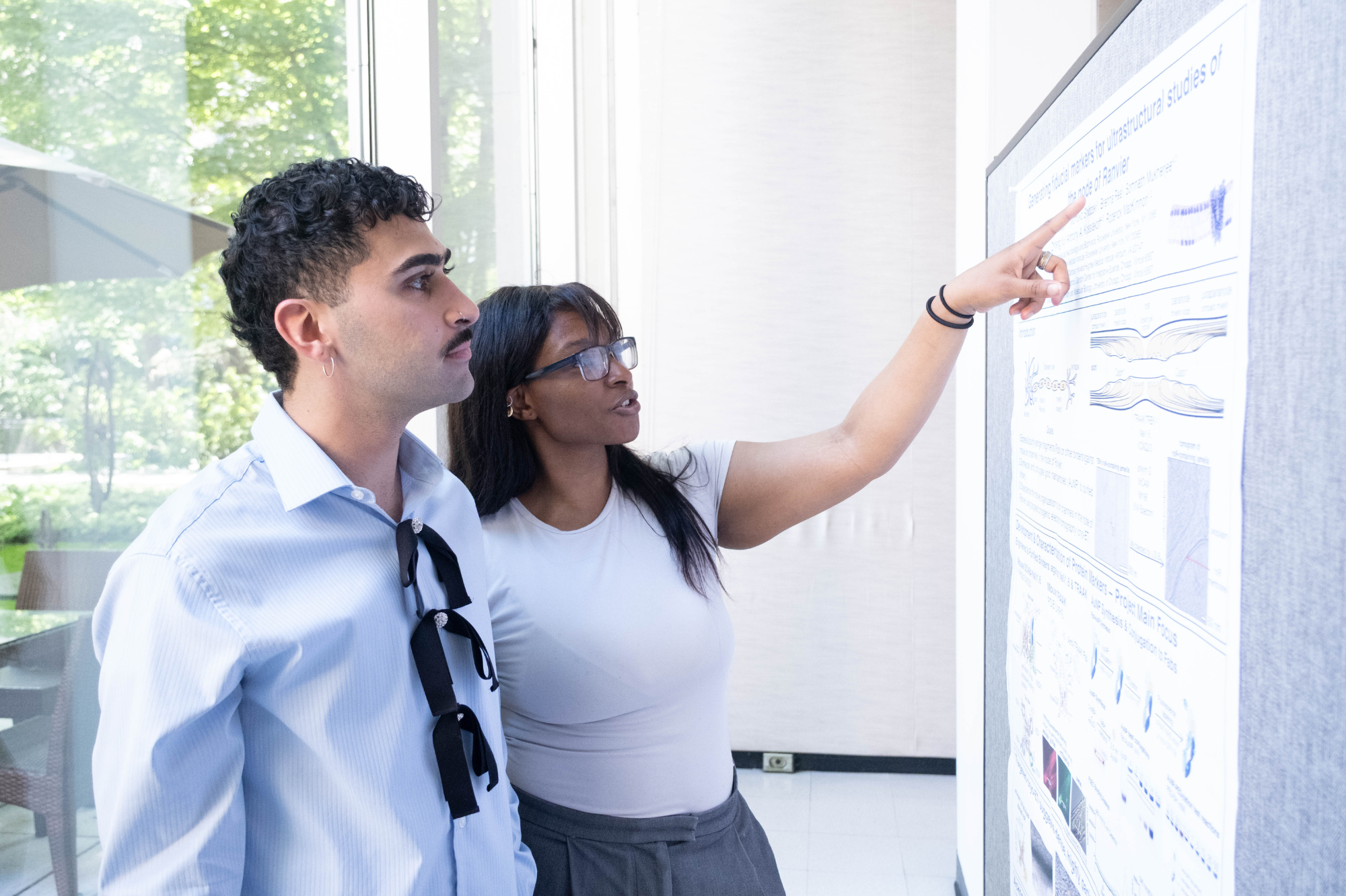
On May 20, dozens of research assistants presented posters explaining experiments they helped design, troubleshoot, and carry out across Rockefeller laboratories and facilities. For many, it was one of their first opportunities to present their research to a discerning public.
The annual event, organized by the Rockefeller University Research Assistant Association (RURAA) has become a much-anticipated gathering for a community of roughly 100 early-career scientists on campus. Research assistants typically arrive on campus with only undergraduate laboratory experience, planning to spend two years immersed in full-time, paid research positions before applying to graduate school, medical school, or a combination thereof. Along the way, they are mentored by senior scientists, attend lectures and scientific events across campus, and have access to professional resources including free MCAT and GRE Kaplan prep courses.
But the transition from undergraduate science to professional research can be daunting. New research assistants must learn not only experimental techniques, but also how to think critically about data and how to communicate effectively about their science. RURAA was created to facilitate that process—initially as a community-building group and, more recently, as a forum for professional development.
“RURAA is a terrific support system for research assistants across campus,” says Alexander Talaie, an assistant in Seth Darst’s Laboratory of Molecular Biophysics, and member of RURAA’s executive board. “It makes it so much easier to connect with other research assistants and the broader community, and easier to navigate career paths and different application processes.”
Beginning this spring, RURAA began focusing more heavily on how to professional development and scientific communication. The organization hosted workshops on abstract writing and poster design for research assistants ahead of the May 20 session, and is organizing panels with current graduate and medical students to help them better understand training paths and application processes. A microgrant from the Office of University Life Community Engagement supports the panel discussions; the poster workshops (which are distinct from the poster session) are organized separately, with support from RockEDU.
The poster session is both practice and proof of growth. “At some point you’ll have to communicate your science to someone,” says Chidera Udedibia, an assistant in Vanessa Ruta’s Laboratory of Neurophysiology and Behavior, and member of RURAA’s executive board. “The session is an opportunity to jump in headfirst and practice that skill in a safe and supportive environment, within the Rockefeller community, so that you can take those skills onward.”
Udedibia participated in last year’s poster session soon after arriving at Rockefeller. Her own path reflects the kind of growth RURAA hopes to support. She began by working part-time maintaining fly lines, moved into molecular and structural biology projects, and is now helping bridge different branches of the Ruta lab by conducting behavioral research. For Udedibia, the poster session was an early chance to practice speaking about science to more experienced researchers, and RURAA itself was a vehicle that shaped her sense of belonging at Rockefeller.
“RURAA was definitely an important part of integrating me into the community and exposing me to its opportunities,” Udedibia says. “I made what I expect to be lifelong friends through RURAA and, when I began my second year as a research assistant, I decided to join the executive board so that I could be involved in shaping the community that I have found so valuable.”
In addition to Talaie and Udedibia, RURAA’s executive board includes Cecilia Cuddy of the Heintz lab, Sitsandziwe Simelane of the Darnell lab, Kimberley Elicker of the Wahba lab, and Lily Kronenberg of the Kapoor lab. The board operates without a formal hierarchy, sharing responsibilities, and works closely with HR staff Wanda Chen and Samara Brown (who began her own Rockefeller career as a research assistant) and RockEDU. That growing network of institutional support has helped RURAA expand from a small community-building group into an organization offering social events, scientific communication training, and career programming.
“Over the past four years working with RURAA, it’s been exciting to see the organization evolve into a vibrant, peer-led community,” says Brown. “The group not only brings people together but also creates meaningful opportunities to support one another’s development and showcase their work across the Rockefeller community.”
For many presenters in that growing community, the poster session can feel like their public debut as scientists. “The research assistant position is, in part, about learning to take ownership over your science and your projects, rather than just doing tasks in a lab,” Talaie says. “We’re learning to think more critically and better engage with our science. RURAA’s programs exist to help turn that growth into a career.”