Interactive Kitchen Lab will showcase the art and science of cooking
 COPY LINK
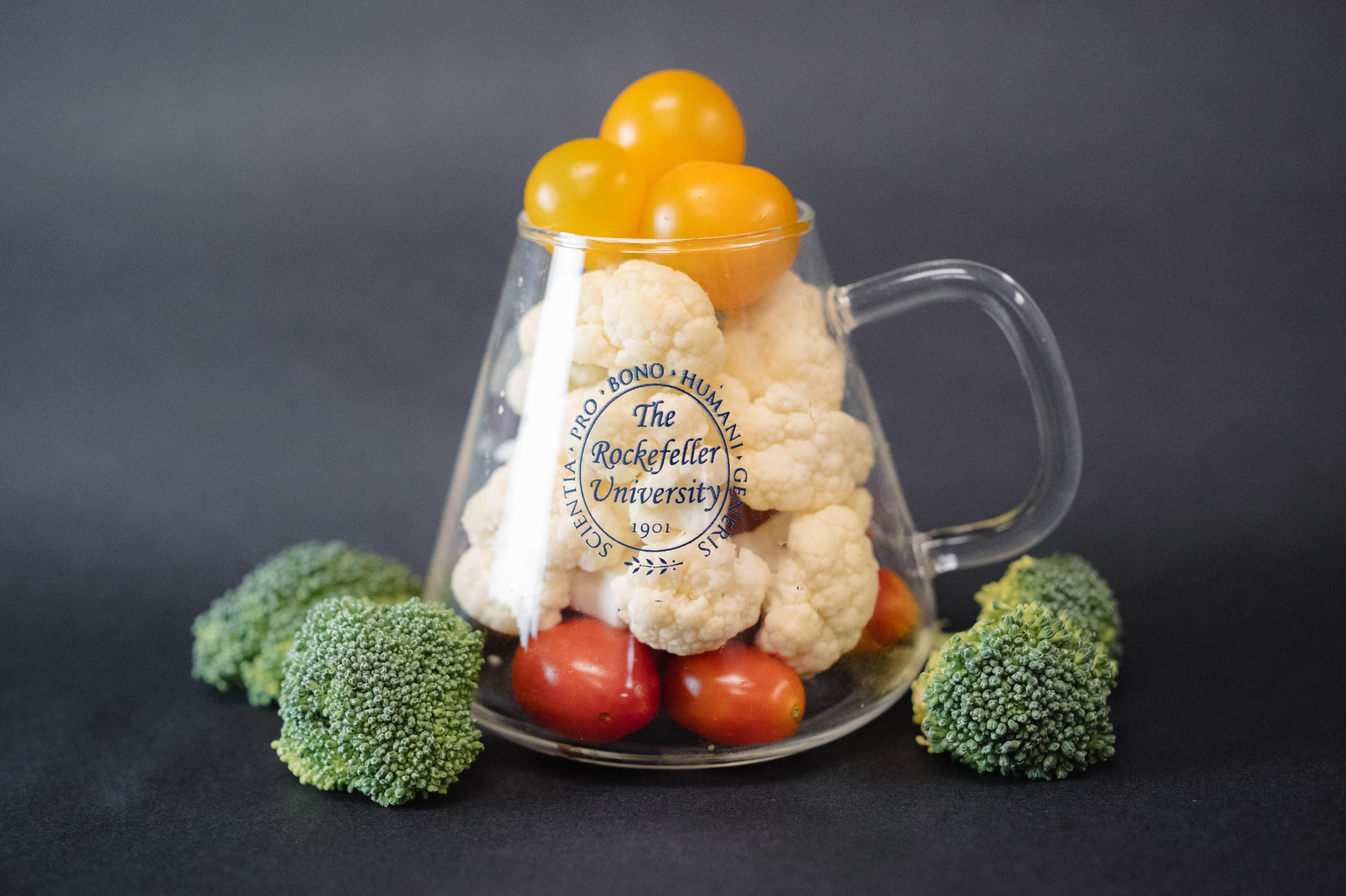
The event highlights the chemistry, biology, and neuroscience of food through tastings and sensory experiments. (Credit: Lori Chertoff)
A new sort of lab is coming to Rockefeller on June 11—Kitchen Lab: Science Through the Lens of Food. The interactive experience, led by a professional chef from America’s top culinary school, illuminates the chemistry, physics, and biology of food through a variety of tastings and sensory experiments. It takes place from 4–7 pm in Abby Dining Hall.
Kitchen Lab was developed by Joanna Archontaki, alliance manager of partnerships & strategic initiatives in the Office of Technology Transfer. “This is not a cooking class or a lecture—it is a live demonstration of scientific principles made visible through food, and attendees will be participating,” says Archontaki. “Food is memory, culture, and identity, but it is also chemistry, physics, and neuroscience. It is one of the rare everyday experiences that engages all five senses simultaneously.”
Community building through food
As a tech transfer specialist, Archontaki helps discoveries made in Rockefeller labs enter the larger biomed ecosystem and potentially save lives. In her downtime, she’s an avid home chef who likes to fuse different culinary traditions, such as Greek—her native cuisine—and Japanese.
“If I had taken a different path, I would be a chef,” she says. “And because I’ve read a lot about cooking and experimented with different methods, I realized that cooking is not separate from science; it is one of the most accessible ways to experience it. For example, I’m really fascinated by the way chefs like Heston Blumenthal apply scientific principles to cooking, flavor, and sensory perception.”
Having joined Rockefeller less than a year ago from London, Archontaki is a relative newcomer to the university, but she’s dived right into campus community building. Inspired by a similar program at Harvard, Archontaki successfully applied for a microgrant from the Office for University Life and Community Engagement for a food-meets-science event.
To find a professional chef who could demonstrate in a live event how they rely on scientific principles to make masterful dishes, she reached out to New York’s renowned Institute of Culinary Education. That’s how she connected with chef Celine Beitchman, the Institute’s director of nutrition. From there, the two began planning the program.
The science of taste
The main event is an interactive demonstration led by Beitchman of how common elements such as sugar, salt, and acid, affect food in myriad ways. Sugar, for example, draws moisture and adds flavor, and while salt does the same, it also denatures proteins and breaks down cell walls. Add acid to salt and you can ferment, cure, pickle, preserve, and cook without heat. Participants will be able to taste their way through the science, from sampling pickles made by famed New York shop Russ & Daughters to making their own ceviche (either fish or vegetarian). As Beitchman is an expert in the preparation of food for gut health, she’ll also explain the role of beneficial bacteria in a variety of foods. Other concepts will include seasoning and diffusion, flavor balance, and using air as an ingredient.
The experience continues at the reception, where light snacks and beverages will be supplemented by four interactive sensory lab stations that show how flavor is influenced by sensory perceptions and genetics.
“The role our senses play in food is enormous,” Archontaki notes. “It’s so fascinating that something as commonplace as having a meal engages all of our senses simultaneously.”
The first station explores the genetics of taste using PROP test strips, which measure the ability to taste bitterness. “Non-tasters,” “tasters,” and “super tasters” have different variations of the TAS2R38 gene, which encodes for bitter taste receptors, as well as varying densities of tastebuds. The second relies on the trickster fruit Synsepalum ducificum, the “miracle berry” that turns sour flavors sweet. It contains a protein called miraculin that binds to sweet taste receptors, activating them. Lemons will be put to the test.
Umami, or savory taste, is the focus of the third station, where tomatoes play a central role in showcasing how glutamate synergy—the combination of the amino acid with certain nucleotides—results in a powerhouse of savoriness and flavor combinations that are common across cultures. Finally, an aroma-based investigation of fermentation through kimchi, miso, and sourdough starters will take place at the fourth station, where participants will receive directions for starting a simple ferment in their own kitchen.
Archontaki hopes this first event could lead to an ongoing campus series. “There are so many more elements of the science of cooking to cover,” she says. “This first event is really a pilot—or maybe a first course. My hope is that this becomes the first step toward a broader series connecting food, science, and community at Rockefeller.”