New club helps early career scientists explore the challenges and rewards of becoming an entrepreneur
 COPY LINK
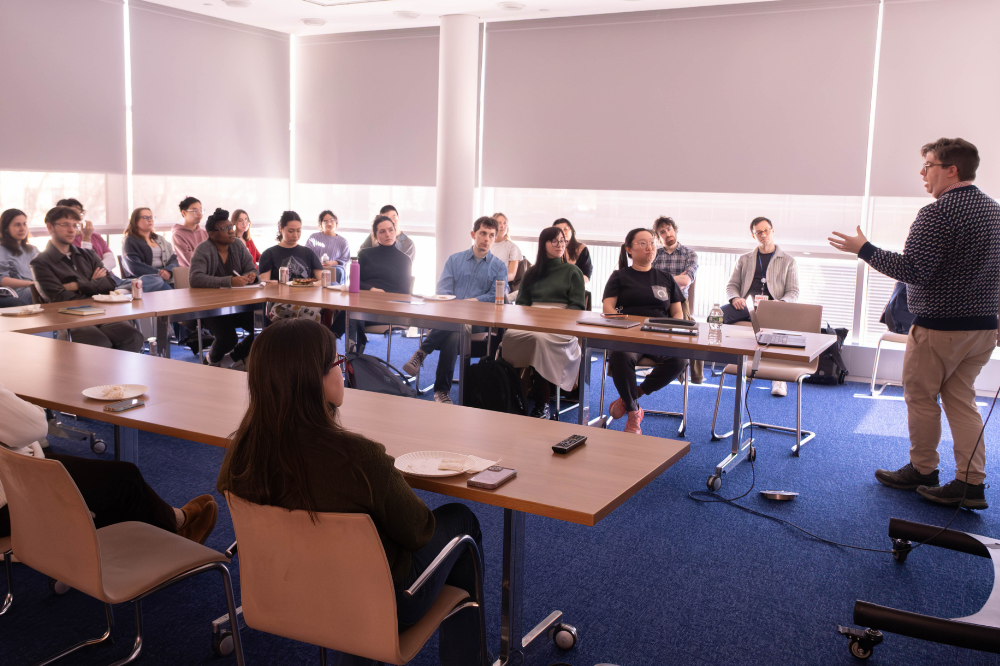
Rockefeller’s Biotech Club is holding a series of talks that explore different facets of entrepreneurship.
A new club on campus aims to help newer researchers explore one of the many fields that a Rockefeller degree opens the door to—biotech.
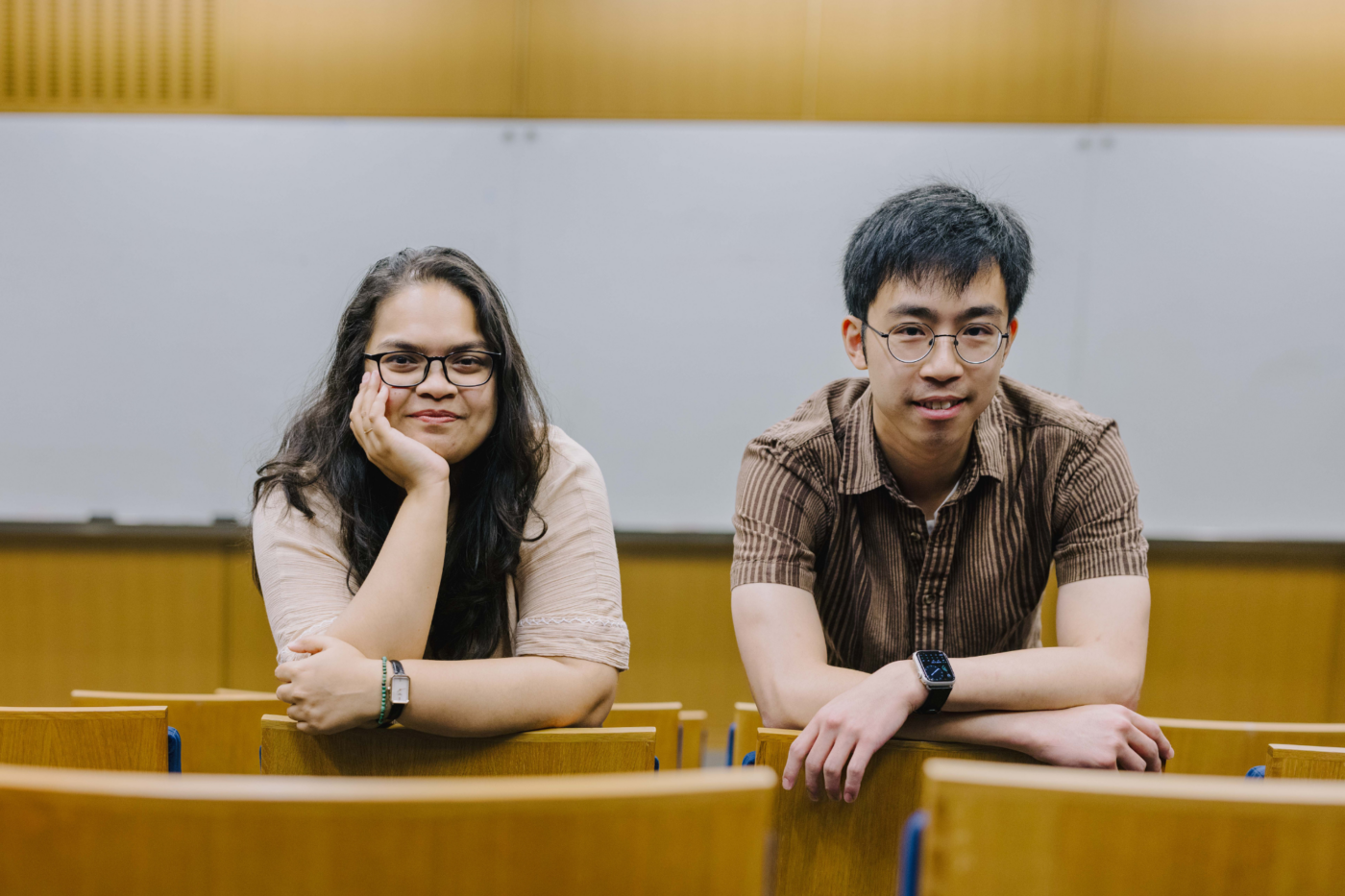
The Biotech Club was founded in late 2025 by Rose Wang, a postdoc in Sanford Simon’s Laboratory of Cellular Biophysics, with a microgrant from the Office of University Life and Community Engagement. Wang hopes to increase awareness of entrepreneurship through a series of lectures, events, and industry engagements through the academic year. While oriented to trainees and postdocs, all lectures are open to the entire Rockefeller community.
Its kickoff event was held in early December 2025 and featured a talk by Carlo Yuvienco, director of Rockefeller’s Ford Center Incubator, who spoke about the incubator’s facilities and the qualities they look for when selecting startups to host. Since then, the Biotech Club has heard from a variety of founders, investors, and industry experts. In-person events are held a couple of times a month in CRC206, and interactive webinars have been on offer as well. The series runs through early May.
For Wang, offering opportunities to hear directly from scientists who have successfully translated findings into funding was a major impetus for creating the club. “With the Biotech Club, I want to give trainees the chance to see how others have done it—and be inspired by it,” she says.
“It also offers a convenient way to network, as most events are on campus or within the Tri-I, making it possible to maintain your career development while not compromising your research progress,” adds Joanna Yeung, a graduate researcher in the Laboratory of Genome Architecture and Dynamics, headed by Viviana Risca.
Lessons from experience
When selecting the speakers, Wang has tried to bring in people who have successfully launched companies or are biotech investors themselves. If they have a connection to Rockefeller or partner institutions, all the better.
Cornell’s Tomer Joshua, for example, spoke about the Cornell Tech Runway Startups and Spinouts programs, which have fostered the launch of 120 companies that now have a combined valuation of more than $1 billion and have created some 700 jobs in NYC. Joshua, the associate director of the program, discussed how they help turn Ph.Ds into entrepreneurs through classes, mentorship, workspace, and financial support, as well as how early-stage ideas are evaluated, supported, and de-risked.
Joshua’s colleague Gregory Ray, director of the eLab Student Accelerator and program instructor for the Women Entrepreneurs in STEM at Cornell, addressed a common worry of business-minded Ph.Ds: Do they need to also get an MBA to be successful? His answer was a firm no. In fact, Ray stressed, achieving a doctorate is excellent preparation for biotech entrepreneurship, citing resourcefulness, self-taught project management, defining problems and designing experiments, managing timelines, troubleshooting setbacks, and moving complex projects forward with limited structure as Ph.D-derived capabilities that translate directly into early-stage company building.
“But most importantly to me, he shared the message: ‘Don’t worry about failing—worry about missing out on a chance at success,’” says Yeung. “I will carry that with me moving forward.”
Ray also highlighted opportunities available through the National Science Foundation (NSF) I-Corps program and the Cornell University Life Science Innovation Fellowship, both of which offer structured pathways for scientists to explore commercialization. Rockefeller’s participation in the national I-Corps program, via the Northeast Hub, is led by program director Bruce Conway.
The pitch deck
Other speakers have shared the successful pitches they made to VCs. One was Natasha Shtraizent, founder & CEO of FREZENT Biological, who took the group step-by-step through the pitch deck she used to secure funding for her company, which targets dormant cancer cells with engineered antibodies and antibody-drug conjugates.
“As a cancer cell biologist, I was especially excited to see the powerful science driving her approach,” says Wang, who researches fibrolamellar hepatocellular carcinoma.
Similarly, Amy Wu, founder & CEO of Antelope Surgical, talked about how she turned a moment of clinical insight she had while operating on a cancer patient into a biotechnology company with FDA approval of a novel platform for precision surgical oncology. Among the subjects she discussed were how she developed the underlying technology, navigated manufacturing challenges, designed clinical trials, and, of course, raised capital.
Representing the VC side of biotech was Julie Wolf, partner of 2048 Ventures, which focuses on early investing in AI, deep tech, health and bio startups with pre-seed funding of $500,000 to $3 million. Drawing on her background as a former postdoc at Albert Einstein College of Medicine, Wolf discussed how investors evaluate scientific ideas, teams, and translational potential, and what makes a strong pitch.
There have also been opportunities to learn remotely. On March 20, Rockefeller alum Tshaka Cunningham, co-founder and director of R&D at Polaris Genomics Inc., spoke with the club through a Zoom webinar. A graduate of Mark Muesing’s lab in the Aaron Diamond AIDS Research Center, Cunningham, whose first-in-kind diagnostic test for PTSD based on blood RNA expression levels is currently in clinical validation, advised attendees to have a broad base of proficiencies.
“Build your lab skills, your communication skills, and your business skills,” he advised.
Field trips are in the mix as well. In January, the club visited BioVenture eLab at Weill-Cornell, where director Loren Busby, who also oversees the Accelerated BioVenture Innovation program, toured them through the facilities. And every Friday, the club offers a tour of the Ford Center Incubator, which began hosting companies in March 2025. Located on the 4th floor of the Bronk building in 8,000 sq. ft. of space, it offers tenants wet labs, offices, and core facilities such as high-throughput drug screening, flow cytometry, antibody production, and bio-imaging.
Still to come
Next up on March 27 is Sergio Botero, a former member of Simon’s lab, who has sought investment opportunities in innovative biotech for Pfizer and currently leads the company’s anticipated launch of a Lyme Disease vaccine that’s now in Phase 3 clinical trial.
Other future speakers include Shardule Shah and Prakrit Jena, co-founders of Lime Therapeutics, and Oriana Papin-Zoghbi, CEO & co-founder AOA Dx. Check the campus calendar and classifieds for dates.
The club is also hosting a networking event on April 7 with two leaders from the Mark Foundation for Cancer Research—Janice Lin, portfolio manager of research & investments, and Rob Magin, scientific director. Also in attendance will be speakers from the series.
The Biotech Club has been eye-opening for Evan Lester, a pulmonary and critical care fellow at Weill Cornell Medicine and a guest investigator in Thomas Tuschl’s Laboratory of RNA Molecular Biology. He has a product in development that’s designed to characterize the inflammatory response in patients with septic shock and related conditions, which was informed by his experiences treating patients.
“Many of us working in biomedical research want to see our work move into humans to alleviate suffering,” Lester notes. “Hearing directly from people who work at this interface has been enormously valuable for understanding how to bridge that gap.”