This Year's Event
The Secret Songs of Dolphins: Decoding Their Mysterious Underwater Conversations
Featuring Marcelo O. Magnasco, Ph.D.
10:30 AM – 2:00 PM
Caspary Auditorium
1230 York Avenue at East 66th Street
New York, NY 10065
Speaker
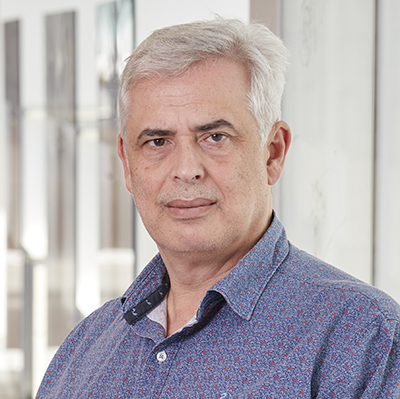
Marcelo O. Magnasco, Ph.D.
Professor and Head
Laboratory of Integrative Neuroscience
The Rockefeller University
Dr. Marcelo Magnasco is Professor and Head of the Laboratory of Integrative Neuroscience at Rockefeller University. Dr. Magnasco has studied a broad spectrum of biological phenomena, considering problems in dynamics and geometry. He and his colleagues use living beings as a source of inspiration for creating new mathematical descriptions of nature. The lab’s main focus is on computational and experimental neurophysiology, primarily in the context of auditory function but also touching on vision, memory, olfaction, and other sensory processing, as well as studies of dolphin communication in aquaria and in the wild.
Dr. Magnasco uses both computational and experimental methods to model the complexity, organization, and information-processing properties of living organisms. In his studies of sensory processing, experimental techniques are employed to investigate the auditory representation of complex objects in laboratory animals and humans, and to study communication in dolphins, while computer modeling is used to understand how and where sound is processed in the mammalian brain, as well as more general models of brain function.
The laboratory’s effort to study dolphin communication and cognition is carried out both in aquaria and with wild animals at several field stations. The scientists are seeking to understand both the natural extent of dolphins’ vocal repertoire and communication ability, and their ability to acquire novel signals. This work involves extensive data analysis efforts as well as fieldwork to develop novel acquisition techniques.
A physics graduate of the University of La Plata, in Argentina, Dr. Magnasco earned a Ph.D. degree from the University of Chicago. He then joined Rockefeller as a postdoctoral fellow and, just a year later, was appointed as assistant professor and Head of Laboratory. He has been a tenured professor since 2003.
The Secret Songs of Dolphins: Decoding Their Mysterious Underwater Conversations
Dolphins are known for their intelligence and sophisticated communication abilities. Using a variety of sounds – ranging from whistles, clicks, and echolocation signals – to body movements and physical touch, dolphins can provide a wide range of information. For example, we know that each dolphin can have a signature whistle that serves as a kind of “name.” Additionally, scientists have documented danger warnings, affection, or forms of play as other common topics of “conversation.” However, at the Roatán Institute for Marine Sciences in Honduras, a sanctuary facility for 24 bottlenose dolphins, Marcelo O. Magnasco, Ph.D., and his colleagues have recorded sounds that no one has ever heard or recorded before.
Curious to learn more, researchers set up recorders to monitor the dolphins overnight, when these sound emissions typically take place. The timing and patterns of sounds captured in overnight recordings offered something astonishing. Just before sunrise, the dolphins began to sing together. For approximately 90 seconds, their voices rose higher and lasted longer than usual, weaving in and out in a way that sometimes sounded strange and clashing, and other times smooth and familiar. Then, as suddenly as it began, the singing stopped.
What is happening in those 90 seconds? Why does it happen in the middle of the night? Who is participating and who isn’t? Have researchers stumbled upon another complex function of communication, a social ritual, or are the dolphins simply playing a game? On January 10, Dr. Magnasco will discuss these strange findings and what he thinks may be happening in the wee hours of the night.
Moderator
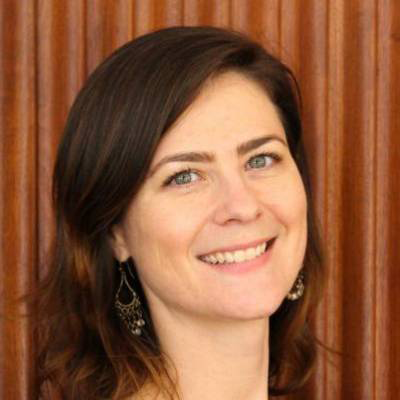
Jeanne Garbarino, Ph.D.
Executive Director
RockEDU Science Outreach
The Rockefeller University