The Vosshall Lab has been carrying out high-risk, high-reward research since 2000. PhD students and postdoctoral fellows carry out their own highly original projects.
Glia as Regulators of Mosquito Behavior – Jessie Mohsen, PhD
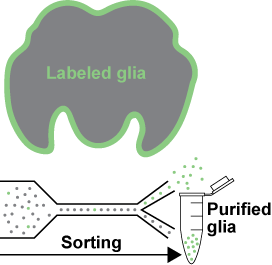
Female Aedes aegypti mosquitoes stop seeking human hosts for several days after a blood meal. This behavioral switch is essential to their reproductive cycle and to disease transmission, but the mechanisms behind this suppression remain poorly understood. Glia, not neurons, undergo the largest changes in gene expression in the mosquito brain after a blood meal, suggesting that these long-overlooked support cells may actively shape behavior rather than simply maintain the nervous system. I am developing the first glia-specific genetic tools in Aedes aegypti to identify the molecules glia secrete after a blood meal and determine how they influence host-seeking circuitry. During my postdoctoral training I will investigate the active role of glia as regulators of mosquito neurobiology, revealing a new class of signals relevant to mosquito behavior.
Regulation of mosquito host-seeking behavior by visceral tissues – Nadav Shai PhD
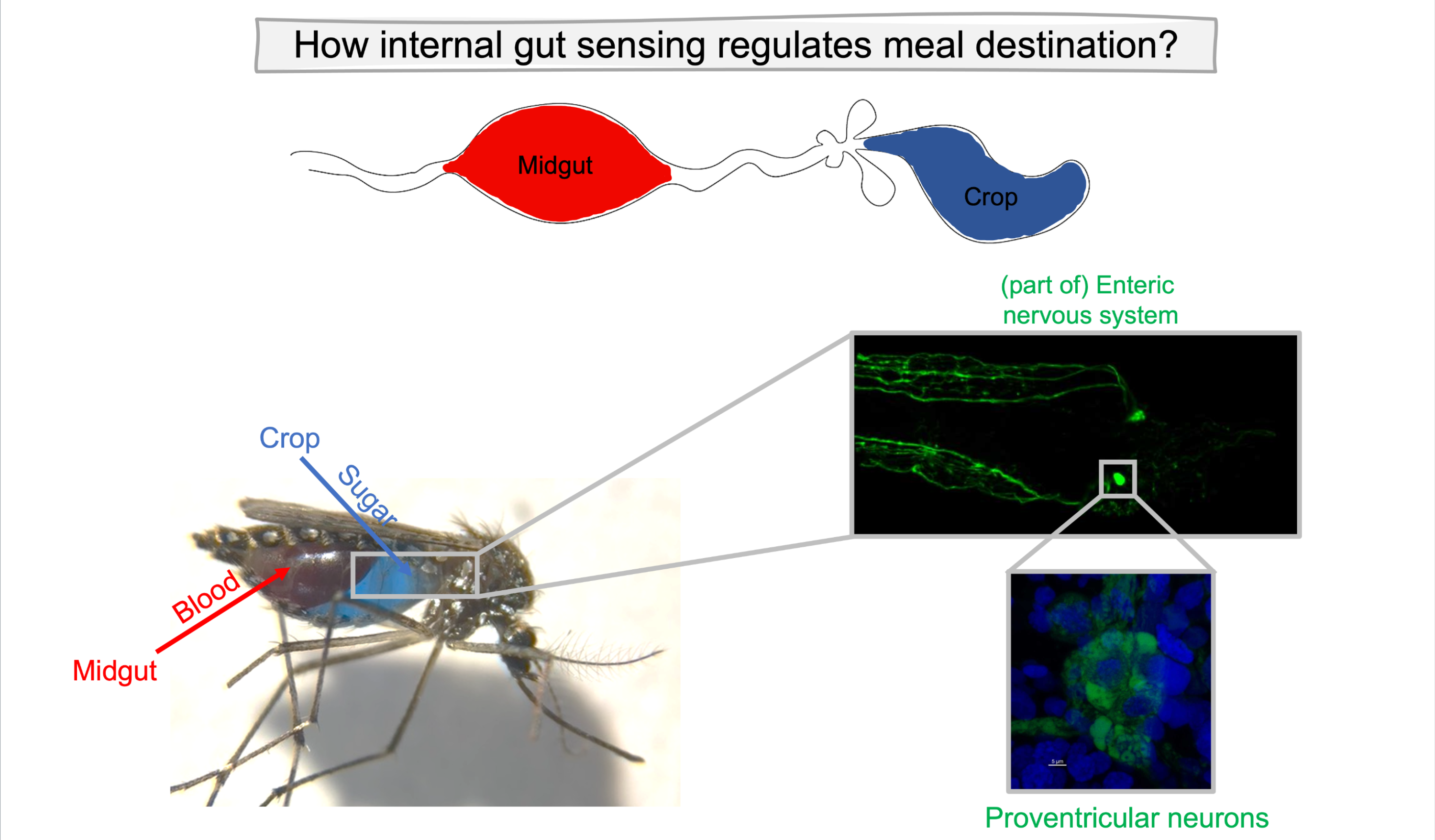
Aedes aegypti mosquitoes use two distinct feeding programs. While females require a blood meal for egg production, both female and male mosquitoes feed primarily on sugar-rich plant nectar. To procure the necessary nutrients from these distinct food sources, females employ two behaviorally and anatomically distinct feeding programs: blood-feeding and nectar-feeding. Ingested blood is directed to the midgut (the equivalent of the small intestine) for digestion while nectar is initially routed to the crop for storage. The mechanisms by which these parallel feeding pathways sense the meal and direct it to a specific ingestive organ are unknown. Using a combination of tissue-specific expression patterns, Microscopy, and genomics I am searching for the chemosensory receptors in the enteric nervous system that detect and differentiate sugar and blood meals. This approach can reveal principles of internal organs chemosensation and how gut-brain communication regulates mosquito biology.
Mosquito aging – Yoonji Kim, PhD
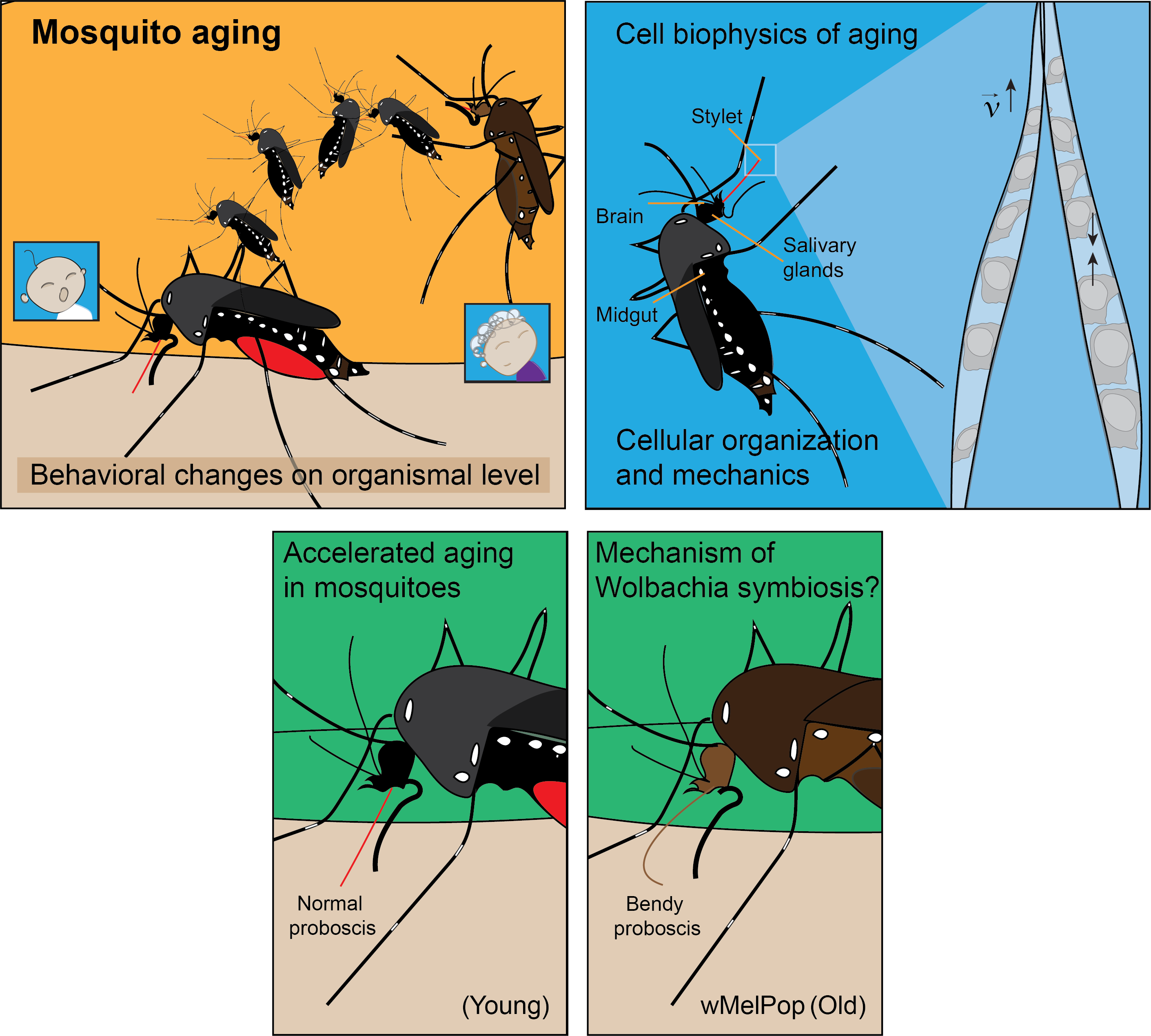
Mosquito aging is the most critical factor in viral transmission and yet has received essentially no attention in the field. Even though mosquito age is singularly the key determinant for vector competence in spreading virus and disease, we lack the tools and knowledge to define aging in this dangerous insect. While the overarching goal of contemporary aging research is to understand mechanisms of aging to increase lifespan and longevity, my research project will do the opposite and speed up aging in mosquitoes to reduce disease transmission. My postdoc work will start a new field of mosquito aging, connecting organismal behavioral phenotypes to cellular organization and quantitative dynamics in key organs of the female mosquitoes important for blood feeding and disease transmission. Revealing the driving forces and molecular mechanisms of (accelerated) aging in mosquitoes will not only open new solutions in combating viral transmission but will also add another dimension to our understanding of biological aging, a widely known and universal process found in all of nature.
Novel functions of chemosensory genes in mosquito reproduction – Lauren (Lola) Neal
Mosquitoes are extremely efficient reproducers, with individual females able to produce over 100 eggs from a single blood meal and the ability to undergo multiple reproductive cycles in their lives. Limited information is available about the mechanisms underlying the female’s ability to take multiple blood meals and generate multiple batches of eggs, thus my research project has examined novel factors involved in this process. Surprisingly, through exploring published RNA-sequencing data sets, I found prominent expressions of the Ionotropic Receptor (IR) gene family in the ovaries across reproduction, with unique expression patterns corresponding with important reproductive milestones. Through behavioral experiments in Ir8a mutants, immunofluorescent staining, and RNA Fluorescent in situ Hybridization, we are establishing a novel and unexpected role of one of these chemosensory receptors in the regulation and maintenance of a female mosquito’s reproductive cycle. This project explores conserved and A. aegypti-specific mechanisms underlying germline maintenance and the production of viable eggs, which is vital to our overall understanding on mosquito fertility.
Molecular mechanisms of ecdysone transport during mosquito reproduction – Kenzie Yedlin
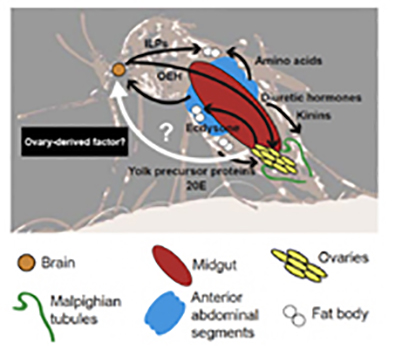
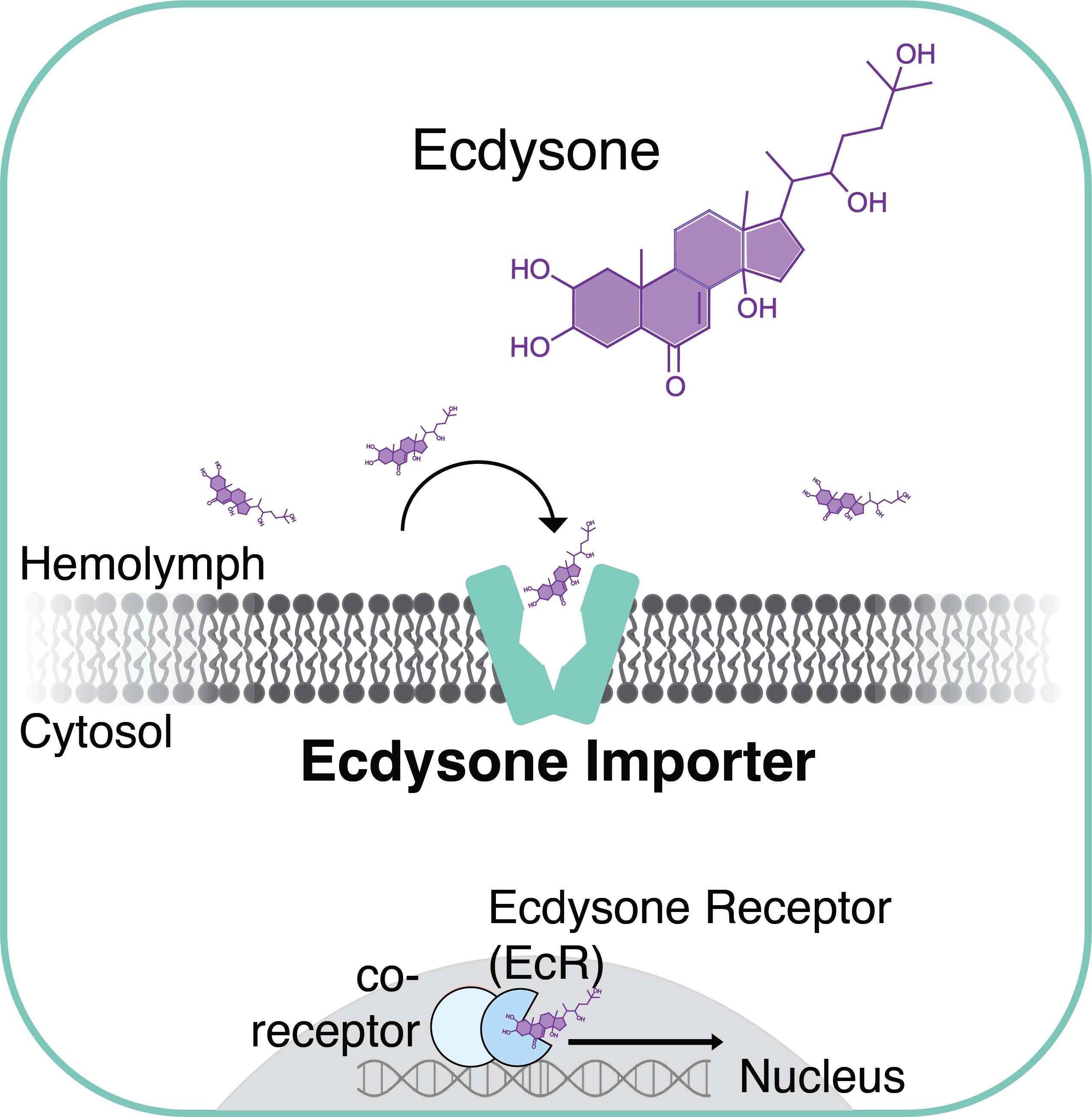
Ecdysone is a steroid hormone derived from cholesterol that is an essential regulator of arthropod development and a coordinator of insect reproductive cycles. Female Aedes aegypti, a mosquito species responsible for transmitting deadly viruses to humans, rely on ingesting vertebrate blood to initiate egg production. Triggered by this blood meal, ecdysone directs the physiology of egg development through transcriptional activation of many genes. Contrary to previous hypotheses that ecdysone passively diffuses across the cell membrane, recent work has shown that this steroid hormone requires active transport mediated by ecdysone importers in the organic anion transporting polypeptide (OATP) family. Though these proteins are present in species ranging from mosquitoes to humans and are drug targets for many approved medications, little is known experimentally about their mode of transport or structural features. This project aims to elucidate the molecular logic of ecdysone import by a divergent ecdysone importer during Ae. aegypti reproduction, using structural biology complemented by biochemical, pharmacological, and behavioral approaches.
Behavioral and Neural Basis of Repellency in Female Aedes aegypti Mosquitoes – Jacopo Razzauti
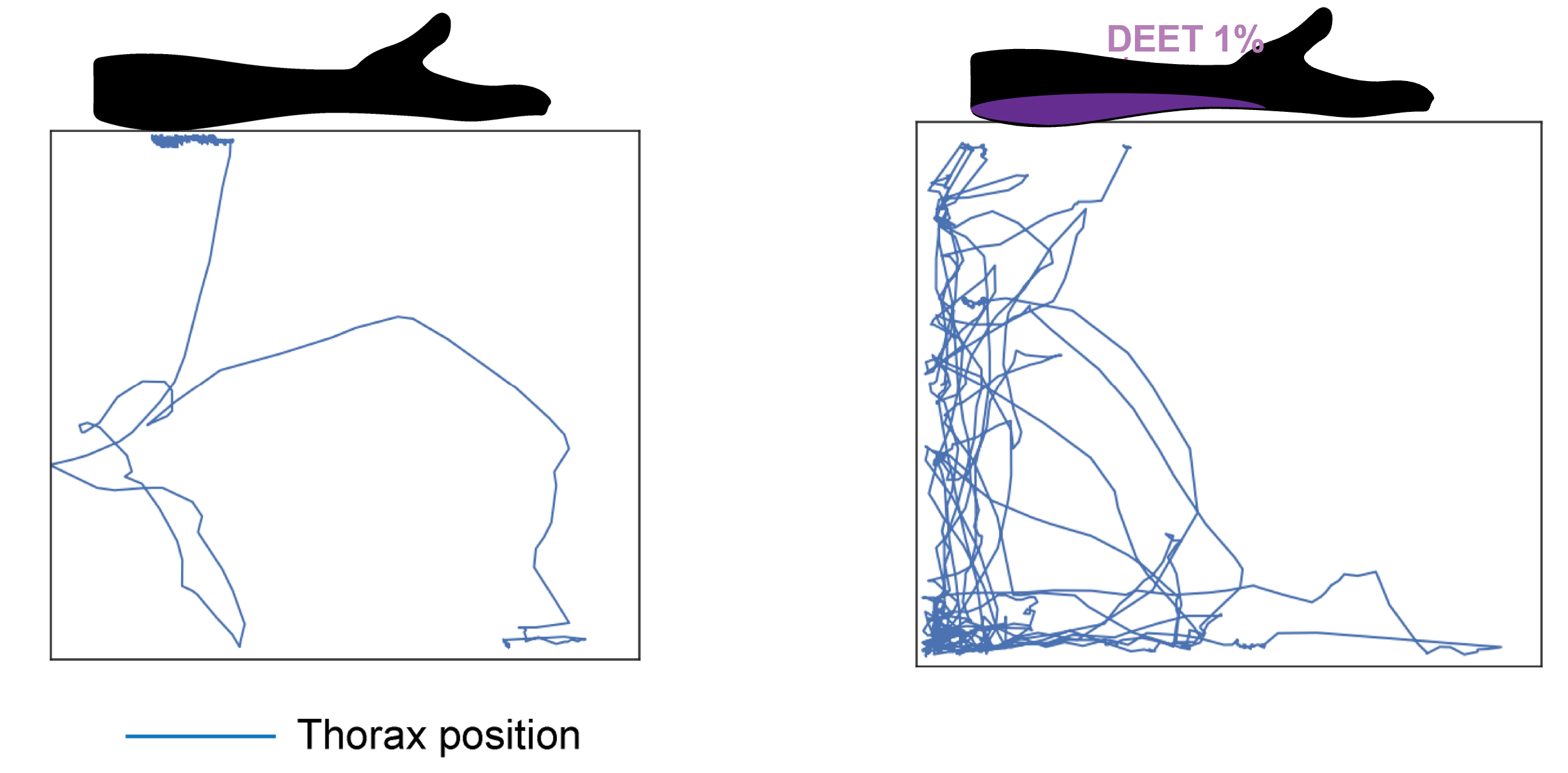
Tracked trajectories of a mosquito exposed to human cues (on the left) and human cues plus DEET (on the right).
Female Aedes aegypti mosquitoes employ robust, seemingly “unbreakable” host-seeking behavior to detect and bite humans. Insect repellents containing the active ingredients DEET and picaridin effectively break this strong attraction and prevent bites, but their mechanism of action remains unclear. Although various hypotheses exist to explain how repellents work, the inability to disentangle their multimodal effects hinders our understanding of the underlying sensory mechanisms. Overcoming these obstacles, my project aims to reveal the behavioral and neurocomputational logic underlying repellency in Ae. aegypti. I combine supervised tracking and pose estimation to determine possible interactive effects between attractive human cues and repellents. In particular, I am interested in how DEET and picaridin disrupt the chaining of actions characterizing host-seeking behavioral sequences. I am also performing calcium imaging in the central and peripheral nervous system to determine neuronal responses to these repellents.
Completed Projects (2000 - Present)
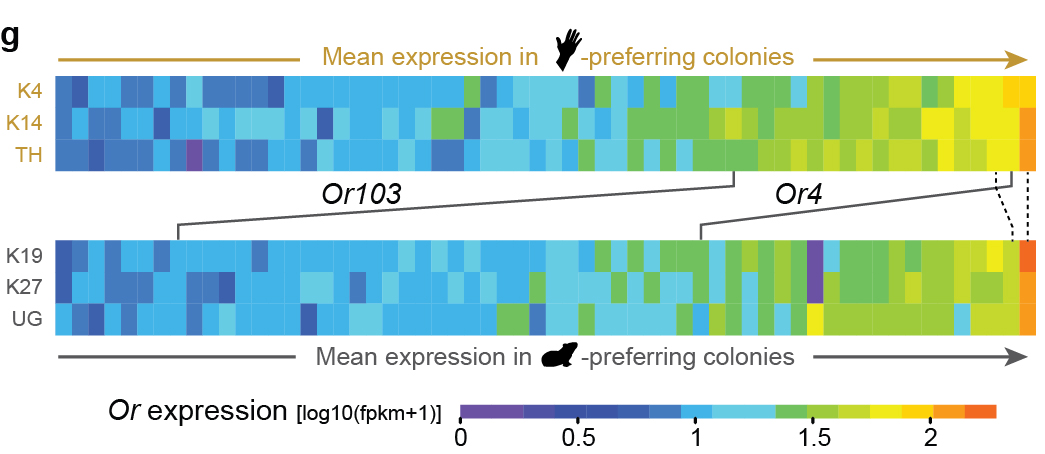
McBride et al. (2014) PMID: 25391959
The Vosshall Lab has been carrying out high-risk, high-reward research since 2000. To read about some of our completed projects, click HERE.
Contact Us
Laboratory of Neurogenetics and Behavior
HHMI – The Rockefeller University
1230 York Avenue
Box 63
New York, NY 10065