For decades, Rockefeller’s Chemers Neustein SURF program has prepared college students for grad school and beyond
 COPY LINK
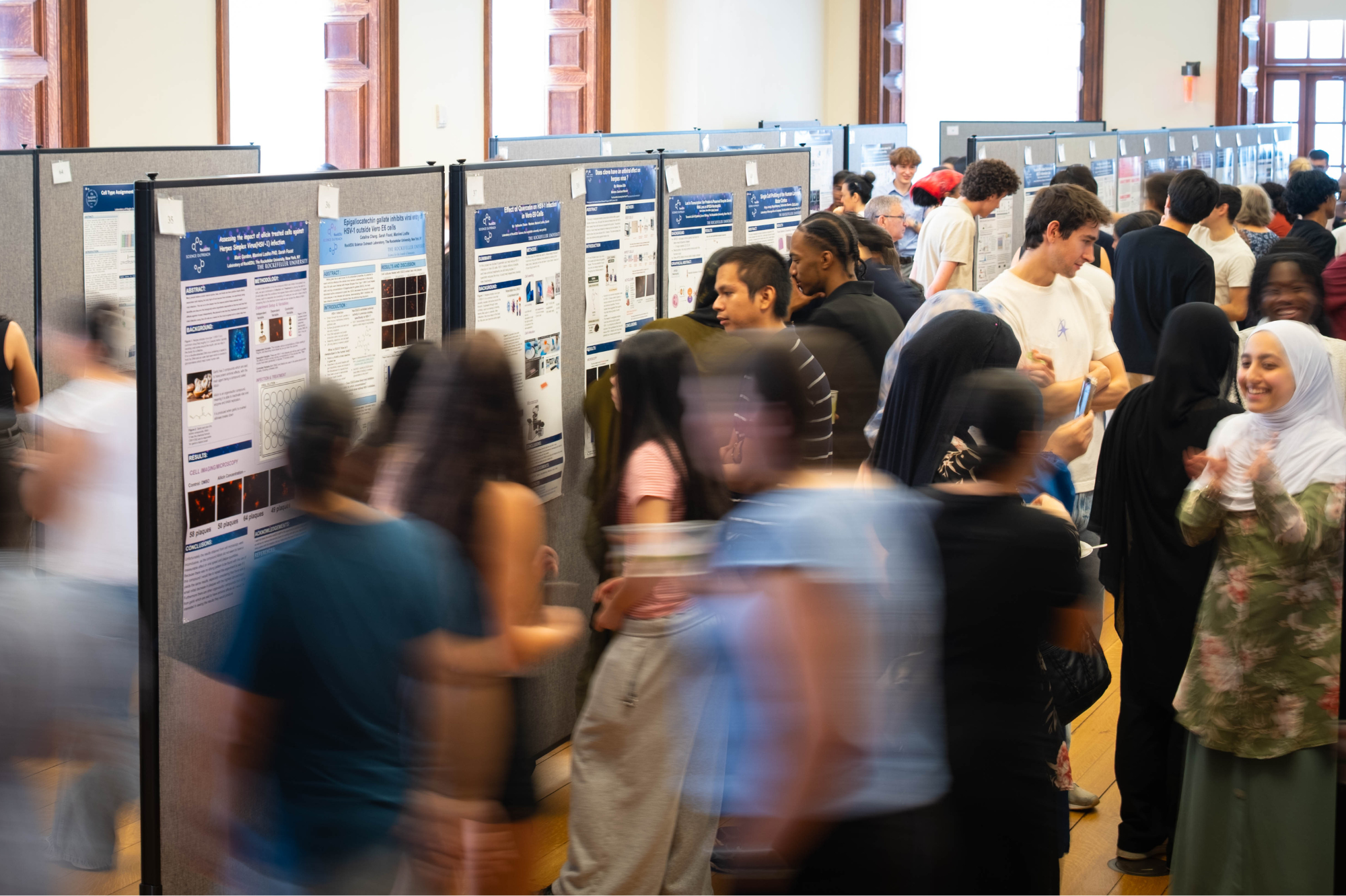
The annual poster session featuring work from Chemers Neustein SURF participants, alongside students from Rockefeller’s Summer Science Research Program, always draws a vibrant crowd. (Credit: Lori Chertoff)
In 1955, the Rockefeller Institute became the Rockefeller University. Since then, only graduate students have received degrees—yet hundreds of undergrads have also studied here. Rather than Ph.Ds, however, these students have received exceptional research training that helps prepare them for a life in science.
In 1984, the Dean’s Office launched what is now the Chemers Neustein Summer Undergraduate Research Fellowship (SURF) program. Each year, the 10-week program gives 25 rising college juniors and seniors firsthand experience in what it’s like to be a grad student doing intensive bench science under the mentorship of senior researchers. Since then, SURF has had hundreds of participants, most of whom have gone on to pursue graduate studies in STEM.
“For some SURF students, this is the first opportunity they’ve had to delve into biomedical research full time and see if it’s a good fit for them,” says Emily Harms, Rockefeller’s senior associate dean for graduate studies and director of the program since 2004. “It also gives them the uniquely Rockefeller experience, where they have all the benefits of a small, focused institution with a lot of personal support but also the excitement and energy of New York City.”
Selecting a cohort
In the earlier years, SURF hosted about 15 students every summer. The program got a boost in 2020, when Rockefeller trustee Robin Chemers Neustein endowed it, ensuring its ongoing sustainability.
It has remained enormously popular: This year, more than 1,300 students from around the world vied for 25 seats, which come with free housing and a $6,500 stipend. The annual deadline is February 1, and applicants are notified of a decision in mid-March.
That six-week period is crunch time for Harms and Andrea Morris, assistant dean and director of career and professional development, who, with support from SURF coordinator Kevin German, review every application to move a few hundred forward to the final round. Along with Harms and Morris, a committee of six to eight grad students and postdocs familiar with the program then chooses the 25 program participants.
“We look for undergrads who are excited about research, and also those who might not have the opportunities at their home institutions that we have at Rockefeller,” Harms says.
Once the cohort has been selected, Harms reaches out to lab heads to make placements. Many labs host SURF students every year.
“It’s part of their lab culture to mentor trainees, and we’re tremendously grateful to them,” Harms says. “I think many of us who have been trained in science had a mentor who had a significant influence on the direction we decided to take in our career.” Harms was herself a postdoc in Michael Young’s lab when she took up the SURF directorship. “There are a lot of people who want to pay it forward.”
Emphasis on mentorship
While students have two group meetings each week featuring science lectures, professional development workshops, and journal clubs, the majority of their time is spent at the bench, after being matched with a lab based on their own research interests.
This experience of conducting research in a professional setting exposes them to advanced techniques and methods—skills that add significant polish to graduate school applications.
They’re also paired with a mentor who works with them one-on-one through the summer. “There’s a lot of hands-on guidance at the beginning, but students become more independent over time,” Harms says. “It’s a significant commitment for the mentors, so we appreciate the community support. The program wouldn’t run without it.”
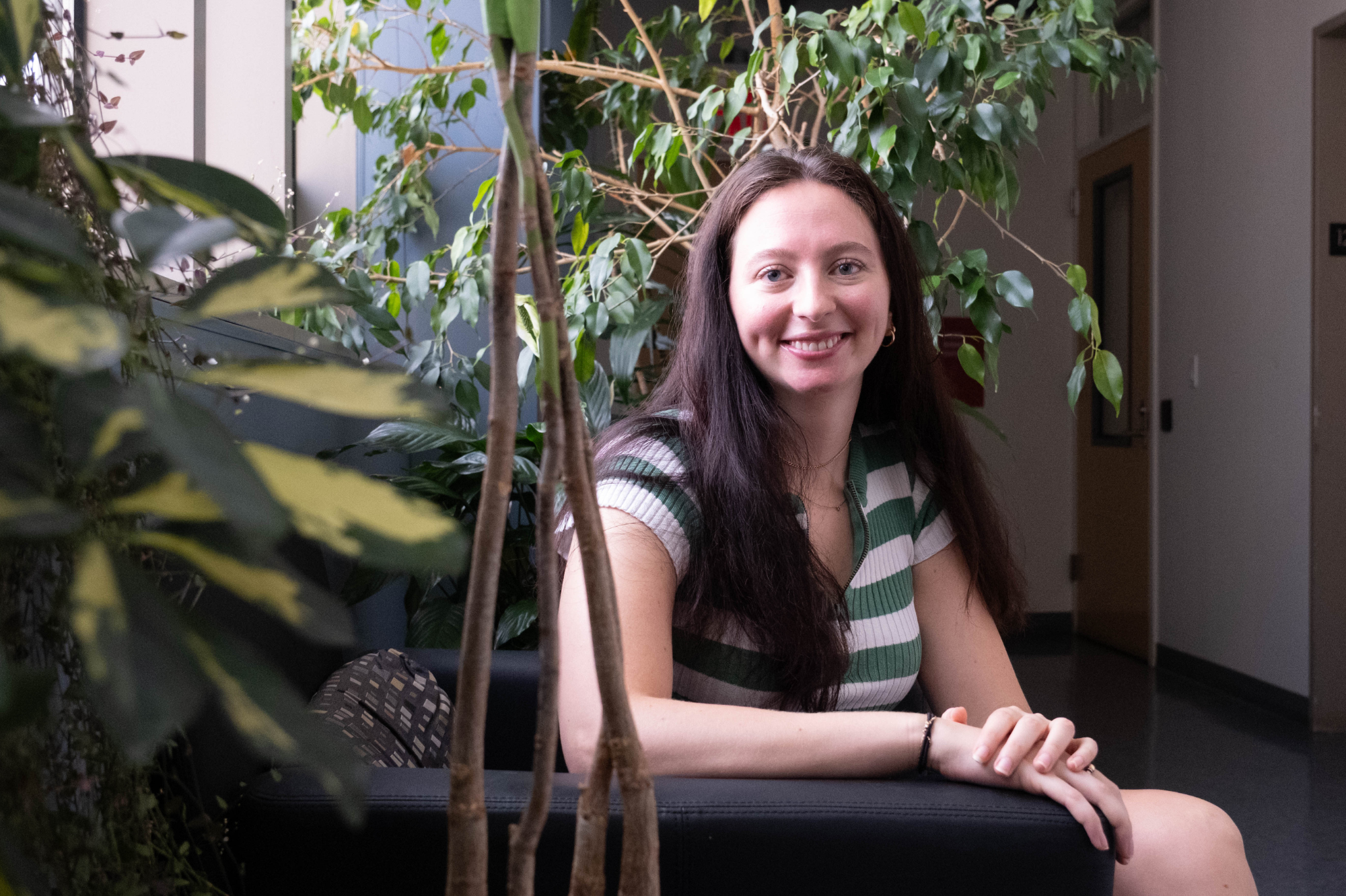
“It’s incredibly rewarding to watch SURF participants grow into scientists,” says mentor Kate Miller, a postdoc in the Smogorzewska lab, where she researches how the machinery that copies DNA overcomes obstacles during DNA replication. “In addition to benchwork, I help them learn how to be a good lab citizen, keep a detailed lab notebook, and make a presentation at the end of the term, which helps them practice clear science communication.”
Miller is herself a SURF alum. In 2013, just before her senior year at the University of Rochester, she spent the summer in the Marraffini lab, where she investigated the interaction among Cas proteins. “It was thrilling to be working in a CRISPR-Cas bacteriology lab during the start of the CRISPR craze,” says Miller, who went on to get her Ph.D at Harvard. “I took away from that experience the excitement of discovery. It was also incredibly fun to be in NYC for a summer and to meet a new set of friends through my cohort.”
In the same cohort was Raquel Aragón, now an assistant professor of biology at Bard High School Early College Brooklyn. At the time a rising senior at Mount Holyoke, Aragón was matched to the Hatten lab. “Within my first week, I learned that Dr. Hatten was the first woman to become a full professor at Rockefeller, which was incredibly inspiring,” she says. “And the lab was a very welcoming environment where everyone helped each other.”
She researched granule cell migration with staff scientist Eve Govek. “Eve was a very patient mentor who taught me the basics of immunostaining and microscopy for the first time,” she says.
After a two-year stint as a research assistant in the Gilbert lab, Aragón attended graduate school at UCLA, where she received her Ph.D in molecular biology.
Forging bonds
SURF students have a uniquely NYC housing experience: They live atop the 92nd Street Y. While famed for its cultural programming, the Y also offers short-term single rooms for students and interns. An easy commute from campus, its amenities include a communal kitchen, common rooms, and a free health club membership.
“It’s great in that it allows all the SURF students to live together in the same residence, which we don’t have the capacity for on campus,” Harms says.
While living and working together, many participants forge lasting bonds; they often stay in contact with their fellow students as well as with members of the Rockefeller research community long after the program is over. And Harms knows of at least three marriages that resulted from SURF meet-cutes.
One of those is Aragón’s. She met her now-husband Ricardo Azevedo, then a Rutgers student, on the very first day of the program in 2013. Fast forward through years of geographically coordinated higher education pursuits—while Aragón was at UCLA, Azevedo was getting his M.D.-Ph.D nearby at UC Irvine—to 2025, when the two got married. Now, while Aragón teaches in Brooklyn, Azevedo is an interventional radiology resident at NYU.
“I’m so grateful that I sat across from him that day,” she says. “I found my best friend and greatest supporter.”
Lasting impact
The program culminates in a poster session, held on August 6 this year, where students present their research. (High school students in RockEDU’s Summer Science Research Program also showcase their work at the same time.) Recent subjects include breast cancer cell state transition responses, the social whistles of bottlenose dolphins, mitochondrial stress pathways, novel aging signatures in the mouse brain, and leptin sensitivity restoration.
Since SURF’s inception, approximately 700 students have completed the program, and 63 have done their Ph.D work at Rockefeller since 2001. Three SURF alumni have received the prestigious Harold Weintraub Graduate Student Award for the thesis work they conducted at Rockefeller.
“Many participants, especially from the earlier years, are now in senior positions, and some are faculty who encourage their own students to apply to SURF,” Harms says. “We now get recommendation letters from researchers who were once undergrads with us. It’s gratifying to see the process come full circle.”