Deep Brain Stimulation and Brain-Machine Interfaces
A Neuroscientist and a Neurosurgeon Chart a Path Forward
6:30 – 7:30 PM
Reception to follow
The Rockefeller University
1230 York Avenue at East 66th Street
New York, NY 10065
SPEAKERS
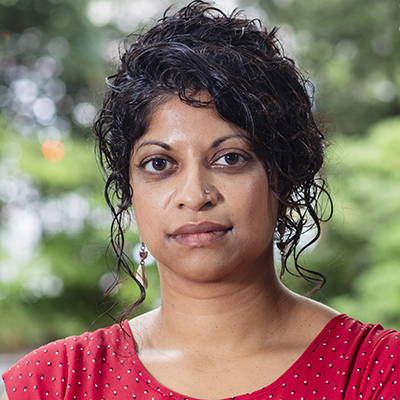
Priya Rajasethupathy, M.D., Ph.D.
Jonathan M. Nelson Family Associate Professor
Skoler Horbach Family Laboratory of Neural Dynamics and Cognition
Head, Fisher Center Targeted Therapies Initiative
for Memory Loss in Alzheimer’s Disease
The Rockefeller University
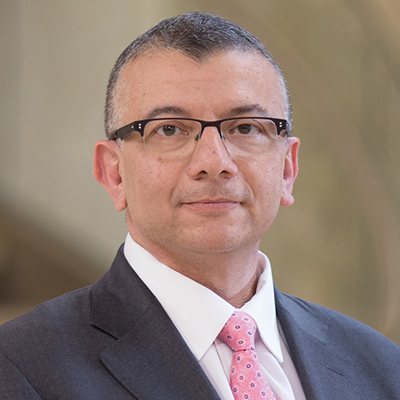
Emad Eskandar, M.D., M.B.A.
David B. Keidan Professor and Chair
Department of Neurological Surgery
Albert Einstein College of Medicine
Montefiore Medical Center
HOST
Richard P. Lifton, M.D., Ph.D.
President and Carson Family Professor
Laboratory of Human Genetics and Genomics
The Rockefeller University
Dr. Priya Rajasethupathy, a Rockefeller University neuroscientist who studies the biology underlying memory, has begun an important partnership with Dr. Emad Eskandar, a neurosurgeon at Albert Einstein College of Medicine and Montefiore Medical Center who helps patients with a range of neurological conditions, including traumatic brain injury, Parkinson’s disease, and memory disorders. Together, they are developing advanced neurotechnologies with the shared goal of translating emerging biological insights into therapeutic options for patients.
Dr. Eskandar, a leader in the development and application of Deep Brain Stimulation (DBS), can record human brain activity with extraordinary precision during neurosurgical procedures, providing extensive real-time data that reflect human brain functions and show how these functions can be compromised. Dr. Rajasethupathy, who studies mice, develops brain imaging technologies that visualize how memories form, reorganize, and stabilize across the brain over time. Her work has revealed new memory centers in the brain that may be attractive targets for cognitive recovery. Thus, one of the shared goals of the Rajasethupathy and Eskandar research groups is to identify translatable, safe, and effective treatments for patients—with an eye toward responsive technologies that will stimulate brain circuits therapeutically only when needed. By determining where, when, and how to stimulate the brain, their mutually informative investigations aim to develop more precise DBS and brain-machine interface strategies to benefit individuals affected by cognitive and movement disorders, including memory deficits associated with age, injury, and disease.
Dr. Rajasethupathy earned her M.D. and Ph.D. degrees from Columbia University. After completing her postdoctoral studies at Stanford University, she joined Rockefeller’s faculty in 2017. Her numerous honors include a prestigious NIH Director’s New Innovator Award and a Presidential Early Career Award for Scientists and Engineers. She is also the recipient of a Vallee Scholar Award and an inaugural MIND Prize from the Pershing Square Foundation.
Dr. Eskandar earned his M.D. at the University of Southern California, Los Angeles, and his M.B.A. at the Sloan School of Management at the Massachusetts Institute of Technology. He completed neurological surgery training at the Massachusetts General Hospital in Boston and a neurophysiology fellowship at Harvard Medical School before joining the faculty at MGH/HMS. He served as the Charles Anthony Pappas Endowed Chair of Neurosurgery and Neuroscience at Harvard Medical School before joining Einstein Montefiore Medical Center in New York.