From Analytical Need to New Tool: How a Protein Cross-Linking Challenge Led to Innovation
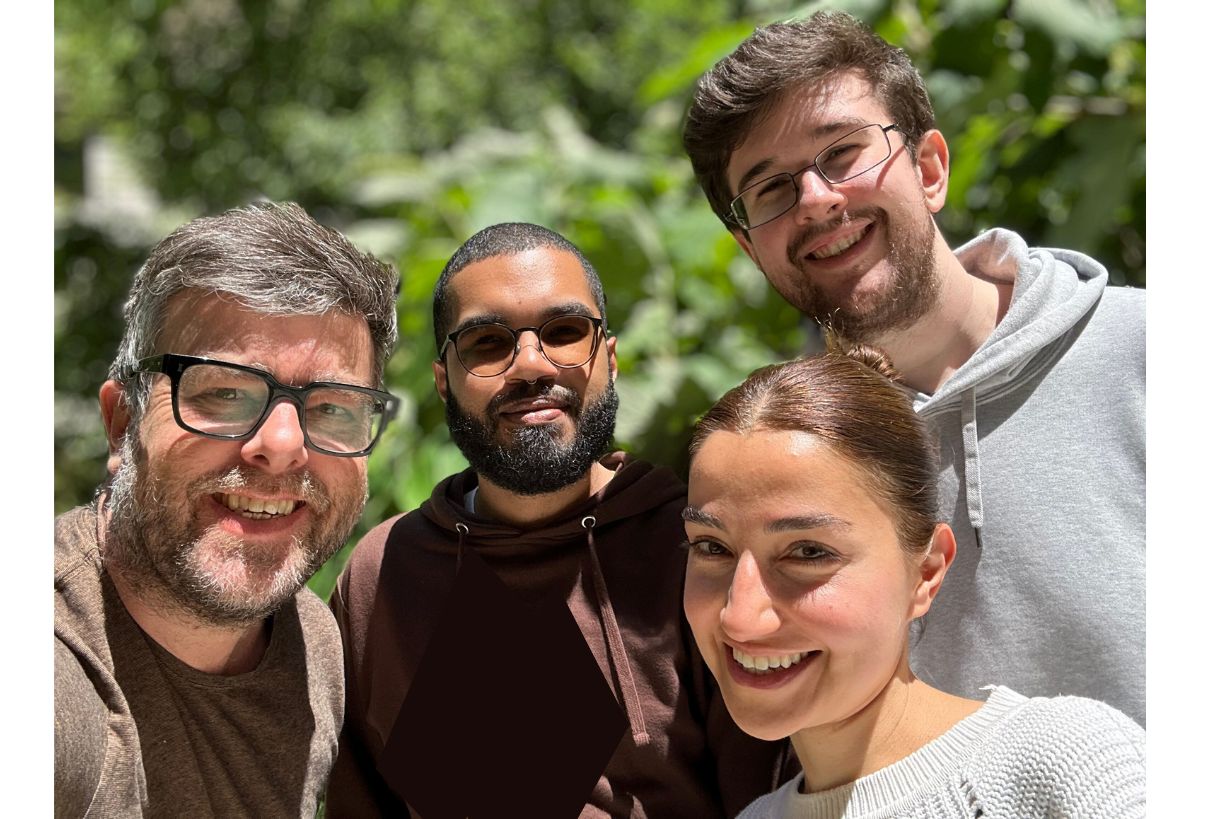
The Proteomics Resource Center team
At the Proteomics Resource Center at The Rockefeller University, led by Henrik Molina, PhD, along with Michael Isay-Del Viscio, Ece Kilic, and Christopher Peralta, collaborative problem-solving is central to the team’s work. In this case, a user’s research question became a shared opportunity for innovation.
Scientific progress often starts with a specific question—and in this case, a request to analyze cysteine cross-links in a protein – an important part of structural biology. The problem was complex, and in solving it, we ended up not just addressing the question but also implementing a powerful tool that can be applied to other projects across our Center.
The Challenge: Cross-Link Analysis of a Protein
The journey began when a user requested a detailed di-sulfur bridge analysis of a protein. While we initially considered using several standard enzymatic digestion approaches, we quickly realized their limitations: the enzymes didn’t adequately cover all cysteines in the protein. This limitation posed a significant barrier to a complete analysis.
Revisiting an Old Approach with New Technology
At this point, Soren Heissel (previous PRC team member) recalled a method he had used in the past: acid hydrolysis for amino acid analysis. Inspired, he began researching whether acid hydrolysis could be adapted for this type of proteomics application. He came across a series of publications describing the use of microwave-assisted acid hydrolysis (MAAH) to break down proteins efficiently – offering a promising path forward.
However, this method came with challenges of its own. Acid hydrolysis creates a very large search space for peptide identification, because it is without the constraints of known cleavage motifs typical of most enzymatic digestions. Also, the generated peptides needed to be of a certain length to not escape detection.
Collaboration and Customization
Recognizing the need for optimized analysis software, we reached out to Richard Scheltema (University of Liverpool), who had previously developed the cross-linking tool integrated into a vendors analysis software platform—the same platform we use. His insights and our generated data were instrumental in adapting the software to handle the unconventional peptides generated by acid hydrolysis.
Simultaneously, we optimized the hydrolysis conditions. The goal was to generate peptide lengths that fell within an ideal analytical window. Soren also found a significant benefit of the acid-based approach: it minimized cysteine bridge scrambling, a common issue that can compromise cross-linking data integrity. This finding reinforced the superiority of MAAH for our purposes.
A New Standard
Today, Microwave-Assisted Acid Hydrolysis (MAAH) is not just a one-off solution—it’s become part of our broader proteomics toolkit. We’ve successfully applied it in several other contexts, such as isoform analysis, as demonstrated in this example: Isoform Identification Using Acid Hydrolysis and Mass Spectrometry.
Conclusion
What started as a single analytical need for one of our users evolved into the adoption of a new method, refinement of protocols, better software and culminated with a publication: PMID: 38574859 —all enabled by collaboration, creativity, and scientific rigor. MAAH now plays a central role in our Center’s analytical tool box, offering new possibilities for tackling unique analytical questions. This project is a good example of the spirit that thrives and drives the boutique analysis carried out at the Proteomics Resource Center at the Rockefeller University.
For more info about the Proteomics Resource Center, please visit the PRC webpage.
To read more news about the Scientific Resource Centers, visit https://www.rockefeller.edu/researchsupport/news-and-announcements.