Fail Fast, Learn Faster: How Fisher Drug Discovery Resource Center Helps Scientists Test Ideas Quickly
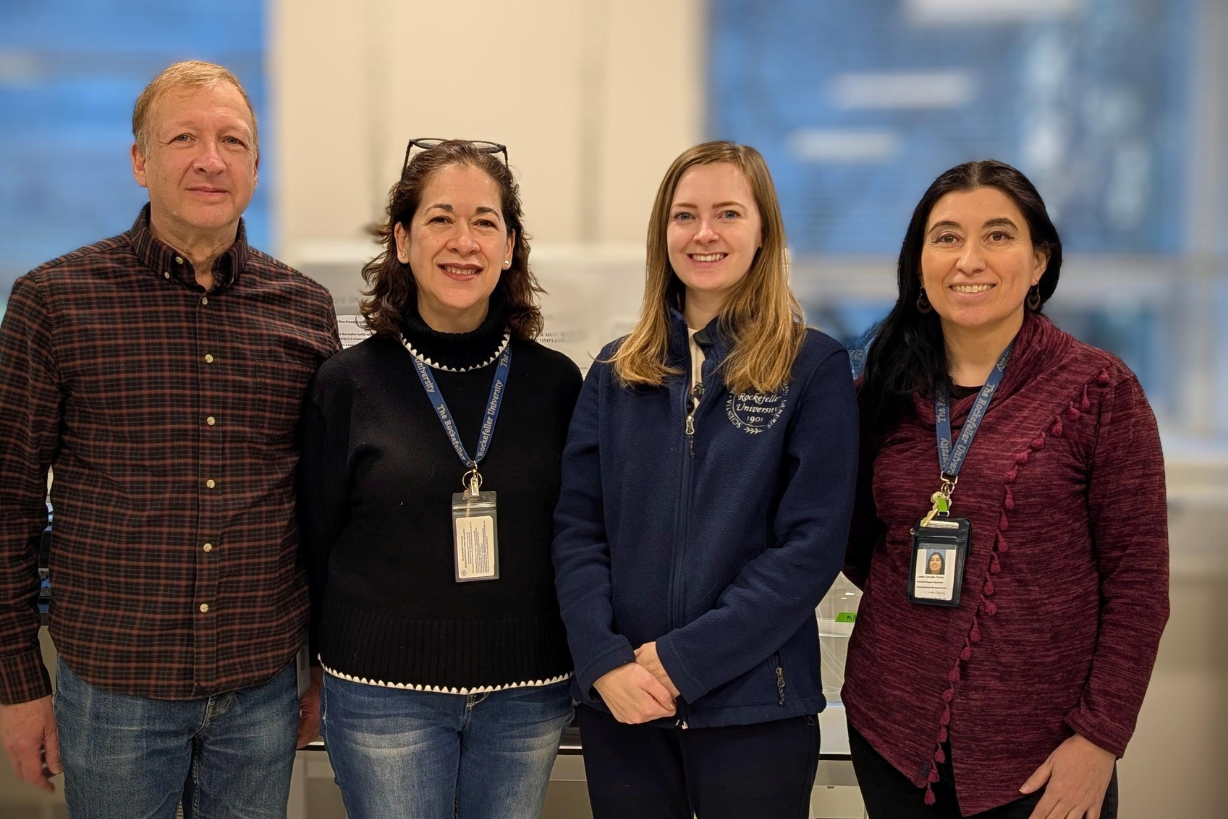
DDRC Team
Drug discovery often begins with a promising idea: a newly identified protein target, a chemical compound that appears active in early experiments, or a hypothesis about how a disease process might be disrupted. Yet many of these ideas encounter technical or biological obstacles long before they can lead to new therapies.
At Rockefeller University, Scientific Resource Centers help researchers uncover those obstacles early. By combining advanced instrumentation with deep technical expertise, these centers allow investigators to test critical assumptions quickly, often determining whether a strategy is viable before large amounts of time and resources are invested.
This early-stage evaluation is particularly important in drug discovery, where the path from scientific insight to a viable therapeutic strategy is long and uncertain. Sometimes the most important discovery is learning, early, that an idea will not work.
For Dr. Fraser Glickman, director of the Fisher Drug Discovery Resource Center (DDRC), this “fail fast” philosophy guides much of the center’s work. “Our goal is to help researchers design experiments that produce definitive answers and clear next steps,” Glickman says. “If we can identify technical or biological limitations early, investigators can redirect their efforts toward strategies that are more likely to succeed.”
The DDRC collaborates with more than 30 Rockefeller laboratories and provides hands-on training to dozens of graduate students, postdoctoral fellows, and visiting scientists each year. Many projects begin with compelling ideas: a newly identified protein target, for example, or a newly synthesized compound. But determining whether those ideas can realistically support a drug discovery effort often requires specialized technical expertise.
The center provides that expertise alongside modern screening infrastructure, including automated liquid-handling systems and a compound library containing more than 650,000 small molecules. Researchers can also access a range of biophysical techniques that help identify and characterize potential chemical starting points for new therapies.
One of the most common challenges in early drug discovery is developing reliable quantitative bioassays capable of measuring how potential drug candidates affect biological targets. These assays must be both highly reproducible and small enough to conserve expensive reagents before they can support large-scale compound screening.
Over the past 18 years, the DDRC has developed dozens of validated bioassays for a wide variety of biological targets. In some cases, the center has also helped laboratories significantly reduce costs by identifying reliable but more economical sources of assay reagents.
Researchers frequently encounter difficulties when attempting to reproduce findings reported in scientific literature. According to Glickman, the problem often comes down to two common issues: substandard reagents or incomplete descriptions of experimental methods.
To address these challenges, the DDRC evaluates whether proteins, nucleic acids, and cell lines behave as expected in drug discovery systems. Using well-characterized controls and calibration standards, the team can determine whether experimental materials meet the rigorous quality standards required for quantitative assays.
Proteins, for example, may appear pure when examined using standard techniques such as gel electrophoresis yet still be improperly folded, unstable in solution, or contaminated in ways that prevent reliable assay development. To detect these problems, the DDRC uses several biophysical methods, including label-free thermal melt analysis, dynamic light scattering, and circular dichroism to confirm that proteins are properly folded, stable, and suitable for quantitative measurements.
In other cases, problems originate with commercially supplied reagents. Synthetic fluorescently labeled nucleic acids purchased from manufacturers have occasionally failed to perform as expected. Detailed spectroscopic analysis using the center’s Synergy Neo instrument revealed that, in at least one instance, the supplier’s certificate of analysis was not appropriate for the experimental method being used.
To help researchers establish reliable systems quickly, the DDRC has developed a collection of validated calibration standards and positive controls for many of its core experimental techniques. These tools allow investigators to benchmark assay performance and confirm that experimental systems are functioning properly before launching large-scale discovery efforts.
Often, even a brief consultation with the DDRC team can save laboratories significant time and resources. Because the staff have encountered many experimental pitfalls before, they can help researchers avoid flawed protocols or reagents that fail to perform as expected.
Many “fail-fast” experiments can be completed in just hours or days. Sometimes the results confirm that a project is ready to move forward. In other cases, they reveal obstacles that might otherwise emerge much later in the discovery process.
Although negative results can be disappointing, they remain an essential part of scientific progress.
By bringing investigators and specialized resource centers together early in the research process, Rockefeller has created a collaborative model that helps accelerate discovery. Through a combination of technical expertise, advanced instrumentation, and rapid experimental workflows, the Fisher Drug Discovery Resource Center helps transform promising scientific ideas into meaningful advances in biomedical research.
By the Numbers – Fisher Drug Discovery Resource Center
- 30+ Rockefeller laboratories supported
- 650,000+ compounds in the screening library
- 18 years of assay development and screening expertise
- Dozens of validated quantitative bioassays developed
- Dozens of graduate students and postdocs trained annually
To read more about the Drug Discovery Resource Center, please visit the DDRC webpage.
To read more news about the Scientific Resource Centers, visit https://www.rockefeller.edu/researchsupport/news-and-announcements.