Accelerating genetic discovery at the Transgenic and Reproductive Technology Resource Center
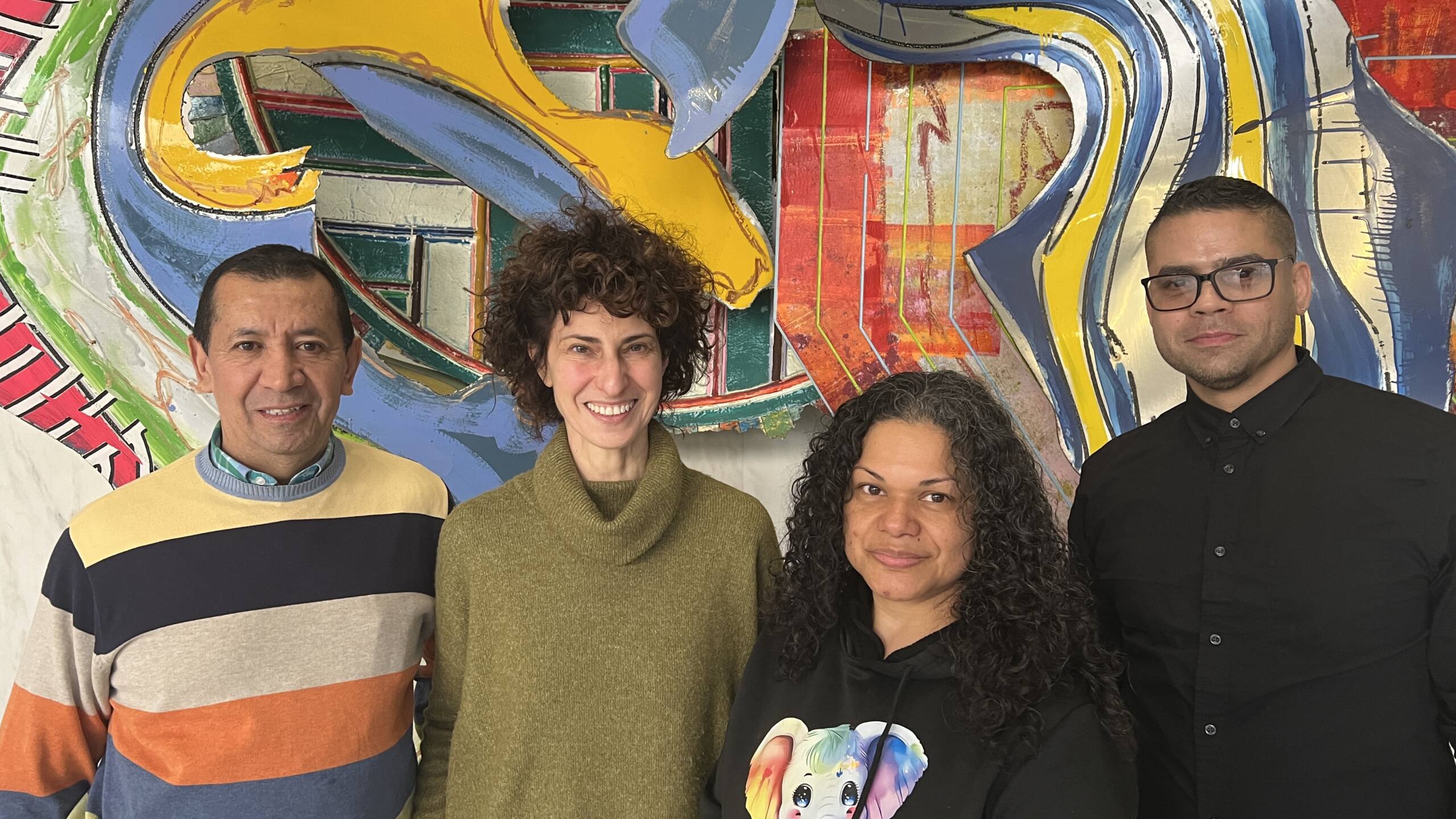
Transgenic and Reproductive Technology Resource Center team
Creating genetically modified mice has revolutionized biomedical research since the 1980s, offering scientists powerful tools to study disease and test new therapies. But even as molecular biology advanced with breakthroughs like CRISPR-Cas9, one thing hasn’t changed: the natural pace of reproduction. Turning a single engineered cell into a living, breathing animal still takes time.
At Rockefeller’s Transgenic and Reproductive Technology (TRT) Resource Center, scientists are finding innovative ways to work with nature’s limits, not against them. “We can’t speed up evolution,” says Rada Norinsky, Director of the TRT Resource Center, “but we can refine every step of the process so that investigators get the animal models they need faster and with the same level of precision.”
Turning a Bottleneck into an Advantage
Traditional breeding remains a rate-limiting step for complex genetic lines. Litters may be small or unpredictable, and establishing a desired strain can take a year or longer.
That constraint is precisely where the TRT Center intervened. The adoption and refinement of in vitro fertilization (IVF) for mice fundamentally changed that trajectory. What began as a solution to breeding constraints has become a core platform that underpins nearly every aspect of the Center’s work. Today, IVF is routinely used to generate fertilized embryos from existing genetically modified lines, enabling additional CRISPR/Cas9 edits and the rapid creation of new mouse models with multiple mutations.
Once the technique was robust and reproducible, Norinsky’s team began applying IVF in increasingly creative ways. They developed multi-step IVF, a sequential approach that allows embryos generated from one genetically modified line to be used immediately for further genome editing. This strategy accelerates the production of complex mouse models and enables researchers to move from one modification to the next without waiting for lengthy breeding cycles.
From Innovation to Impact
As IVF became central to the Center’s workflow, its power proved to be its versatility. Beyond accelerating breeding, it enables precise control over timing, genetics, and scale, allowing researchers to align experimental design with biological constraints rather than being limited by them. At scale, this approach allows the Center to deliver cohorts of animals matched for age, sex, and complex genotypes, level of experimental capability that would be extremely difficult to achieve through conventional breeding. With a carefully scheduled system of IVF cycles, genotyping, and weaning, the TRT team has cut project timelines by months compared to conventional breeding cycles, a critical gain for researchers working on tight deadlines.
Beyond model generation, IVF also plays a critical role in long-term colony management. The TRT Center uses it to generate embryos for cryopreservation, allowing researchers to archive valuable mouse lines quickly and reliably while reducing the costs of maintaining inactive colonies. The same approach is used to rederive incoming lines into Rockefeller’s specific pathogen-free environment, ensuring both experimental integrity and animal health.
For investigators working with time-sensitive or age-dependent models, that reliability can make a decisive difference in experimental design and feasibility.
“Being able to do experiments involving live animals is a privilege, but it also comes with great responsibility,” says Alexander Lercher, Ph.D, Research Associate in the Charles M. Rice Laboratory of Virology and Infectious Disease. “The services and input offered by the Transgenic and Reproductive Technology Center greatly help us design and perform experiments more efficiently, particularly when working with new transgenic mouse strains, colony expansion, and disease models that are inherently age-dependent.”
“As my projects repeatedly required creating and breeding new mouse strains, the accessibility and professionalism of the Transgenic and Reproductive Technology Center were pivotal in driving the work forward,” says Jun Hong, Ph.D, Research Associate in the laboratory of Dr. Michel Nussenzweig. “The progress we made over five years simply would not have been possible without their support.”
First celebrated by the late Dr. Paul Greengard’s laboratory and now used widely across the university, this innovation has become an invaluable tool for advancing discovery through close technical collaboration.
“We’ve worked with Rada and the Transgenic Resources team multiple times, and they consistently meet our needs with expertise, clear communication, and reliability,” says Jana Bilanovic, Graduate Fellow in the Gabriel Victora Laboratory of Lymphocyte Dynamics. “They don’t just help expand colonies, they accelerate projects. And they’re a real pleasure to work with.”
For Norinsky and her team, each technical advance is about more than efficiency; it is about supporting science responsibly. “Our goal is to ensure that research can move forward without unnecessary delays, while maintaining the highest standards of animal care and reproducibility,” Norinsky says. “When we see that a new approach helps scientists reach their goals faster, that’s the best outcome we can ask for.”
To learn more about the Transgenic and Reproductive Technology Resource Center, visit https://www.rockefeller.edu/transgenics/
To read more news about the Scientific Resource Centers, visit the Resource Center News page.