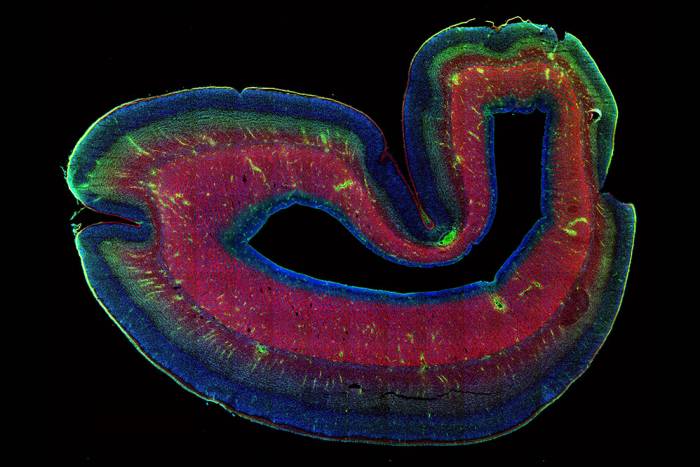
A new study shows that a group of neurons, previously thought to die in the course of development, in fact become incorporated into the brain’s cortex. This research has implications for understanding—and possibly treating—several brain disorders.
Since its first convocation, Rockefeller has granted doctor of philosophy degrees in bioscience to more than 1,260 students, including today’s graduates.
Scientists have found a new way to trawl blood samples for snippets of RNA released by tumors or diseased organs. The method might eventually help doctors diagnose and track a wide range of medical conditions.
Researchers have uncovered the genetic factors that make some people susceptible to Whipple's disease, an intestinal inflammatory disorder that causes diarrhea, pain, and weight loss.
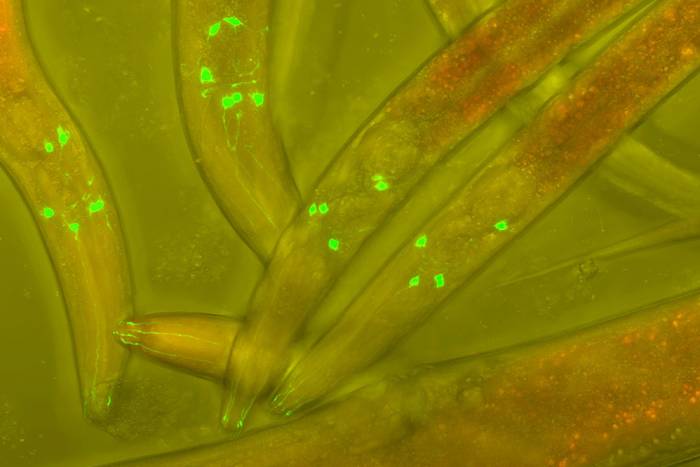
Detailed structural images reveal how an ion channel helps curtail a neuron’s firing. The work has relevance for diseases in which this molecule malfunctions.