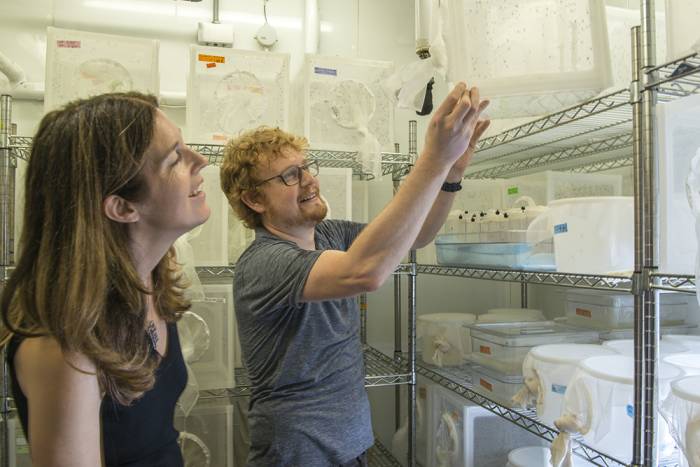
Researchers have assembled a new and improved DNA catalogue for the mosquito Aedes aegypti. This tool will help researchers understand the insect’s biology, and may lead to new strategies for preventing diseases like Zika and dengue.
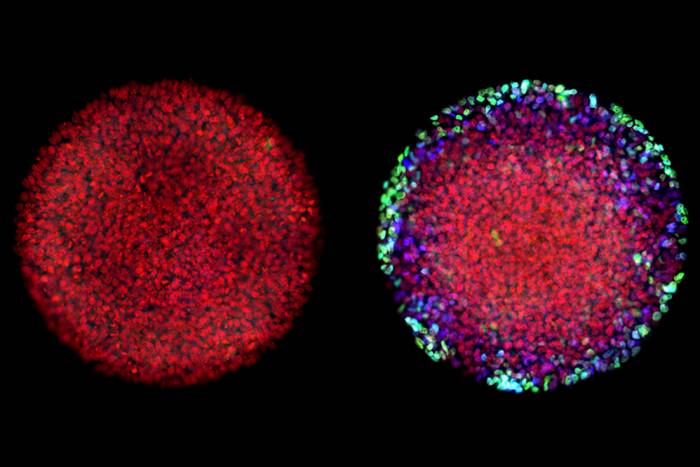
A new study shows that embryonic cells retain a memory of the chemical signals to which they are exposed. Without these memories, cells fail organize into distinct tissue types.
Analyzing soil samples from across the country, researchers have identified an antibiotic capable of treating strains of tuberculosis that do not respond to existing therapies.
Using a unique mouse model, Rockefeller scientists have developed a new strategy in cancer immunotherapy that is more safe and effective than other treatments of its kind.
As you encounter new experiences and form new memories, your brain changes. Now, researchers show that some of these change occur in a brain region devoted to visual perception.
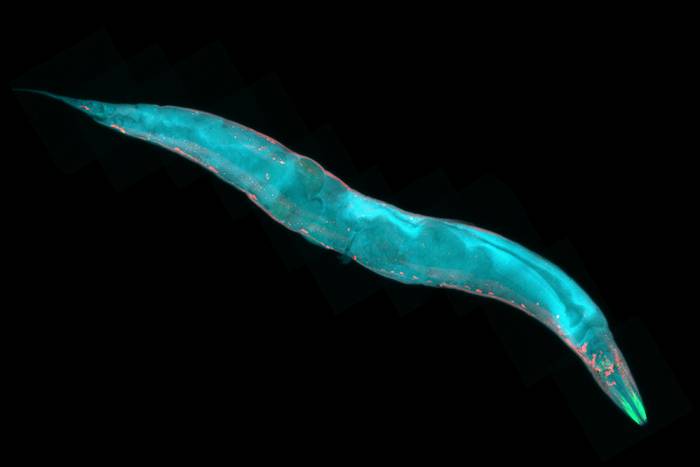
Studying neurons in C. elegans, researchers made a surprising discovery: these roundworms, like most animals, process information using a digital, electric code.
DEET, a chemical in bug sprays, affects the behavior of highly diverse organisms—but how it works remains unclear. New research in C. elegans shows that the compound exploits unique receptors and neurons to interfere with the animals’ response to odors.
Researchers have discovered that the protein ASTN2 shuttles receptors away from the surface of neurons, a process that facilitates efficient brain activity.