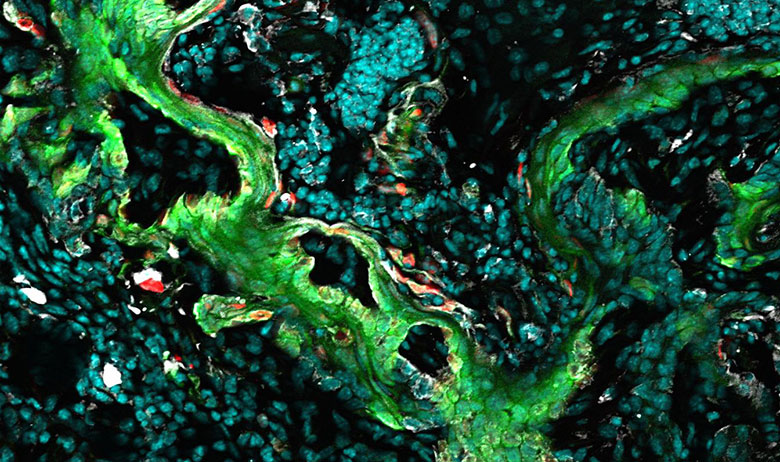
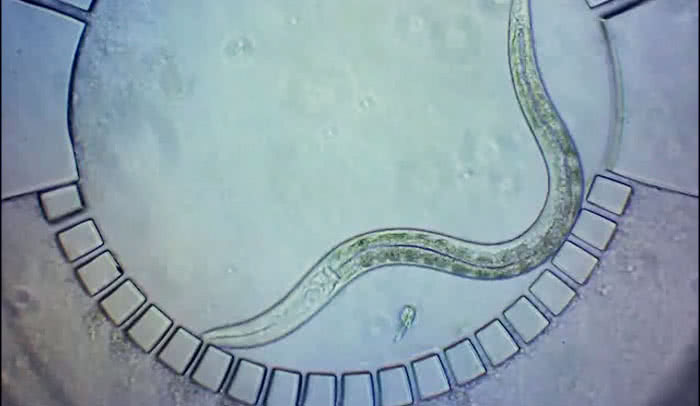
Two new technologies are helping scientists understand new aspects of organ and nervous system development in C. elegans. One allows them to image worms developing in a natural environment, while the other makes it possible to track single neurons as the worms grow.

New findings from Rockefeller University researchers could guide the development of potent combination therapies that deliver more effective and durable treatment of leukemia. In recent work published in Nature, they show it’s possible to deactivate cellular programs involved in tumor growth by d...

As much as we try to avoid it, ­we are constantly sharing germs with those around us. But even when two people have the same infection, the resulting illnesses can be dramatically different—mild for one person, severe or even life-threatening for the other. Now, new research from The Rockefell...

As he opened this year’s Talking Science lecture, geneticist Jean-Laurent Casanova made a stark observation to his teenage audience: “If we had been here 150 years ago, about half of you would already have died.” The primary reason, he told the 350 high school students and 60 teachers present,...

You can anticipate a color before you see it, based solely on the length of light waves. Music can be interpreted from notes on a page without being heard. Not so with odor.

 Scientists can rack up many awards, but to have one’s name cemented in scientific nomenclature is a special kind of honor. In an homage to his mentor Daniel Kronauer, former Rockefeller postdoctoral associate Christoph von Beeren has named a new species of beetle Nymphister kronaueri. ...

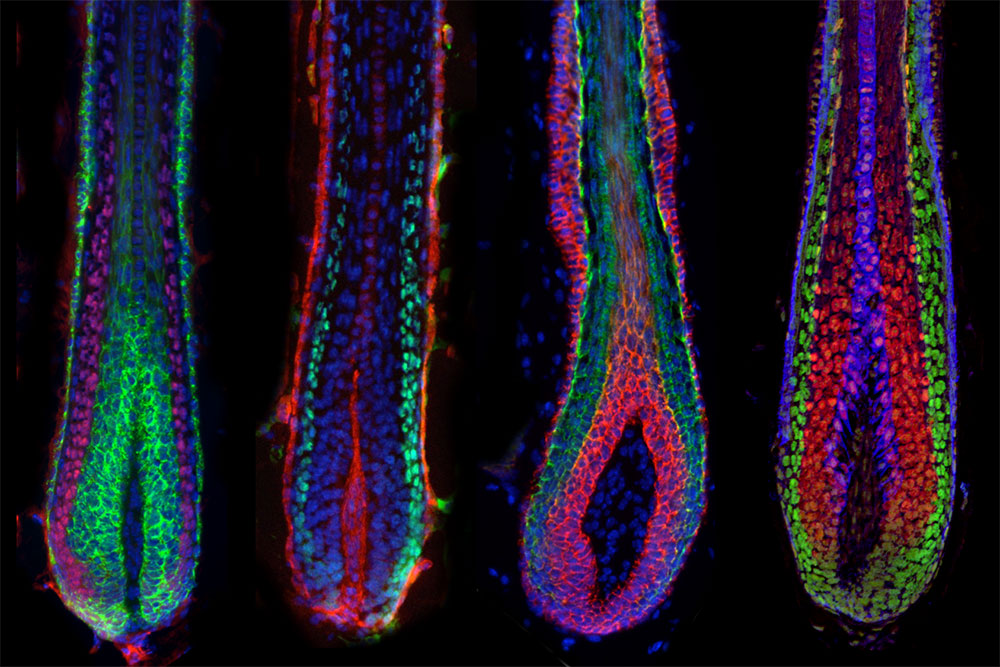
When most cells divide, they simply make more of themselves. But stem cells, which are responsible for repairing or making new tissue, have a choice: They can generate more stem cells or differentiate into skin cells, liver cells, or virtually any of the body’s specialized cell types. As r...

Each cell in the body follows a strict protocol for manufacturing the proteins it needs to function. When a cell turns cancerous, however, its protein production goes off script. A new study led by researchers at the Rockefeller University takes a close look at one way in which this procedure goe...

Elaine Fuchs, Rebecca C. Lancefield Professor and head of the Robin Chemers Neustein Laboratory of Mammalian Cell Biology and Development, has been honored with the 2017 McEwen Award for Innovation. The prize, given by the International Society for Stem Cell Research, recognizes groundbreaking wo...

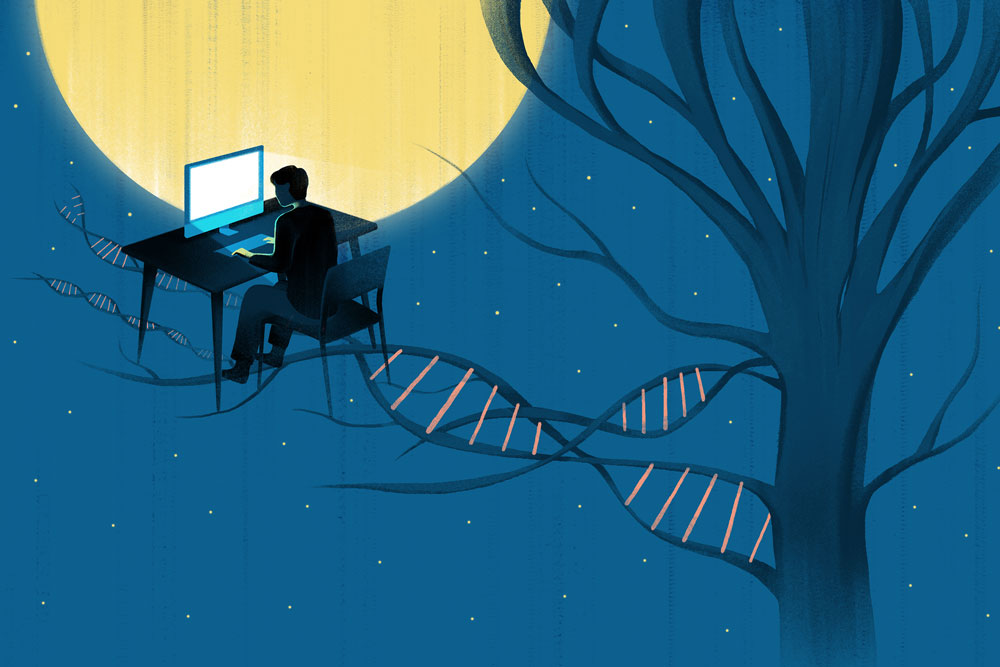
Some microbes can form memories—although, inconveniently for scientists who study the process, they don’t do it very often. Rockefeller University researchers and their colleagues at the University of California, Berkeley, have found a way to make bacteria encode memories much more frequently...