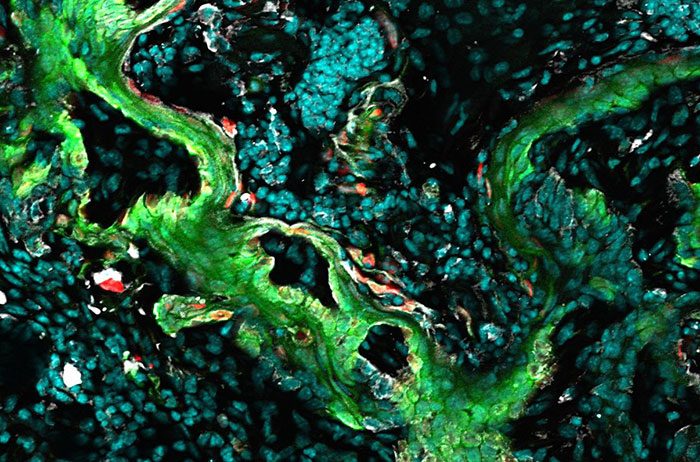
When most cells divide, they simply make more of themselves. But stem cells, which are responsible for repairing or making new tissue, have a choice: They can generate more stem cells or differentiate into skin cells, liver cells, or virtually any of the body’s specialized cell types. As r...

Howard C. Hang, Richard E. Salomon Family Associate Professor and head of the Laboratory of Chemical Biology and Microbial Pathogenesis, has won the 2017 Eli Lilly Award in Biological Chemistry. The prize, given by the American Chemical Society, recognizes outstanding research in biological chemi...

A new biologic agent—the most potent of its kind so far—is showing early promise as part of a potential new strategy for treating HIV. The drug, known as 10-1074, may also offer a new way to prevent viral infection in people who are at high risk to acquire HIV, the virus that causes AIDS. ...

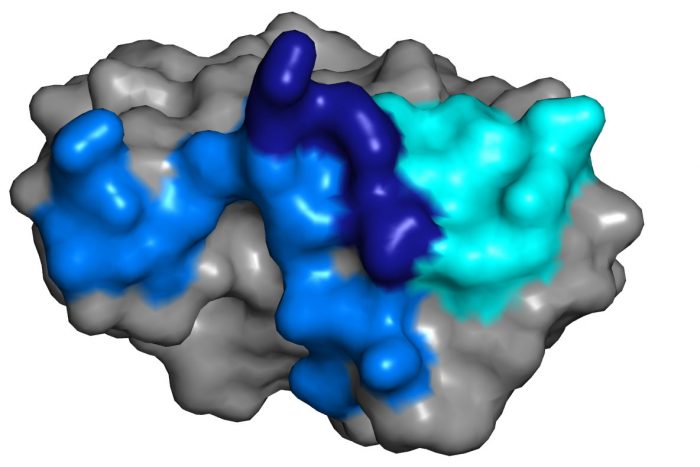
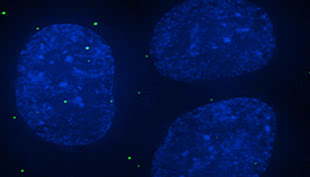
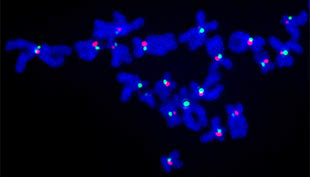
Our DNA contains instructions crucial for virtually all forms of life on this planet. But for life to propagate, this blueprint must be copied and passed on to future generations. New findings describing the structure of a key molecule involved in DNA replication place another piece in the puzzle...

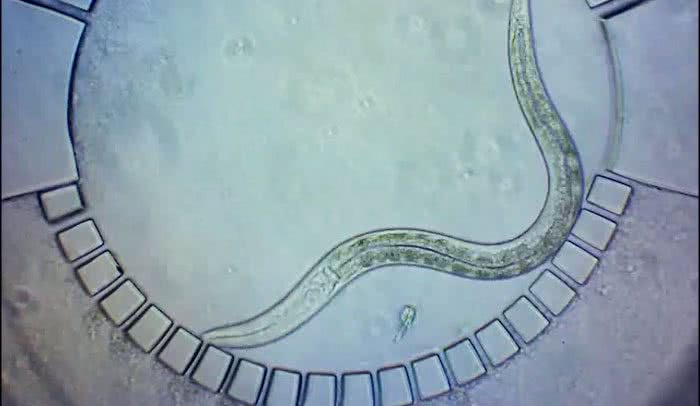
Each cell in the body follows a strict protocol for manufacturing the proteins it needs to function. When a cell turns cancerous, however, its protein production goes off script. A new study led by researchers at the Rockefeller University takes a close look at one way in which this procedure goe...

Without antiretroviral drug treatment, the majority of people infected with HIV ultimately develop AIDS, as the virus changes and evolves beyond the body’s ability to control it. But a small group of infected individuals—called elite controllers—possess immune systems capable of defeating the ...

Elaine Fuchs, Rebecca C. Lancefield Professor and head of the Robin Chemers Neustein Laboratory of Mammalian Cell Biology and Development, has been honored with the 2017 McEwen Award for Innovation. The prize, given by the International Society for Stem Cell Research, recognizes groundbreaking wo...

What you see is not always what you get. And that, researchers at The Rockefeller University have discovered, is a good thing. “Every time you move your eye, the whole world moves on your retina,” says Gaby Maimon, head of the Laboratory of Integrative Brain Function. “But you don’t perce...

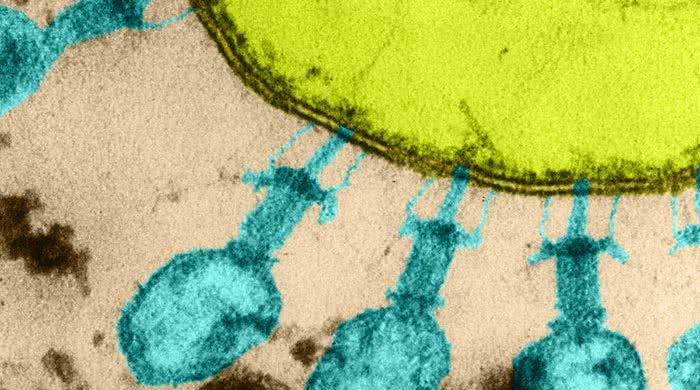
Some microbes can form memories—although, inconveniently for scientists who study the process, they don’t do it very often. Rockefeller University researchers and their colleagues at the University of California, Berkeley, have found a way to make bacteria encode memories much more frequently...

As early humans shed the hairy coats of their closest evolutionary ancestors, they also gained a distinct feature that would prove critical to their success: a type of sweat gland that allows the body to cool down quickly. Those tiny glands are enormously useful, allowing us to live in a wide var...