Rising Scholars Workshop introduces local students to research at Rockefeller
 COPY LINK
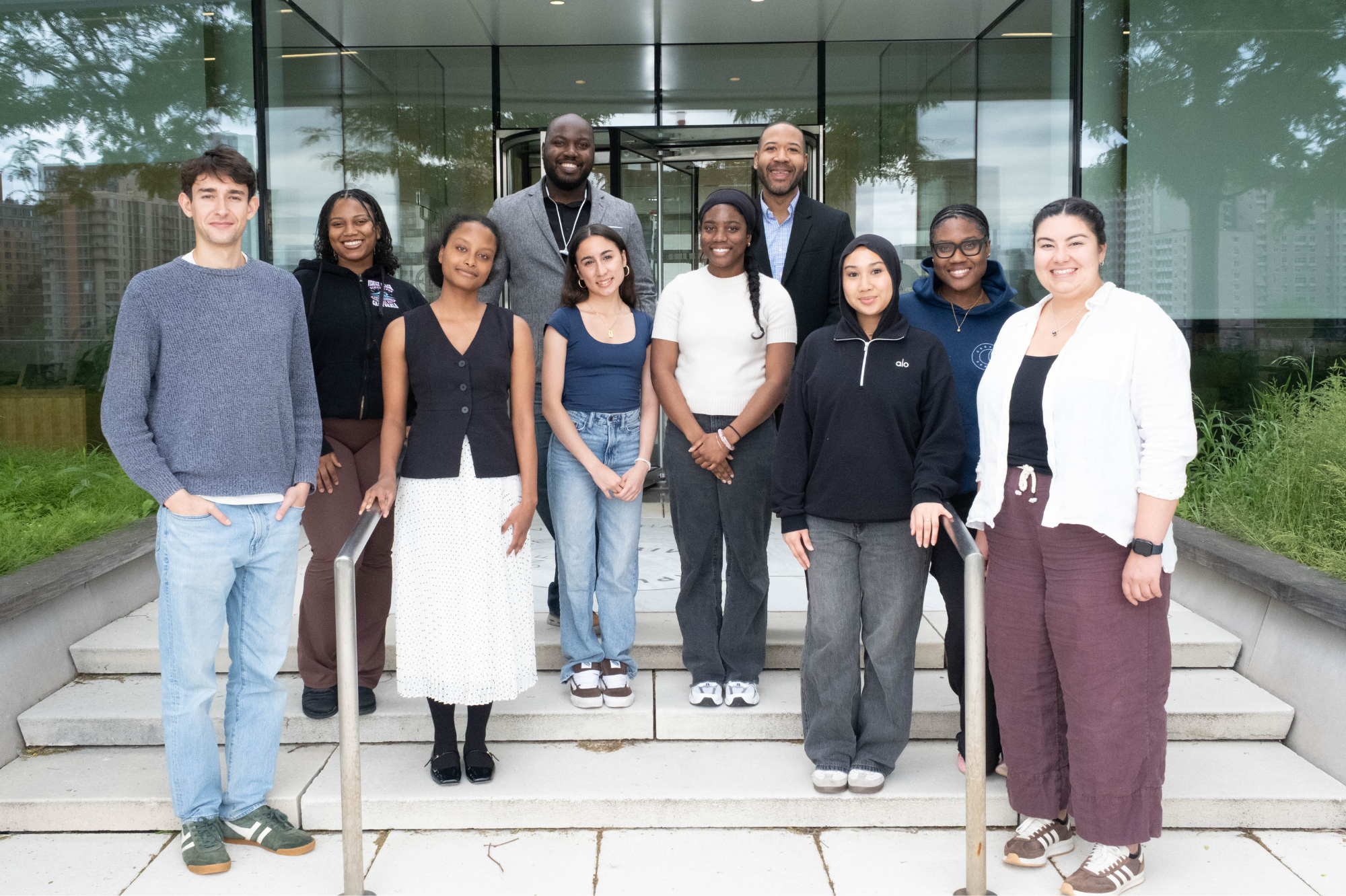
Organizers worked to create a more in-depth experience for the workshop’s third installment.
This spring, undergraduates were again invited to embed themselves on campus for nearly a week through Rockefeller’s Rising Scholars Workshop. The event marked the third such workshop since 2023, and like before, participants experienced cutting-edge research and became acquainted with career paths in science.
But this year, organizers made some notable changes to the program. The group was limited to only four students, and rather than arriving from around the country, they hailed from New York City institutions. The changes proved productive, according to Ashton Murray, vice president for University Life and Community Engagement, whose office runs the workshop.
“It was designed as an experiment,” he said. “We wondered if we could provide a more in-depth experience with a smaller group. In fact, we found that with four participants, we could offer something uniquely enriching that we couldn’t have imagined otherwise.”
That included more hands-on lab time, according to Murray, while other changes to its structure made it possible for the group to take a deeper dive into the research curriculum, which focused on mapping fruit fly neural circuits and was guided by members of Daniel Kronauer’s Laboratory of Social Evolution and Behavior.
A shift to local talent
The Rising Scholars Workshop blends scientific exploration and professional development with the goal of creating an opportunity for students to envision a future in research. In addition to immersing students in science, it offers a means for Rockefeller to build relationships with colleges that have not historically sent students to the university’s graduate program.
In designing this year’s event, Murray’s office recognized they an opportunity to build those connections much closer to home.
The university has a long-standing relationship with the Upper East Side’s Hunter College, part of the City University of New York (CUNY) system. But the same has not been true for other CUNY schools throughout the five boroughs. When Murray’s office asked some of these institutions to nominate students, it marked the beginning of new, formal relationships, he said.
In the end, the workshop enrolled three students from Brooklyn College, John Jay College of Criminal Justice, and City College. A fourth student arrived from Bronx Community College, after being recruited through Becoming a Scientist, a lecture series offered in partnership with the Simons Foundation that brings community college students to Rockefeller.
“It just reinforces the message that even in our backyard there is tremendous talent,” said Chad Morton, a program specialist who helps organize and run the workshop. “There are students who are eager and ready to engage in science, who might not have the opportunities and the resources available elsewhere.”
A greater emphasis on research
Like last year, the students explored the scientific process through an interactive curriculum, met with the Dean’s office to discuss careers, and learned about the precision technology required for research like that they encountered. This year, Kronauer lab members Lindsey Lopes, a postdoc, and Giacomo Glotzer, a graduate student, introduced the scholars to connectomics—detailed maps of neural connections. With their guidance, the students used this circuitry to study how flies navigate based on smell. The new schedule gave them about twice as much time to focus on this research component as compared to last year’s group.
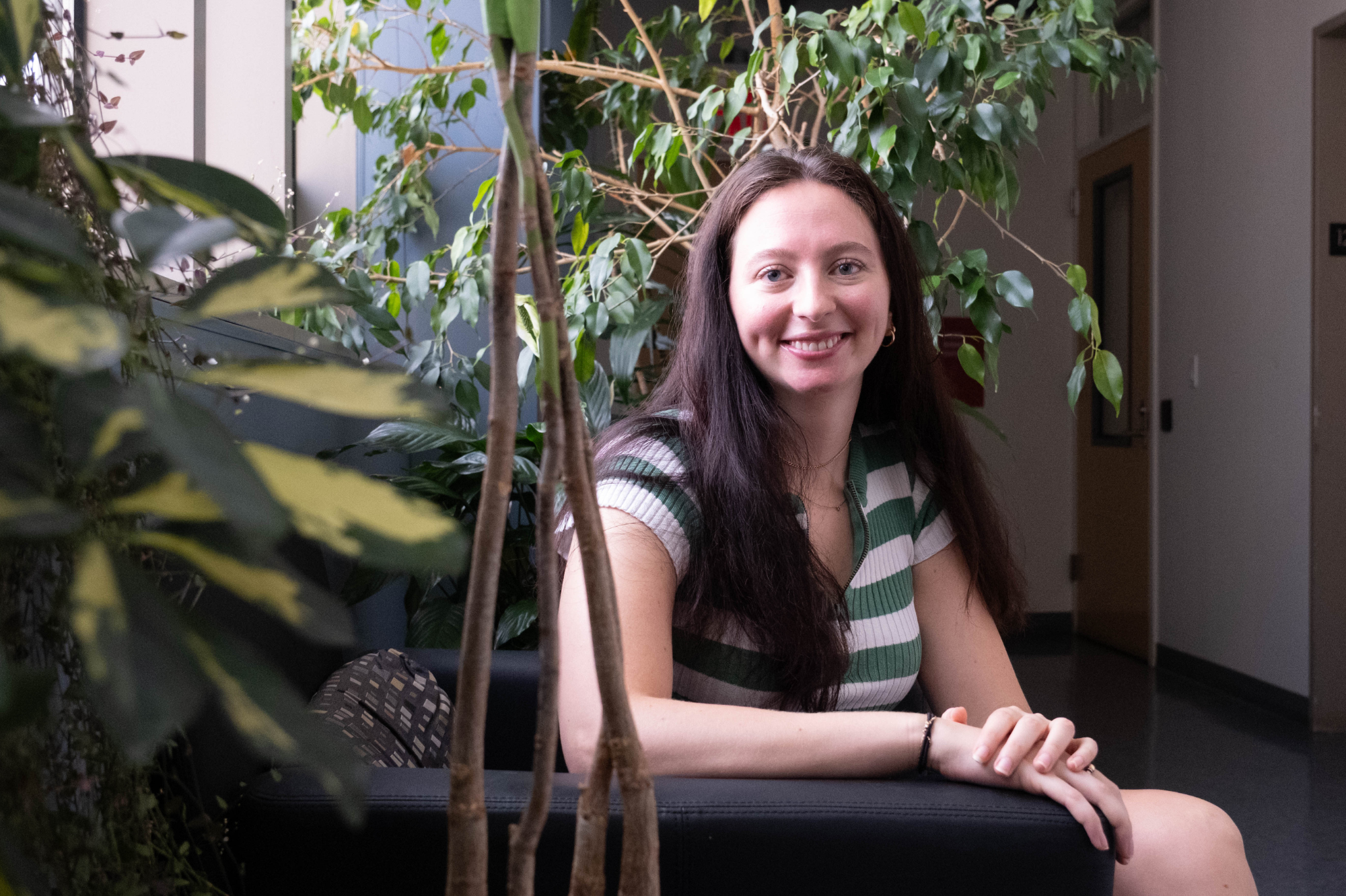
“I loved the experience,” said Betzaly Collado, a Macaulay honor student at City College. A rising junior who plans to go to medical school, Collado said she found the discussion of career paths particularly eye opening.
Spending time with Rockefeller’s scientists also humanized the profession for her. “It was like we all are just people. It felt more like a community than I expected,” she said.
After the success of this year’s experiment, Murray is mulling how much of the new approach to carry forward, and whether there might be additional opportunities to rethink the program. “Our task now is to take what we’ve learned and see how we could inform the next iteration of rising scholars for the better,” he said.