Rockefeller Outreach shares insights on how to keep young students in science
 COPY LINK
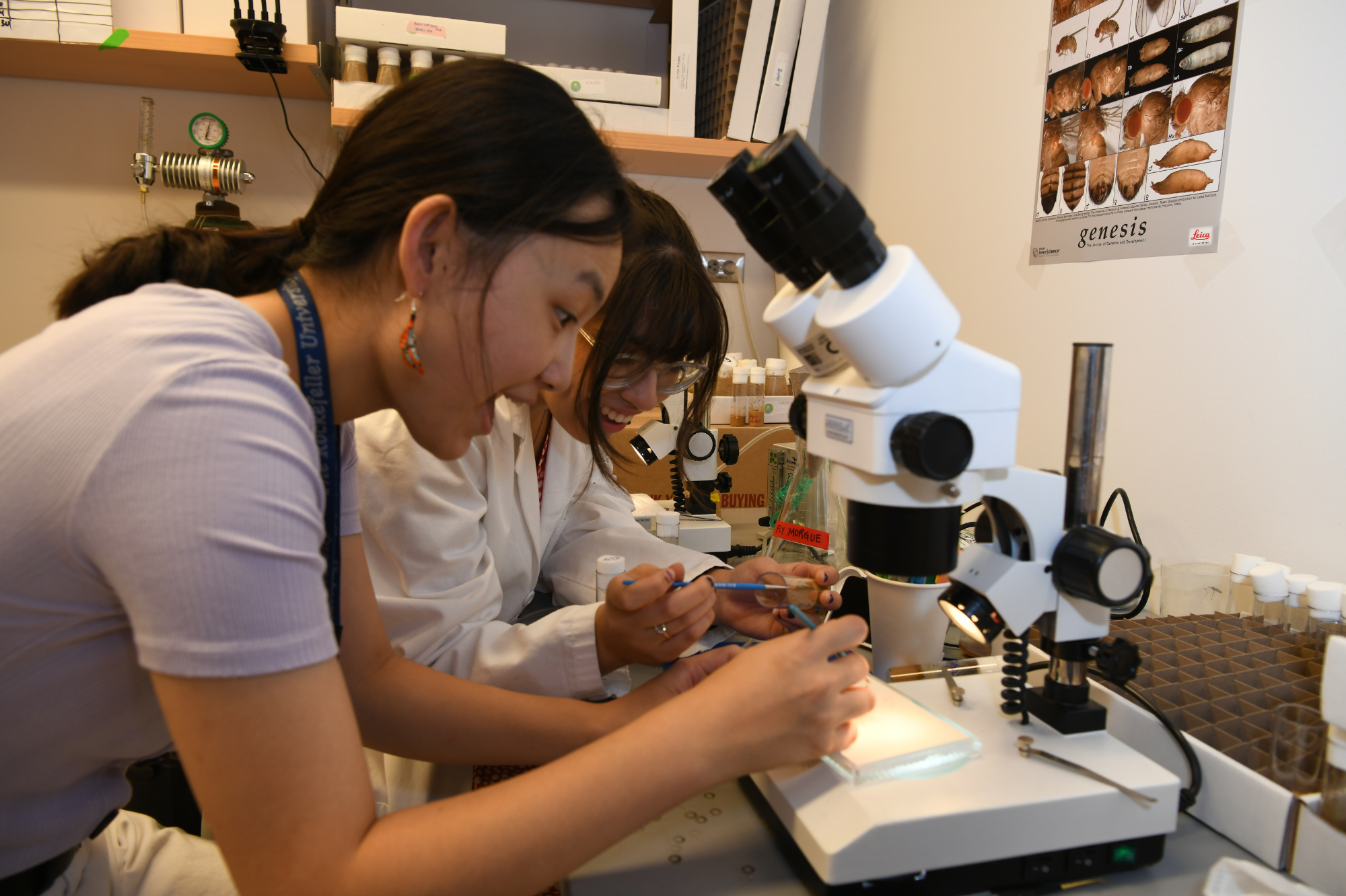
Since launching in 2012, RockEDU has worked with over 25,000 students sharing the joy and wonder of science. (Credit: Claire Holt)
Each year, high school and undergraduate students with aspirations in STEM step into laboratories on the Rockefeller University campus to conduct research. What happens after that first experience, and which students continue in science, has become a central question for the university’s science outreach team.
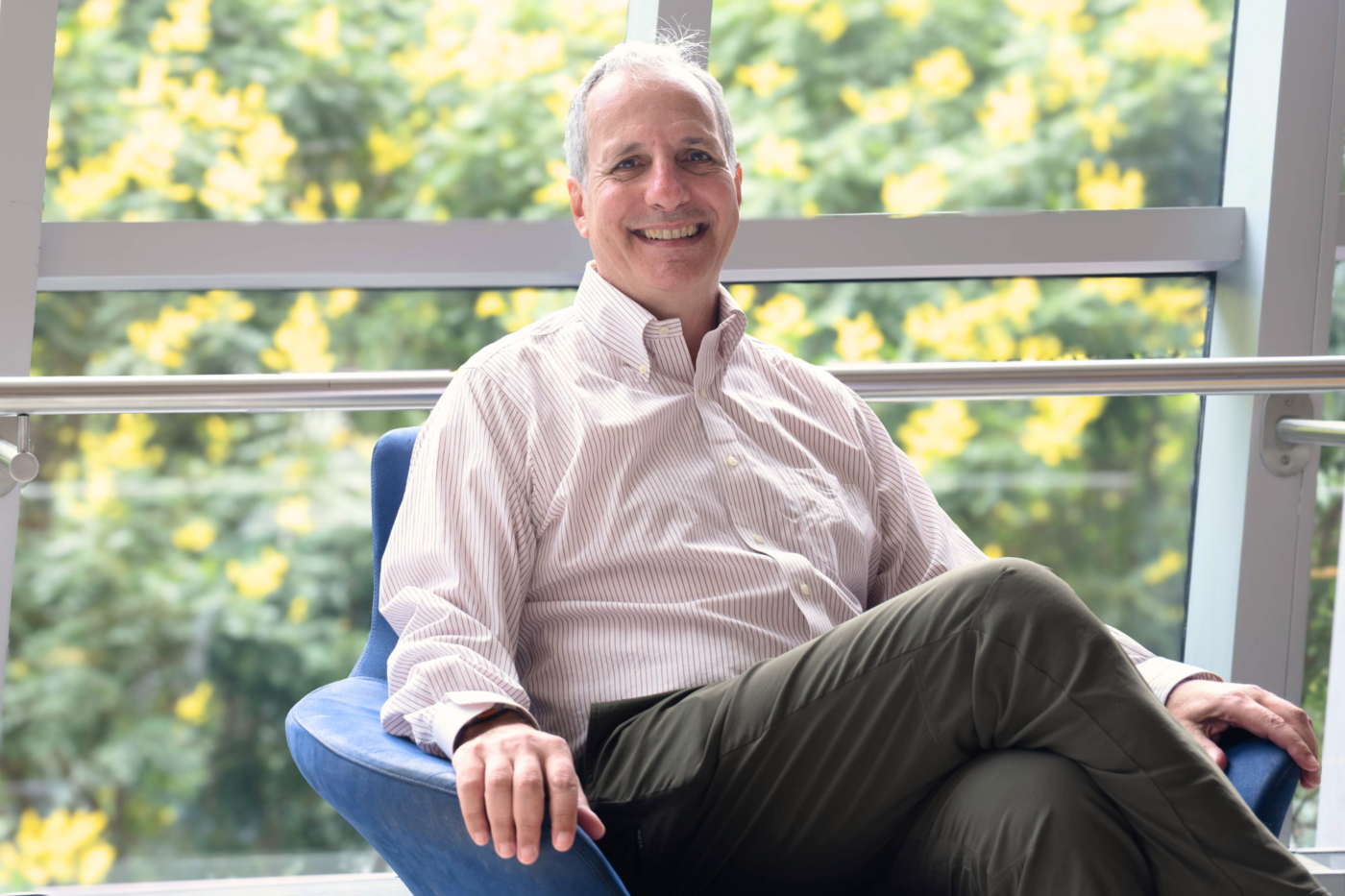
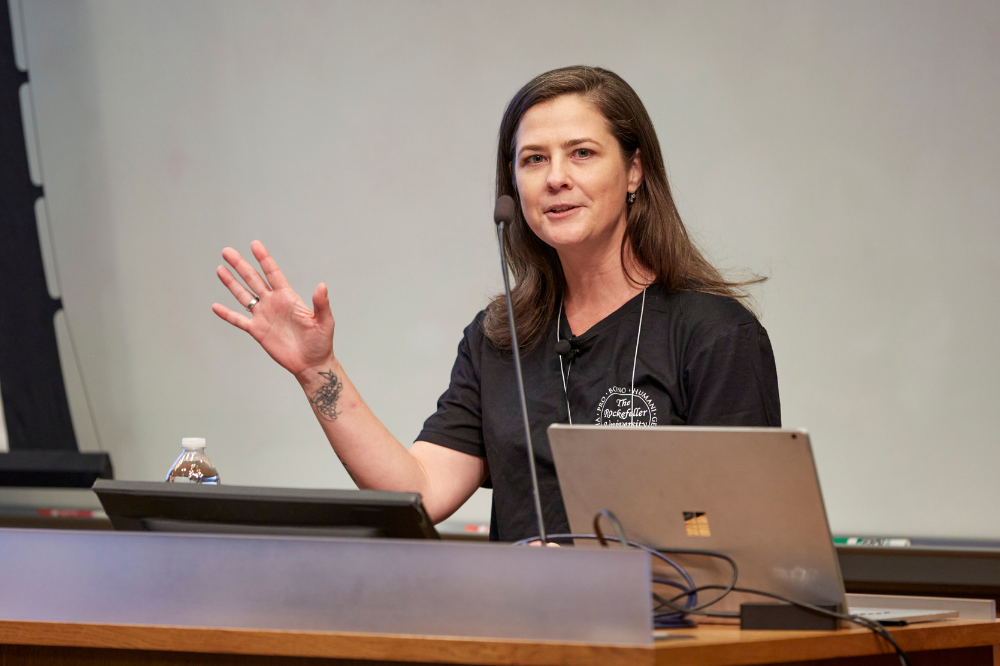
At a recent Rockefeller University lecture, Jeanne Garbarino, PhD, executive director of RockEDU Science Outreach, shared key insights into the critical factors that shape persistence in STEM.
“When people think about persistence, they often focus on motivation, passion, and talent,” Garbarino says. “But in STEM, persistence is really about whether students are able to keep participating over time.”
National data show how often that participation breaks down. Roughly 40% to 60% of students who enter college intending to major in STEM do not complete a STEM degree, with higher attrition among students from lower-income and underrepresented backgrounds. Many leave not because of ability, but because of their experiences in academic and research environments.
A coordinated approach to persistence
Garbarino introducing a speaker at Talking Science, one of RockEDU’s signature events. (Credit: Matthew Septimus)
Garbarino’s analysis of more than a decade of RockEDU program tracking, along with a recent alumni survey of one of its core high school research programs, points to a clear pattern. Students are more likely to continue in STEM when they have early access to research and strong mentorship and peer networks.
RockEDU builds these supports into its programs through a deliberate, coordinated effort across the Rockefeller research community. The initiative bridges generations of scientists, connecting high school and undergraduate students with educators, trainees, and established researchers through immersive research experiences, mentorship, and skills training.
This integrated approach has achieved significant reach. Since 2012, RockEDU has worked with more than 25,000 K–12 students, 2,500 science educators, and 3,000 university scientists who serve as mentors or volunteers, in partnership with more than 250 community organizations.
Garbarino, who has led RockEDU since its founding and previously trained at Rockefeller as a postdoctoral fellow, attributes these outcomes to a framework built on three essential pillars:
- Institutional Support: Laboratories host students, while faculty, postdocs, and graduate trainees serve as mentors. By securing funding, space, and coordination, administrative teams make it possible for students with varying levels of prior exposure to succeed in demanding research environments.
- Program Design: Structure is reinforced through initiatives like the Summer Science Research Program, where high school students work in teams supported by trained fellows and staff. These entry points are designed to prepare students for lab work and support continued participation through their undergraduate years.
- Relational Systems: These connections sustain long-term progress. Mentorship and peer networks often extend beyond a single program, following students as they move through college and into their early careers.
“Relational infrastructure is, above all, about people,” Garbarino emphasizes. “It includes mentorship, peer learning, and the systems that make it easier to build connections. When those relationships are consistent, students are more likely to stay in science.”
RockEDU has formalized its relational approach through BIOME (Building Interactive Opportunities for Mentorship Education), a digital hub that connects high school and undergraduate students, K–12 educators, and community partners with a broader scientific network. The platform enables real-time interaction, supporting mentorship and sustained engagement.
BIOME also extends across the Tri-Institutional corridor, inviting postdocs, research assistants, and graduate students from Rockefeller University, Memorial Sloan Kettering Cancer Center, and Weill Cornell Medicine to participate.
Measuring long-term impact
To better understand how the university’s structured approach supports STEM pathways, RockEDU combined administrative enrollment data for 6814 past applicants with a February 2026 survey of 63 self-selected alumni from the Summer Science Research Program (SSRP). The broader analysis, which links participants to postsecondary enrollment and degree outcomes, is supported by a National Science Foundation-funded effort to track long-term persistence in STEM.
While the administrative data captures trends across the program’s history, the survey provides a more nuanced look at how these experiences shaped individual careers. These results point to levels of persistence that significantly outpace national trends:
- 100% of survey respondents pursued STEM majors.
- Over 50% of alumni have earned graduate degrees.
- 55% remain in contact with their RockEDU mentors, and 65% stay connected to their peer networks.
The outcomes are particularly notable given that only 11% of these students had prior research experience before joining SSRP, Garbarino says. For many, financial barriers and limited access were the primary obstacles to early exposure.
Innovation through new entry points
With this data in mind, RockEDU has expanded their programming to create a more seamless sequence of support. Jumpstart prepares New York City high school students for lab environments through spring sessions on molecular biology and scientific thinking. For undergraduates, the RockEDU Upskill Workshop offers a paid, semester-based program to build technical skills. Partnerships such as the Hunter x RockEDU Scholars and the Lulu Wang Scholars initiatives provide continued access and mentorship at the undergraduate level.
These initiatives create new entry points into the Rockefeller community, particularly as SSRP has become increasingly competitive. The number of applicants has surged as the program’s reputation has grown, receiving roughly 1,600 applications in 2026, far exceeding available lab spots. That growth, Garbarino notes, also underscores a continuing challenge: students from lower-income backgrounds remain underrepresented in the applicant pool, reflecting broader, systemic barriers to access.
Expanding that access is a priority because of how profoundly the experience shapes a student’s trajectory. Beyond the data, alumni responses return again and again to the role of mentorship and belonging in defining their professional identity. One participant described the program as “the only thing keeping me in science,” while another credited it with a fundamental shift in their confidence as a researcher.
Garbarino says the findings reinforce that persistence depends on fostering a culture of high-quality mentoring and long-term engagement.
“We are building an infrastructure that supports students with diverse starting points and end goals,” Garbarino says. “Students stay in STEM when they feel like they belong.”