David Baltimore, Rockefeller's sixth president, has passed away
 COPY LINK
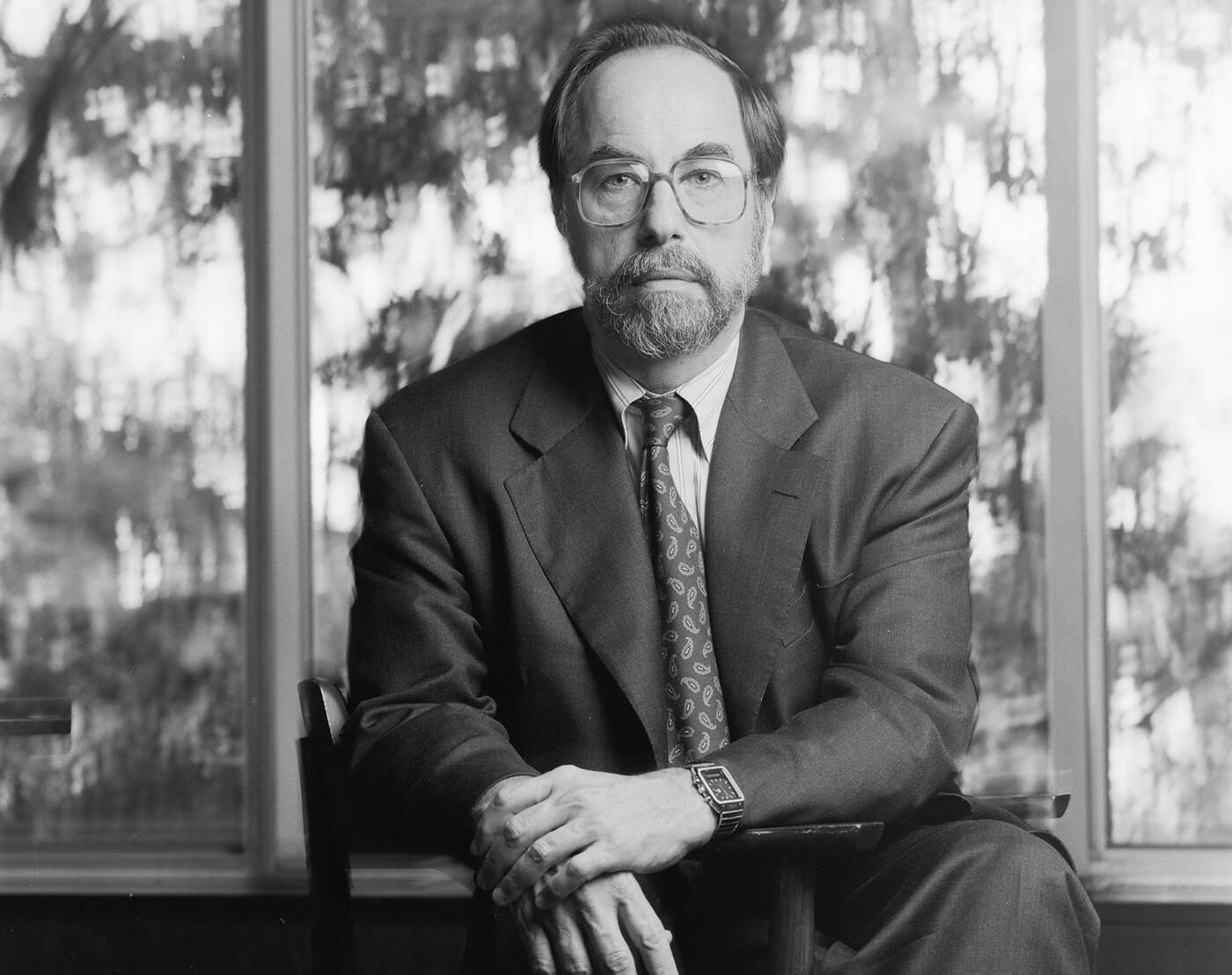
David Baltimore at Rockefeller in 1991.
David Baltimore, Rockefeller’s sixth president, has passed away at the age of 87. An extraordinary scientist, Baltimore’s discovery of reverse transcriptase—the copying of RNA into DNA that could be inserted into the genome—had profound implications in biology, and his visionary leadership as founder of the Whitehead Insititute for Biomedical Research at MIT, and at Rockefeller and Caltech, left an indelible mark on generations of scientists.
“David’s research overturned biology’s central dogma, the presumed unidirectional flow of information from DNA to RNA to protein,” says Richard P. Lifton, Rockefeller president. “This not only had profound implications for understanding how the genomes of RNA viruses such as HIV can be inserted into the human genome; reverse transcriptase also became a vital tool in biotechnology, with myriad applications ranging from the cloning and characterization of DNA copies of RNAs from cells to recent use in the editing of chromosomal DNA sequences in cells.”
Baltimore received his Ph.D. from Rockefeller in 1964, where he studied with Richard Franklin, and did his postdoctoral work in James Darnell’s lab, then at MIT. But it was as a young faculty member at MIT that Baltimore’s research on cancer-causing RNA viruses led to the identification of reverse transcriptase as a viral RNA-dependent DNA polymerase that allows retroviruses to make DNA copies from its RNA genome and replicate within host cells. This discovery by Baltimore, and independently by Howard Temin in 1970, was so unexpected and transformational that they were awarded the Nobel Prize in Medicine or Physiology only 5 years later, alongside Renato Dulbecco. Baltimore was 37 years old at the time.
Baltimore was advocate for science and a key figure in national scientific policymaking. In the 1970s, he played an important role in creating a consensus that allowed recombinant DNA research to flourish. An early advocate of federal AIDS research, David was appointed in 1996 to head the National Institutes of Health AIDS Vaccine Research Committee.
Baltimore was the founding director of the Whitehead Institute, established in 1982 as an independent affiliate of MIT, dedicated to improving human health through biomedical research. He assumed the presidency of Rockefeller in 1990, where he helped stabilize the university’s finances and pushed to reform the academic structure to better support junior faculty. He then became president of the California Institute of Technology in 1997, continuing until 2006. During this time, he maintained an active lab—working to develop gene therapies for HIV and cancer, on the role of microRNAs in the immune system, and on splicing control of gene expression in the inflammatory response; these efforts continued post-presidency. He was awarded an honorary degree from Rockefeller in 2004.
“David had a truly extraordinary career that is hard to capture,” Lifton says. “Among his many honors, he received the 2021 Lasker-Koshland Special Achievement Award, given to those ‘whose professional careers have engendered within the biomedical community the deepest feelings of awe and respect.’ This description could have been crafted with David in mind. He will be sorely missed and fondly remembered, with the very deepest feelings of awe and respect.”