Francis Collins, M.D., Ph.D.
RECIPIENT OF THE HONORARY DEGREE
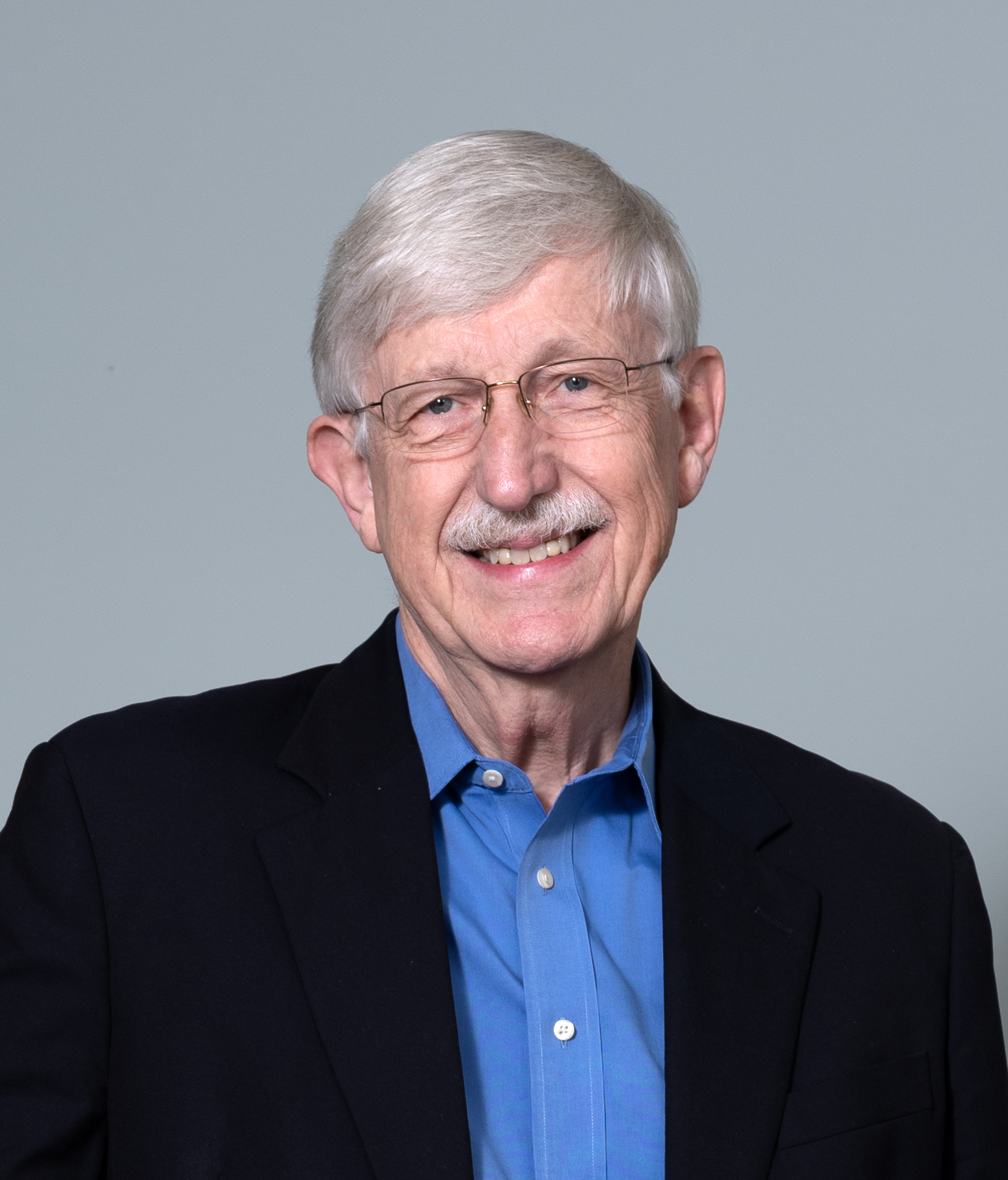
Growing up, Francis Collins was home schooled until he reached sixth grade. Beyond teaching the usual academic subjects, his mother introduced him to the joys of pushing his intellectual boundaries and opening himself up to new discoveries. Those inspirational lessons served him well later in life as he went on to search for disease genes, spearhead the effort to sequence the human genome, and chart the course of American biomedical research as the longest-serving director of the National Institutes of Health.
Dr. Collins’s lifelong fascination with DNA bloomed in the early 1970s, with the dawn of the age of recombinant DNA technology. Although he had been focused on questions in quantum chemistry as an undergraduate at the University of Virginia in the late 1960s, and during his doctoral training at Yale University from 1970 to 1974, late-night coffee sessions with a fellow graduate student opened his eyes to DNA’s elegance and potential. So, when Dr. Collins subsequently encountered patients with heritable conditions, as a medical student at the University of North Carolina, he quickly recognized that this information-bearing molecule held the key to understanding and treating human disease.
After joining the faculty at the University of Michigan in 1984, Dr. Collins used a method he had developed as a postdoctoral fellow at Yale in the early 1980s to identify the genes responsible for cystic fibrosis, Huntington’s disease, and neurofibromatosis—breakthrough discoveries that paved the way for the development of diagnostics and therapeutics.
As the head of the National Human Genome Research Institute, a position he accepted in 1993, Dr. Collins steered an international consortium of researchers working to sequence the three billion DNA bases that make up the human genome. More importantly, he pushed to make sure that the data would remain publicly available, transforming future studies of human disease.
That experience prepared Dr. Collins for his most expansive role yet. As the 16th director of the National Institutes of Health from 2009 to 2021, Dr. Collins launched initiatives to promote translational research, explore the workings of the human brain, and lay the groundwork for the era of precision health.
His contributions to science, medicine, and society have been recognized by the Presidential Medal of Freedom, the National Medal of Science, and the Templeton Prize. In 2007, he founded the BioLogos Foundation to foster discussion of the intersection of Christianity and science, and he has written several books that reflect on the harmony of faith and science, including the New York Times bestseller The Language of God: A Scientist Presents Evidence for Belief and, most recently, The Road to Wisdom: On Truth, Science, Faith, and Trust.