Carolyn Bertozzi, Ph.D.
RECIPIENT OF THE HONORARY DEGREE
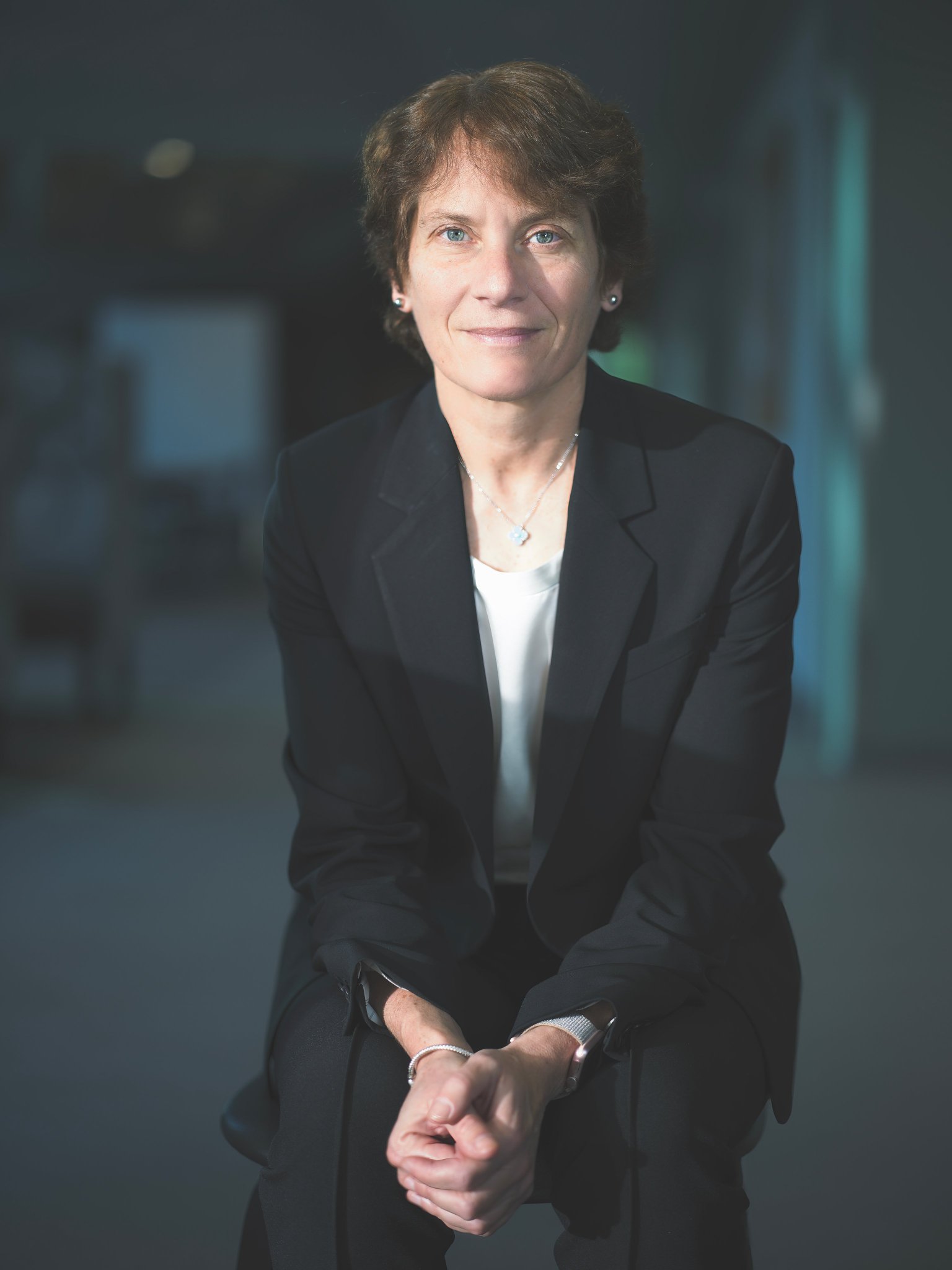
With her keen eye for chemistry, Carolyn Bertozzi has made it possible, for the first time, to visualize sugar molecules in living cells and organisms. Her method for tagging and tracking the sugars that decorate cell surfaces allows researchers to assess how these carbohydrates guide complex biological processes from development to immunity and to determine how their disruption contributes to disease.
Although her father was a nuclear physicist and her childhood home was filled with scientific gadgets, Dr. Bertozzi’s first love was music. But when her parents suggested she focus her studies on something more practical, she turned her attention to chemistry. The pivot was not merely practical, but personal. As an undergraduate at Harvard in the late 1980s and a graduate student at the University of California, Berkeley, in the early 1990s, Dr. Bertozzi watched friends die of AIDS. The discovery of small molecules that stopped HIV in its replicative tracks inspired Dr. Bertozzi. She, too, wanted to use the power of chemistry to solve big problems and maybe even save lives.
The problem she chose to pursue—during her postdoctoral training at the University of California, San Francisco, and when she returned to U.C. Berkeley as a faculty member in 1996—was how to monitor complex sugars in their native cellular environment. The trick, she found, was feeding cells or animals a modified chemical group that would become incorporated into newly made sugars. This group serves as a distinctive chemical loop onto which Dr. Bertozzi could attach a compound that carried a fluorescent marker—a molecular maneuver that makes sugars easy to see.
The achievement transformed how scientists study the roles that sugars play in development and in disease—and earned Dr. Bertozzi the 2022 Nobel Prize in Chemistry. She holds more than 80 U.S. patents and has founded a dozen companies to translate her work into targeted therapeutics and diagnostics. As Anne T. and Robert M. Bass Professor of Chemistry and the Baker Family Director of Stanford University’s Sarafan ChEM-H Institute, she now leads a diverse team of chemists, engineers, and physicists who collaborate on projects aimed at bettering human health.
A Howard Hughes Medical Institute investigator and a member of the National Academy of Sciences and the American Academy of Arts and Sciences, Dr. Bertozzi was the first woman to win the prestigious MIT-Lemelson Prize and the first openly gay woman to receive a Nobel Prize in the sciences.