Philanthropy News
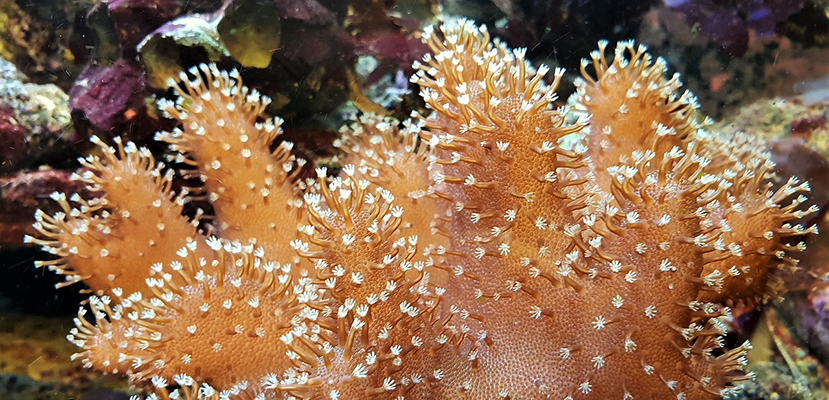
QUADRIVIUM FOUNDATION BACKS NEW RESEARCH ON CORAL RESTORATION
NEW YORK, NY, March 25, 2026— A generous grant from the Quadrivium Foundation has launched a novel initiative to generate corals that can thrive despite rising temperatures, increased acidity, and exposure to diseases—environmental stresses that are taking hold as oceans warm. Ali Brivanlou, Ph.D., head of the Laboratory of Synthetic Embryology at The Rockefeller University, will lead this unique, biotechnology-fueled research project, which will harness the power of stem cells to revitalize coral reefs.
Between 70% to 90% of the world’s surviving coral reefs are at risk of dying off in the next two decades. With funding from the Quadrivium Foundation, and in consultation with coral experts worldwide, Dr. Brivanlou’s laboratory will infuse fresh knowledge and energy into the global campaign to rescue coral communities and improve the outlook for ocean ecosystems.
“I want to express my gratitude to the Quadrivium Foundation for this important grant,” said Dr. Brivanlou. “I am honored by their confidence in our work, and I look forward to conducting many exciting experiments with their indispensable support.”
Ali Brivanlou is an internationally renowned leader in stem cell research. He was among the first investigators to derive human embryonic stem cells in the 1990s; his cell lines are still being used today by scientists worldwide. He also published an influential white paper that defined the essential properties of embryonic stem cells, providing essential guidance for investigators and policy makers as the field of stem cell biology was undergoing revolutionary changes.
Dr. Brivanlou and his colleagues are now drawing on their expertise to develop the first biotechnology model for coral generation. They will isolate coral stem cells and use the latest molecular biology tools, including CRISPR DNA editing, to pinpoint genetically encoded traits that favor coral survival amidst challenging environmental conditions.
While research groups at other institutions have pursued selective breeding experiments to produce generations of corals with properties such as resistance to thermal stress, the brief spawning windows of coral communities, and the amount of aquarium space required to maintain broodstock corals in laboratory settings, place severe limitations on such efforts.
Stem cells offer a potentially transformational alternative. Coral stem cells can be grown into coral polyps (individual coral animals) with a virtually unlimited scale using micropatterned substrates developed by the Brivanlou lab for human stem cell investigations. The isolation and amplification of both embryonic and adult coral stem cells can create sources of billions of cells, serving as the basis of dramatically enhanced efforts to accelerate sexual reproduction of corals and, eventually, introduce resilient organisms into natural environments at an ecological level.
A notable feature of the Brivanlou lab’s planned studies is screening for corals that are resistant to bleaching, the loss of symbiotic algae that provide corals with essential nutrients and give transparent polyps their characteristic colors. Bleaching events are often the first warning sign that a reef is in imminent danger.
In work closely integrated with these studies, Dr. Brivanlou and his colleagues will sequence the genomes of multiple coral species and establish a secure repository for coral DNA—a Coral Genbank—as a permanent record of species diversity. A library of coral genomes will be vital to future studies employing CRISPR gene editing and other technologies to produce transgenic corals engineered for survival and reproduction during future waves of climate change. The isolation of coral stem cells will enable the creation of a universal Coral Species Biobank, a separate repository of cell samples that will facilitate the production of genetically diverse corals at industrial levels, eventually enabling large-scale reef restoration efforts.
The Brivanlou lab at Rockefeller will coordinate its efforts with interested organizations and investigators worldwide, including molecular, cell, and invertebrate biologists, oceanographers, marine biologists, ecologists, conservationists, and other experts in diverse disciplines whose input will be crucial as this project evolves.
Commenting on the Quadrivium Foundation’s philanthropy, Rockefeller University President Richard Lifton said, “We hope that this grant will inspire others to consider funding this important work. This is a new area of research for Rockefeller that we believe can make beneficial contributions, but it cannot continue into future years without the participation of globally committed organizations such as the Quadrivium Foundation.”
About the Quadrivium Foundation
The Quadrivium Foundation, founded in 2014 by James and Kathryn Murdoch, invests in evidence-based solutions to some of the greatest challenges facing societies today. The Foundation was given the Latin name for “crossroads” to reflect the founders’ commitment to addressing the root causes of problems, where single actions can create multiple positive outcomes. Quadrivium currently has five interrelated areas of focus: Democracy, Technology and Society, Scientific Understanding, Climate Change, and Ocean Health.
About The Rockefeller University
The Rockefeller University, one of the world’s leading biomedical research universities, is dedicated to conducting innovative, high-quality research to improve the understanding of life for the benefit of humanity. Rockefeller’s 70 laboratories conduct research in neuroscience, immunology, biochemistry, genomics and many other areas, and a community of more than 2,000 heads of lab, students, postdocs, technicians, clinicians, and administrative personnel work on the university’s 16-acre Manhattan campus. Rockefeller’s unique approach to science has led to an impressive series of transformative contributions in biology and medicine. During the institution’s 125-year history, 26 Rockefeller scientists have won Nobel Prizes, 26 have won Albert Lasker Medical Research Awards, and 20 have garnered the National Medal of Science, the highest science award given by the United States.