Philanthropy News
REAL ESTATE DEVELOPER ROBERT WENNETT MAKES A NEW GIFT TO ADVANCE RESEARCH AIMED AT A CURE FOR HIV INFECTION
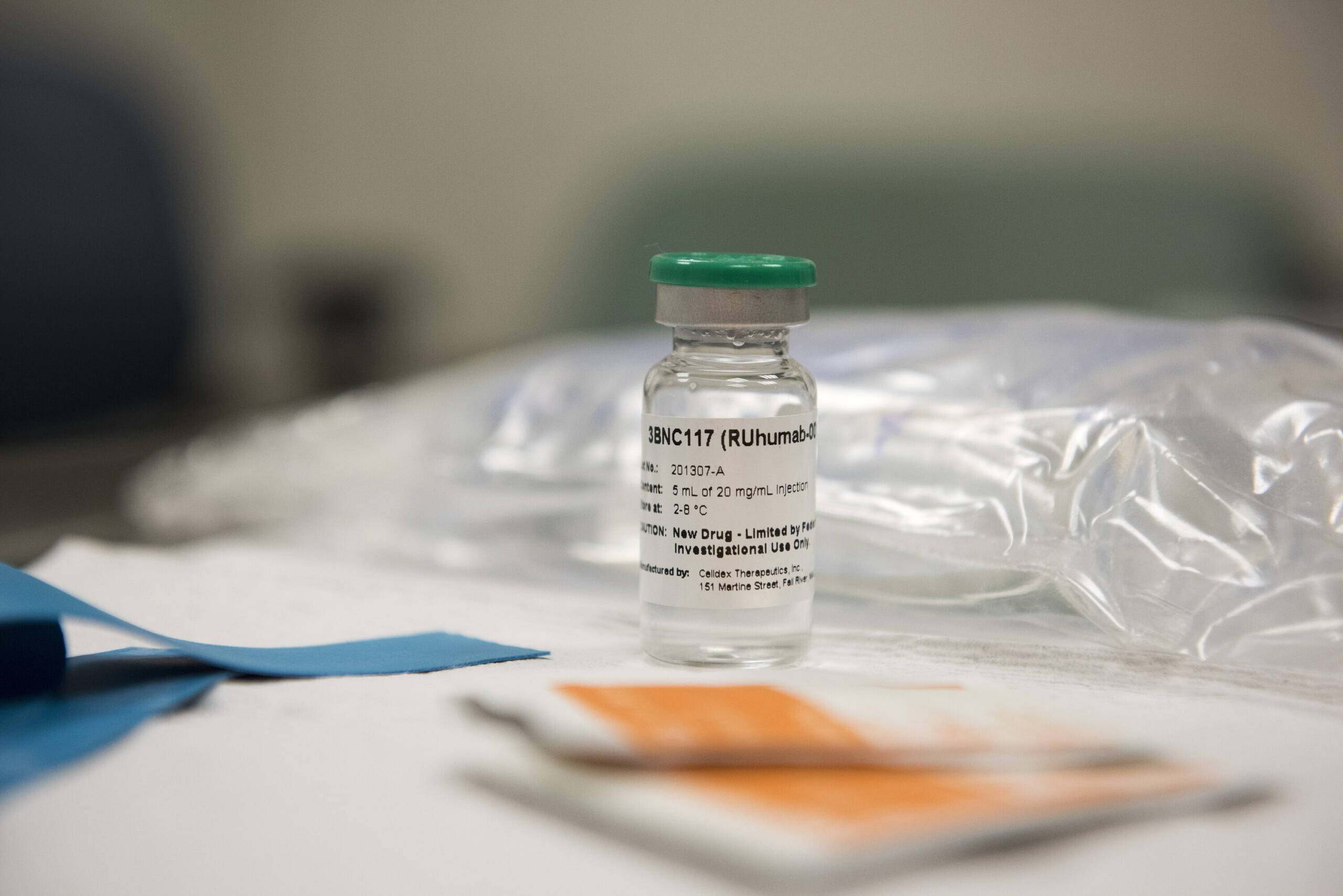
January 13, 2026— With his recent gift of $200,000 to The Rockefeller University, Miami-based real estate developer and philanthropist Robert S. Wennett has contributed a total of $1.45 million toward the development of antibody therapies for HIV—work that is now under way in the Rockefeller University laboratory headed by Michel Nussenzweig, M.D, Ph.D. Mr. Wennett has generously supported the Nussenzweig lab’s clinical research on long-acting, broadly neutralizing antibodies (bNAbs) against HIV since 2019.
“I am excited to see the tremendous strides being made by Michel and his colleagues at Rockefeller and around the world,” says Mr. Wennett. “Their remarkable progress inspires confidence that durable control of HIV by antibodies—a functional cure for the infection—appears to be on the horizon.”
Mr. Wennett’s latest gift is providing essential support for the MCA-1034 trial, which recruited
87 patients at The Rockefeller University Hospital and another location. The trial’s participants were randomized to receive either bNAbs or a placebo while continuing daily antiretroviral therapy (ART). Enrollment in the study is complete and regular follow-ups have allowed consistent testing of each participant’s viral load. Continuing laboratory work will determine whether the antibody therapy will enhance the participants’ immunity against the virus. The MCA-1034 trial addresses the important question of whether antibody effects will be observed when individuals remain on ART.
This trial stands on the shoulders of previous work from Dr. Nussenzweig and his colleague Marina Caskey, M.D., a professor of clinical investigation at Rockefeller. An important study they published in the journal Nature, in 2022, demonstrated that bNAbs administered to 18 patients over five months yielded prolonged viral suppression.
The MCA-1034 trial also received funding from the Gates Foundation, Rockefeller University’s Stavros Niarchos Foundation Institute for Global Infectious Disease Research, and the National Institutes of Health. These entities have supported multiple studies which are showing that bNAbs produce antibody-dependent increases in viral control that are independent of ART. Initial results from these ongoing investigations, conducted by the Nussenzweig lab in collaboration with scientists at other institutions, represent the first time that any intervention in people living with HIV-1 has shown clinical evidence of immune-based remission.
Postdoctoral investigator Marcilio Fumagalli, a member of the Nussenzweig lab who has been named the Robert Wennett Fellow at Rockefeller, is analyzing data from ongoing clinical trials, including the trial supported in part by the generous gift from Mr. Wennett.
About Robert Wennett
Robert S. Wennett is a Miami-based real estate developer and investor with more than 40 years of experience in urban real estate, known for creating architecturally significant and community-shaping projects. He is the founder and president of UIA Management, LLC, and is best known as the developer of 1111 Lincoln Road in Miami Beach, an internationally recognized mixed-use landmark designed by Herzog & de Meuron. Throughout his career, Mr. Wennett has focused on transformative developments that combine strong fundamentals with long-term urban impact, including major projects in Miami’s Health District and Allapattah. He is also an active philanthropist, supporting medical research, cultural institutions, and civic initiatives.
About The Rockefeller University
The Rockefeller University is one of the world’s leading biomedical research universities and is dedicated to conducting innovative, high-quality research to improve the understanding of life for the benefit of humanity. Rockefeller’s 70 laboratories conduct research in neuroscience, immunology, biochemistry, genomics and many other areas, and a community of over 2,000 faculty, students, postdocs, technicians, clinicians, and administrative personnel work on the university’s 16-acre Manhattan campus. Rockefeller’s unique approach to science has led to some of the world’s most revolutionary and transformative contributions to biology and medicine. During Rockefeller’s 125-year history, 26 Rockefeller scientists have won Nobel Prizes, 26 have won Albert Lasker Medical Research Awards, and 20 have garnered the National Medal of Science, the highest science award given by the United States.