The Antibody and Bioresource Core Facility promotes the reproducibility of Rockefeller discoveries
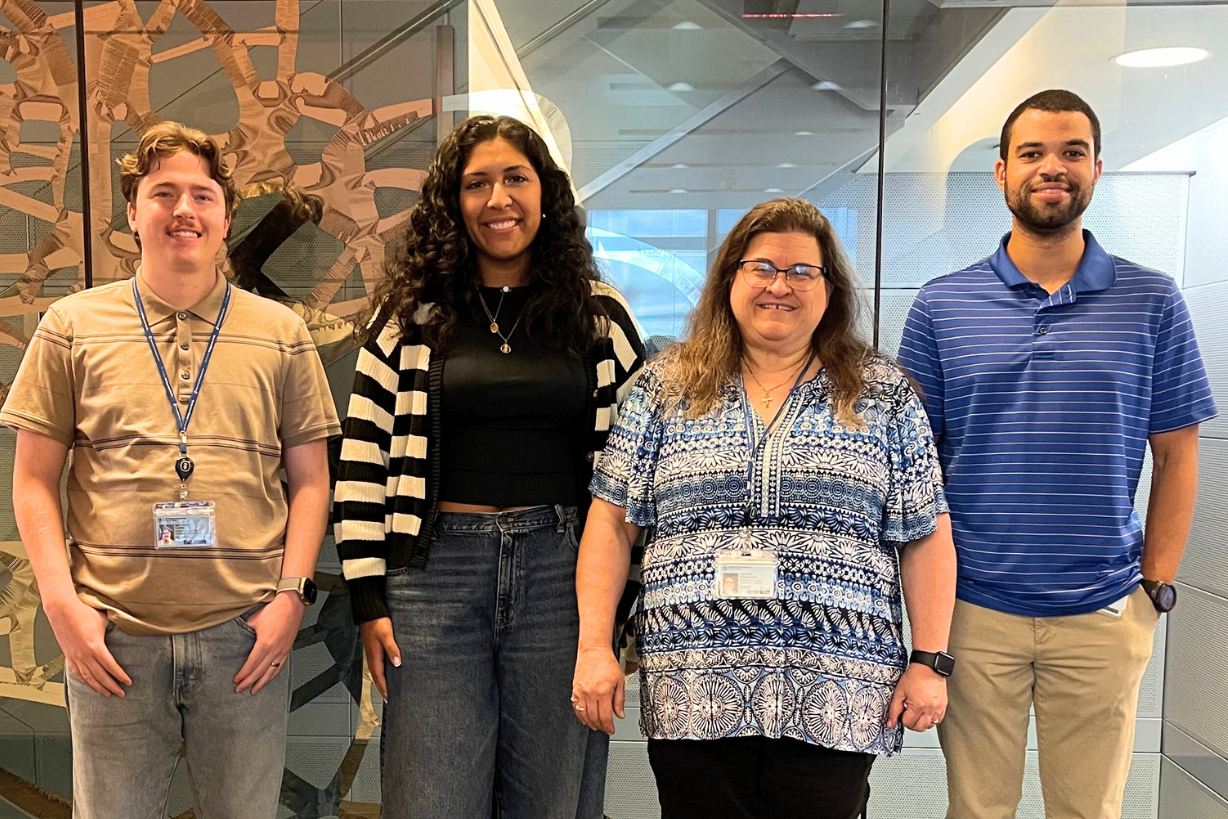
ABCF team
Science moves forward only when discoveries can be reproduced. Yet in the world of cell lines and antibodies, what’s written on the label isn’t always what’s inside the vial. Contamination, misidentification, and poor recordkeeping have derailed countless studies, wasting time and resources. At Rockefeller, the Antibody and Bioresource Core Facility (ABCF) works to ensure that doesn’t happen.
“Our mission is stewardship,” says Frances Weis-Garcia, Associate Laboratory Member and Head of the Bi-Institutional Antibody and Bioresource Core Facility serving Rockefeller and Memorial Sloan-Kettering. “We safeguard the quality and integrity of Rockefeller’s biological resources so that when they leave our labs, they continue to support reliable, reproducible science.”
Ensuring Trust in Every Vial
Creating key biological reagents, such as cell lines, is a significant contribution to the larger scientific community but it also comes with the responsibility to ensure what is given out is what you claim it is. When ABCF distributes these cell lines, every sample undergoes rigorous short tandem repeat (STR) profiling to confirm identity, alongside testing for mycoplasma, bacteria, and fungi. The facility also documents culture conditions, references, and images, ensuring that recipients know exactly what they are working with.
This attention to detail transforms each shipment from a simple transfer into a guarantee of reproducibility.
Preventing Loss of Irreplaceable Resources
Another threat to reproducibility is time itself. When a Lab closes, the resources it created—often the product of years of work—risk disappearing. The ABCF steps in as a repository of irreplaceable reagents, preserving them for the future. Among its most notable holdings are the hybridomas developed by Nobel laureate Ralph Steinman, safeguarded so that his pioneering contributions to immunology remain available to the scientific community.
Extending Impact Through Partnerships
Some reagents hold not just scientific, but commercial value. In these cases, ABCF works closely with Rockefeller’s Office of Technology Transfer (OTT), turning unique cell lines and hybridomas into licensed assets that extend scientific reach and support the university’s mission.
“The Antibody and Bioresource Core Facility serves as a valuable strategic partner, efficiently storing and quality-assuring reagents developed by Rockefeller scientists. It also facilitates the transfer of these materials to our licensees for scale up and commercial sale to the greater research community. The University has more than 50 reagents in its portfolio that are licensed globally and is always looking for more,” says Nidhi Sabharwal, Senior Assistant Director, Office of Technology Transfer. “Together, expanding access to these research reagents more widely amplifies the impact of these discoveries. If any Rockefeller laboratory has developed these kinds of research tools, we and the ABCF are happy to support and explore ways to bring them to market through the licensing process.”
Safeguarding the Future of Rockefeller Discoveries
Through rigorous validation, long-term preservation, and strategic partnerships, the ABCF helps ensure Rockefeller discoveries remain reproducible — allowing the university’s scientific contributions to continue shaping research well into the future and, when appropriate, supporting their path to market through the licensing process.
To learn more about the Antibody and Bioresource Core Facility—or to discuss depositing or sharing reagents—visit rockefeller.edu/monoclonal.
To read more news about the Scientific Resource Centers, visit the Resource Center News page.