CRISPR and Genome Editing Center: Expanding the Frontiers of Genetic Engineering
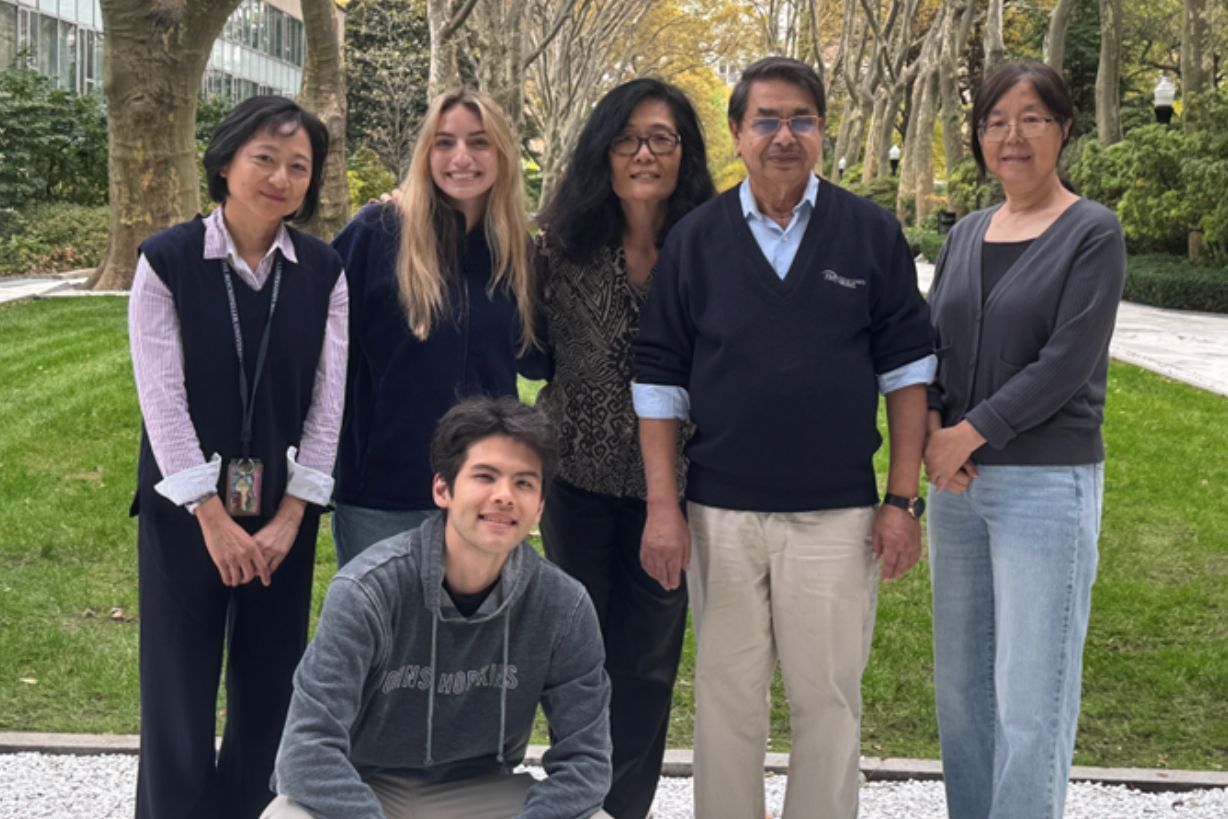
CGERC team
The CRISPR and Genome Editing Center (CGEC) drives innovation in biomedical research by giving scientists the tools to explore and reprogram the genome with extraordinary precision. Led by Chingwen Yang, Ph.D., the center provides customized genetically modified animal and cell models, essential tools that allow investigators to study gene function, test therapies, and advance discovery across biology and medicine.
“Our work is foundational to many of Rockefeller’s research projects,” says Dr. Yang. “By tailoring genetic models to each lab’s specific goals, we help researchers move from idea to insight with speed, accuracy, and confidence.”
Supporting Investigators from Design to Discovery
The CGEC team works closely with investigators at every stage, from project design to experimental application. They provide in-house consultation, help troubleshoot unexpected results, and ensure that each model is optimized for meaningful scientific outcomes.
For Adam Wang, a Biomedical Fellow in the Friedman Laboratory, the CGEC’s partnership has been central to his work on the molecular regulation of leptin expression. “Because leptin expression in cultured adipocytes is minimal, these studies must be done in vivo,” he explains. “That work has only been achievable thanks to the collaborative, highly competent, and responsive support of Chingwen and her team. From the earliest stages of designing gene-targeting strategies through the delivery of genotyped animals, they’ve provided expert guidance and technical excellence.”
Wang notes that the CGEC often generates complex knockout and knock-in mouse lines in under six months, “an astonishing pace compared to the years such efforts once required.”
This type of collaboration reflects the broader philosophy of the center. Behind these partnerships is an impressive toolbox of genome editing methods. The center’s projects often involve DNA modifications of 10 kilobases or less, but their range of molecular tools allows them to generate a wide variety of genetic alleles. Each strategy is carefully matched to the project’s scientific objectives and technical constraints. Years of accumulated data guide the team toward approaches that are both efficient and reliable.
Pushing the Boundaries of Chromosomal Engineering
As genome editing technologies evolve, so do the ambitions of the CGEC. The team is now expanding its capabilities to handle large-scale genomic rearrangements: from tens of kilobases to several megabases, opening new opportunities to model complex chromosomal events, structural variants, and large regulatory networks.
Building on years of refinement in small-scale genome editing, the CGEC is now extending its reach to the full architecture of the genome. Expanding the scale of chromosomal engineering, says Dr. Yang, “would open wider horizons for innovative research models.” To achieve this, the center has employed integrase-based and two-step strategies in collaboration with the Transgenic and Reproductive Technology Center, though these approaches often require two rounds of microinjections, making them time-intensive.
A recent breakthrough from Patrick D. Hsu’s lab at University of California, Berkeley signals a new era in genome engineering. Their programmable bridge-RNA-guided DNA recombinase system enables insertion, excision, and inversion of DNA segments in mammalian cells without inducing double-strand breaks or requiring pre-inserted recognition sites.
The system relies on a structured, non-coding “bridge RNA” molecule that brings together the target and donor DNA, acting as a molecular scaffold for precise recombination. By reprogramming two loops of this RNA independently, scientists can direct highly specific insertions or rearrangements in a modular fashion.
“What truly sets the team apart,” Wang adds, “is their ability to adapt quickly to new technologies and tailor each approach to the needs of investigators. Even with the most challenging projects, they persist with dedication, troubleshooting every step until a viable model is achieved.”
Kristina Hedbacker, Research Associate in the Friedman Laboratory, echoes that sentiment: “Working with Chingwen is incredible. Her knowledge is so deep, and every project is a collaboration full of discussion about genetic design and creative tweaks to make the impossible possible. She’s taken on some remarkably complex concepts with us—always with enthusiasm and precision.”
For a center like the CGEC, this innovation suggests the potential to engineer chromosomal rearrangements with much less dependence on traditional break-and-repair methods. As Dr. Yang explains, “We’re actively evaluating its feasibility for our own applications. We invest time, money, and expertise in technologies that hold the greatest promise for Rockefeller researchers, balancing proven methods with bold innovation.”
“The CGEC exemplifies how we approach technology at Rockefeller,” says Dr. Tolwani, Associate Vice President in the CBC. “It’s not just about adopting the newest tools, it’s about thoughtfully integrating them to empower scientific discovery.”
To learn more about the CRISPR and Genome Editing Center, visit https://www.rockefeller.edu/crispr/
To read more news about the Scientific Resource Centers, visit the Resource Center News page.