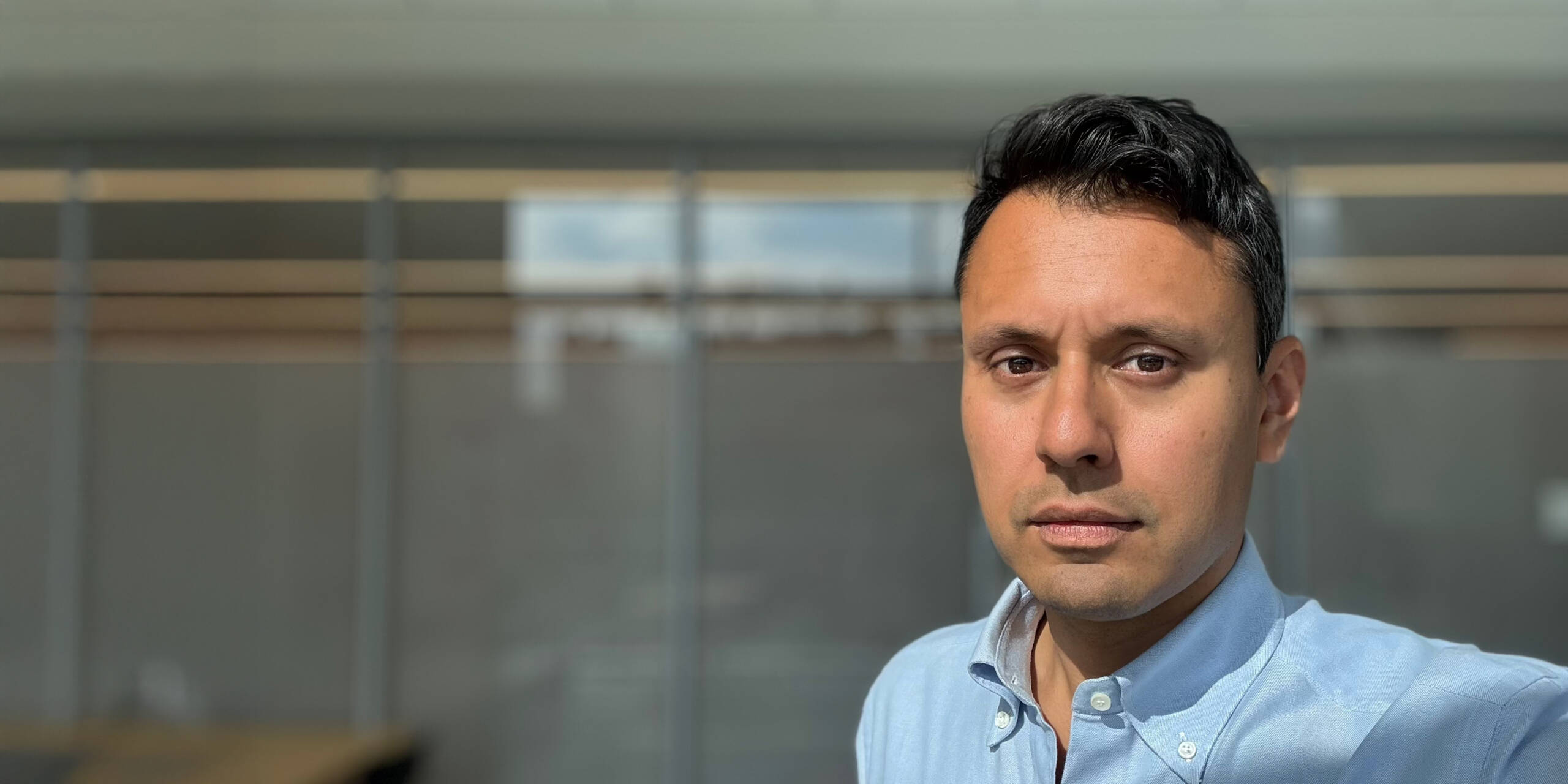
Studies how cells organize collectively to form tissues and regulate genes in development and disease
Rodrigues co-founded and co-leads the Laboratory of Morphogenesis. Rodrigues combines conceptual theory and experiment to understand how changes in tissue structure occur in organ development and disease. Focusing on the ecological relationships in cell collectives, his work has shown that “supra”-cellular self-organization shapes tissue architecture while concurrently modulating molecular processes the cellular level. Such fundamental insights have consequences for the study of disease, suggesting that effective diagnosis and treatment requires a focus on supracellular epigenetic processes that cannot be understood through cellular and molecular analysis alone.
Inspired by 20th century organicist thinkers such as Paul Weiss (one of Rockefeller University’s first professors) and Conrad Waddington, Rodrigues’ research program seeks to develop an understanding of living systems that moves beyond a reliance on machine metaphors and molecular reductionism. Rodrigues has developed experimental systems in which groups of cells can collectively self-organize into structures, providing a tractable window into the mystery of how the whole (collective) and the parts (individual cell) interrelate to create functional order. In lieu of molecular circuits or programs, Rodrigues employs an “organic” paradigm in which structural self-organization at the supracellular scale is the primary causal nexus for the formation of organ structures.
Rodrigues also aims to show how conceptual reorganization can change the way in which disease processes are understood and treated. For example, his lab is exploring how supracellular self-organization leads to pathological situations such as ovarian tumor metastasis and is developing ways to identify emergent supracellular biophysical properties that are indicative of disease progression. Such work anticipates a future in which medicine addresses not only the molecular states within cells but also the pathological self-organization of cell collectives.
Rodrigues received his B.A. in Chemistry (Highest honors) in 2007 from Williams College (Harry S. Truman Scholar), his MPhil in Computational Biology in 2008 from the University of Cambridge (Gates-Cambridge Scholar) and his Ph.D in 2016 from Harvard University.
Selected Publications:
Sautchuk R. Jr., et al., Epigenetics Beyond the Cell: Supracellular Organization of Fate and Form in Morphogenesis. Cold Spring Harb Perspect Biol (2025)
Shyer A.E., Rodrigues A.R., Transcending the hegemony of the molecular machine through an organic renewal of biology and biomedicine. Cells Dev 10, 204018 (2025)
Yang S., Morphogens enable interacting supracellular phases that generate organ architecture. Science 382, 6673 (2023).
Palmquist, K.H., et al. Reciprocal cell-ECM dynamics generate supracellular fluidity underlying spontaneous follicle patterning. Cell 185, 1960–1973 (2022).
Shyer A.E., Rodrigues A.R., et al. Emergent cellular self-organization and mechanosensation initiate follicle pattern in the avian skin. Science 357, 811–815 (2017).