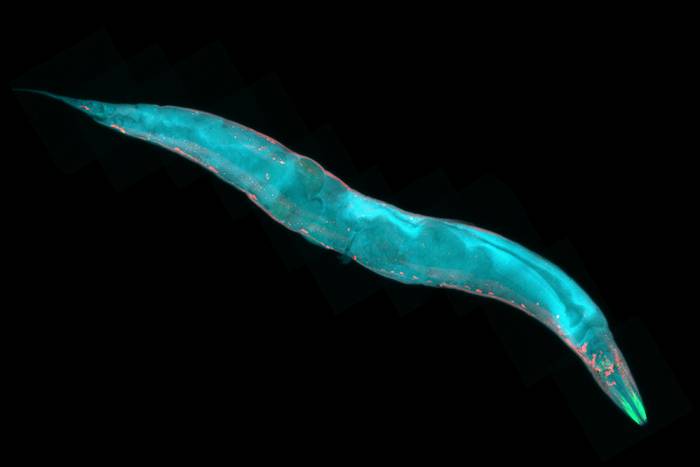
Studying neurons in C. elegans, researchers made a surprising discovery: these roundworms, like most animals, process information using a digital, electric code.
DEET, a chemical in bug sprays, affects the behavior of highly diverse organisms—but how it works remains unclear. New research in C. elegans shows that the compound exploits unique receptors and neurons to interfere with the animals’ response to odors.
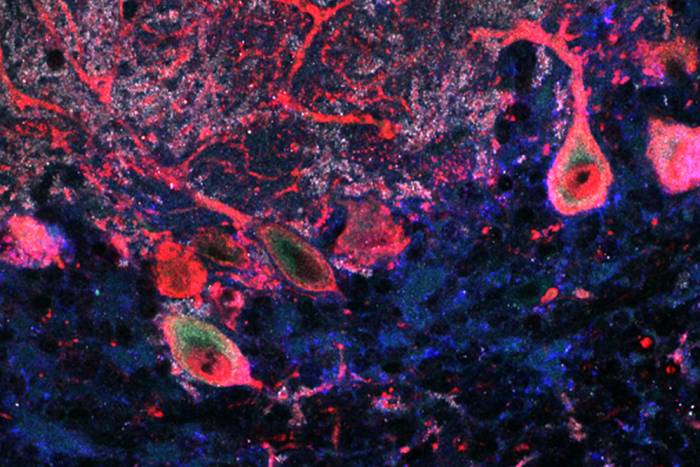
Researchers have discovered that the protein ASTN2 shuttles receptors away from the surface of neurons, a process that facilitates efficient brain activity.
Committed to innovative cuisine, Great Performances will be introducing changes over the next weeks and months as they get to know Rockefeller tastes and culture.
Using gene editing technology, researchers have developed a new way to study B cell activation in mice. This technique makes research more efficient, and has the potential to improve our understanding of immune responses in humans.
With a new transmission cryo-electron microscope, Rockefeller researchers will be prepared to sleuth out complicated protein structures in increasingly sophisticated ways.