“Organisms pay attention to what other members of their species are doing,” says Cori Bargmann, a neuroscientist at Rockefeller University. “It’s a very robust phenomenon that you see from humans on Twitter to bacteria, and everything in between.” That’s why Bargmann, Torsten N. W...

No single neuron produces a thought or a behavior; anything the brain accomplishes is a vast collaborative effort between cells. When at work, neurons talk rapidly to one another, forming networks as they communicate. Researchers led by Rockefeller University’s Alipasha Vaziri are developing tech...

In an ideal world, the newest and most effective drugs for chronic inflammatory conditions would immediately help everyone who took them. Unfortunately, in the real world, it can take several months to determine whether a given patient will respond to one of these medications, which target specif...

To take shape, to move and to reproduce, cells need internal scaffolding composed of slender filaments known as microtubules. Before the cell can use microtubules for these and other essential functions, it must first organize them into carefully crafted bundles, which become the basis for three ...

The nerves we feel before a stressful event—like speaking in public, for example—are normally kept in check by a complex system of circuits in our brain. Now, scientists at Rockefeller University have identified a key molecule within this circuitry that is responsible for relieving anxiety. Intr...

Antibiotics save millions of lives. But their tendency to kill helpful and harmful bacteria alike, coupled with the growing problem of antibiotic resistance, means that they are not without their downside. Probiotics consisting of beneficial microorganisms, meanwhile, have the potential to delive...

Cholesterol—that waxy substance incriminated in heart attack and stroke—is a precious commodity for cells. In fact, errors in a cell’s ability to import these rod-like molecules can be fatal. In new work, researchers at The Rockefeller University and their colleagues delved into a pivotal p...

Tiny, abundant biological factories, known as ribosomes, produce the cell’s most fundamental building material: protein. If ribosomes don’t work, cells can’t divide—and this can be an advantage for scientists seeking to develop drugs that target invading organisms, such as pathogenic fungi. ...

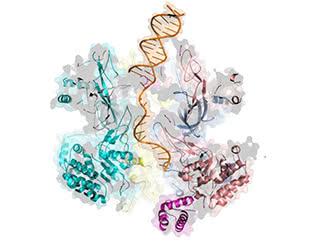
Like humans, bacteria come under attack from viruses and rely on an immune system to defend themselves. A bacterial immune system known as CRISPR helps microbes “remember” the viruses they encounter and more easily fend them off in the future. Since researchers first discovered CRISPR in the mid...

During the first year of life, the human brain doubles in size, and continues expanding through adolescence. The loosely connected bony plates of the young skull accommodate this growth. But sometimes, these bones fuse too early, a disorder known as craniosynostosis. This disorder can produce fac...