The Rockefeller University
Hospital
Aaron Diamond AIDS Research
Center
Center for the Study of
Hepatitis C
Center for Field Research in
Ethology and Ecology
Howard Hughes Medical
Institute
Starr Cancer Consortium
Tri-Institutional Stem Cell Initiative
The Rockefeller University
Press
The Rockefeller Archive Center
Center for Clinical and
Translational Science
Center for the Study of
Hepatitis C
Center for Studies in Physics
and Biology
Christopher H. Browne Center
for Immunology and Immune
Diseases
Fisher Center for Alzheimer's
Disease Research
F.M. Kirby Center for Sensory
Neuroscience
Pels Family Center for
Biochemistry and Structural
Biology
Shelby White and Leon Levy
Center for Mind, Brain and
Behavior
Starr Center for Human
Genetics
Nobel Prize
Albert Lasker Award
National Medal of Science
National Academy of Sciences
Institute of Medicine
Gairdner Foundation
International Award
 |
Friday, May 09, 2008 |
|
|
|
|
|
|
|
|
|
 |
 |
 |
 |
 |
| Research Areas |
 |

Science at the University
Centered around 69 cutting-edge laboratories working in a broad range of fields
— such as cell and developmental biology, genetics, immunology and infectious diseases, neuroscience, structural biology, biophysics, biochemistry, physics, mathematics and statistics — The Rockefeller University fosters a collaborative research environment for its faculty and provides an innovative educational experience for a select group of outstanding graduate and postdoctoral students.
Discoveries include the first physiological outcomes of the histone code, for example, how the immune system B cells create a repertoire of 50 million antibodies.
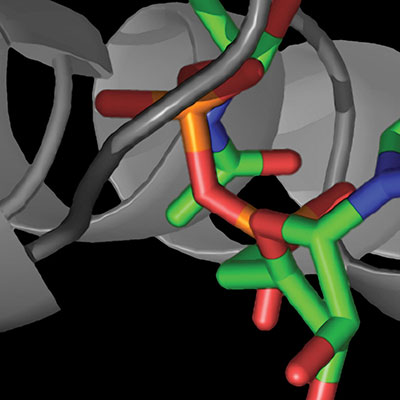
In addition, Rockefeller scientists have determined the shape of telomeres (bits of DNA on the end of chromosomes that tell a cell when to die), located genes regulating the sleep/wake cycle, identified genes that influence obesity, identified the body's natural immunity to tumors, and determined the structure of the voltage-dependent potassium ion channel. This last finding has addressed how this type of channel functions as a voltage-dependent switch during muscle and nerve activity in all living organisms.
Clinical research occurs primarily at The Rockefeller University Hospital.
Opened in 1910, it has been the site of some of medicine's most dramatic achievements, including the invention of the first apparatus for analyzing blood chemistry and the discovery of the Rh factor in blood. HIV/AIDS research at the hospital will include vaccine human clinical trials as well as the development of dendritic cell-based therapies.
Since 1996, the Aaron Diamond AIDS Research Center, led by Rockefeller University
Professor David D. Ho, has been an integral component of Rockefeller's clinical research program. The university's collaborations with other New York City institutions, exemplified by the Center for the Study of Hepatitis C and the Tri-institutional Research Program, embody the interdisciplinary approach that is increasingly necessary to answer many of today's important scientific questions.
Research at the university naturally clusters into several general scientific areas. These research areas are briefly described in the following pages, and a list of heads of laboratories working within each area is provided. A report from each of these laboratories, along with selected publications, is then presented in the section that follows.
|
|
 |
|
 |
 |
|
 |
|
|
 |