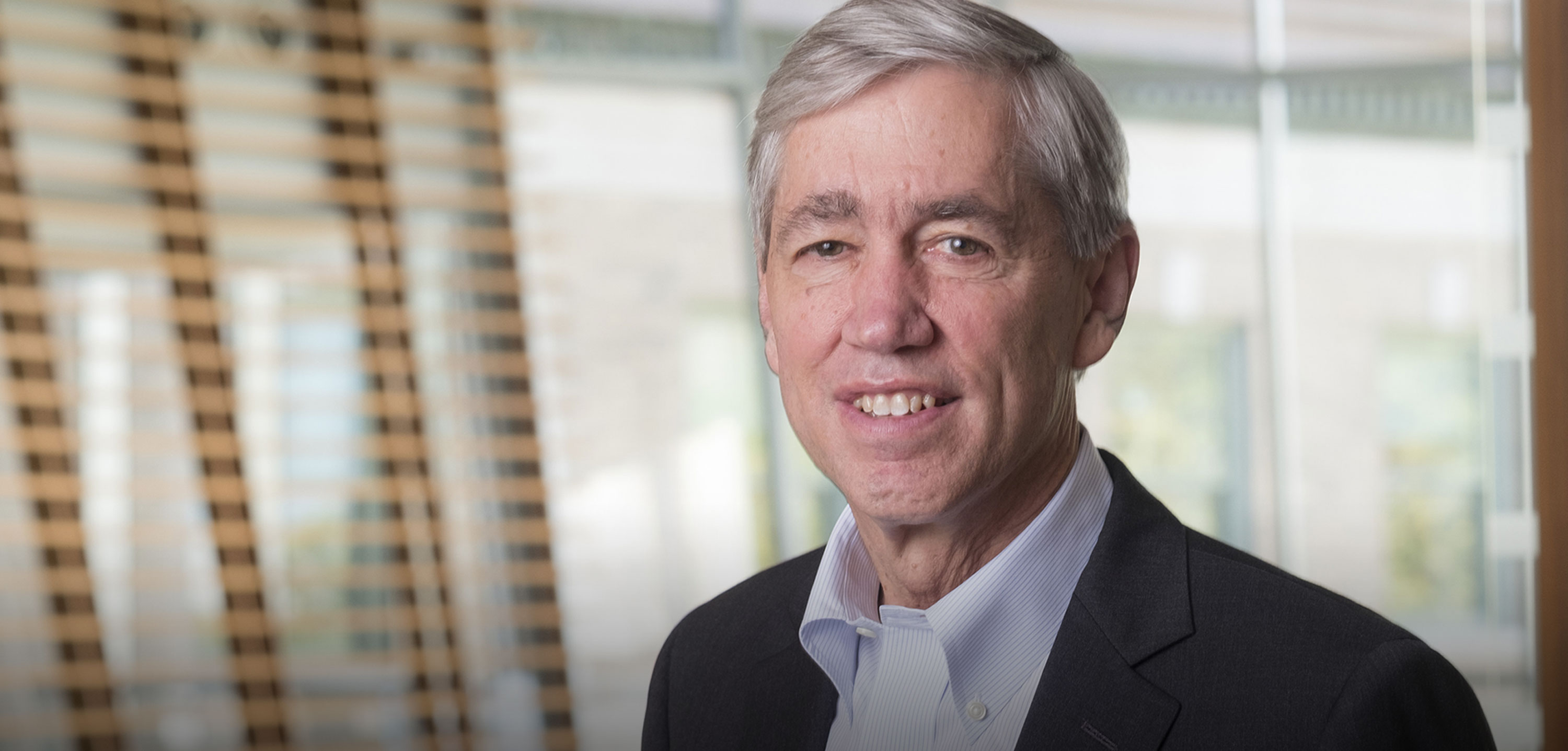
Introduction of Paul Nurse to The Rockefeller University community
Friday, July 03, 2009
Calendar | Directory | Career Opportunities
The Rockefeller University Home Page
Search
Advanced Search
About The Rockefeller University
Quick Facts
Office of the President
Board of Trustees and Corporate Officers
Campus Map & Views
History
Awards & Honors »
Sustainability
NYC Resources
Travel Directions
Contact Information

Home  >  About
Print
PRINT
Office of the President

Paul Nurse became Rockefeller University's ninth president on September 1, 2003. A Nobel Prize-winning biologist, Paul's research focuses on the molecular machinery that drives cell division and controls cell shape. Before coming to Rockefeller, Paul spent more than three decades as a research scientist in the United Kingdom, where he was born. His research led to the identification of cyclin-dependent kinase (CDK) as the key regulator molecule controlling the process by which cells make copies of themselves, a discovery that is important for understanding growth, development and cancer. His most recent post was as head of the world's largest volunteer-supported cancer research organization, Cancer Research UK.

Paul's vision for the university is one of collaboration and innovation, with the goal of enabling the world's best scientists to pursue high-quality research into biological and biomedical science to improve our understanding of life for the benefit of humanity. Under his strategic plan, approved by the Board of Trustees in 2005, Rockefeller is recruiting at least a dozen new laboratory heads, employing an open recruitment approach designed to identify the very best scientific talent regardless of their field. To facilitate world-class science and promote interactions among researchers, Rockefeller has also begun constructing a new Collaborative Research Center on its campus, restoring two of the university's original laboratory buildings and creating a new facility between them in order to produce large, open-plan laboratories.

In addition to the Nobel Prize in Physiology or Medicine, which he shared with two other scientists in 2001, Paul has won the Albert Lasker Award for Basic Medical Research, as well as numerous other awards and medals. He is a fellow of the Royal Society and a foreign associate of the United States National Academy of Sciences, and in 1999 was honored with knighthood in Great Britain for services to cancer research and cell biology.